
On a recent tour of Scandinavia, I visited Finland to look for the elusive Sisu in its natural habitat. The Sisu company is Finland’s only truck maker and, at one time, it offered the complete package, in terms of products made. From its formation, trucks (mostly dump trucks) and buses were built, then specialized vehicles were produced for military use, along with trams, mobile cranes, and dockside tractors – Sisu even dabbled in a number of different railway maintenance locomotives.
The company was established in 1931 with the coming together of two Helsinki based vehicle coachbuilders. Both were going through some financial difficulties, and both were funded by the same bank who suggested that they merge into one. The name “Sisu” was chosen for the new company, with its English meaning being a combination of guts and determination – true grit.
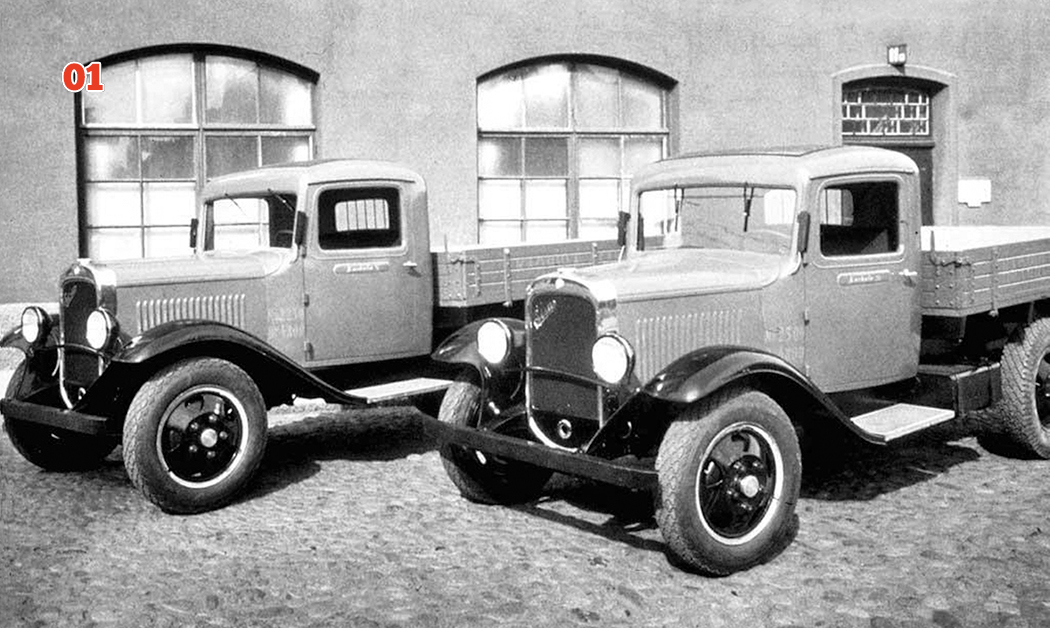
The first models produced were known as the S series and they were built with a number of Volvo parts. They were mostly powered with Penta gas engines, and their carrying capacity ranged from 2.5 up to 4.75 tons, depending on the fitting of single or double rear wheels. In 1939, the Soviet Union (USSR) invaded Finland, claiming parts of the country, but fully intending to take it all over. The conflict ended with the League of Nations stepping in and expelling the USSR from the organization.
During this time, Sisu experienced a number of changes. The company was put under State military administration, and then an engineering project was started to design their own carburetor. Also, the American made Hercules engine began to be built under license, then used widely in most of the vehicles. It was also at this time when Sisu started producing their own front and rear axles. Because of the hostility shown by the USSR, it was decided by the State that Sisu would also begin building military vehicles in large numbers.
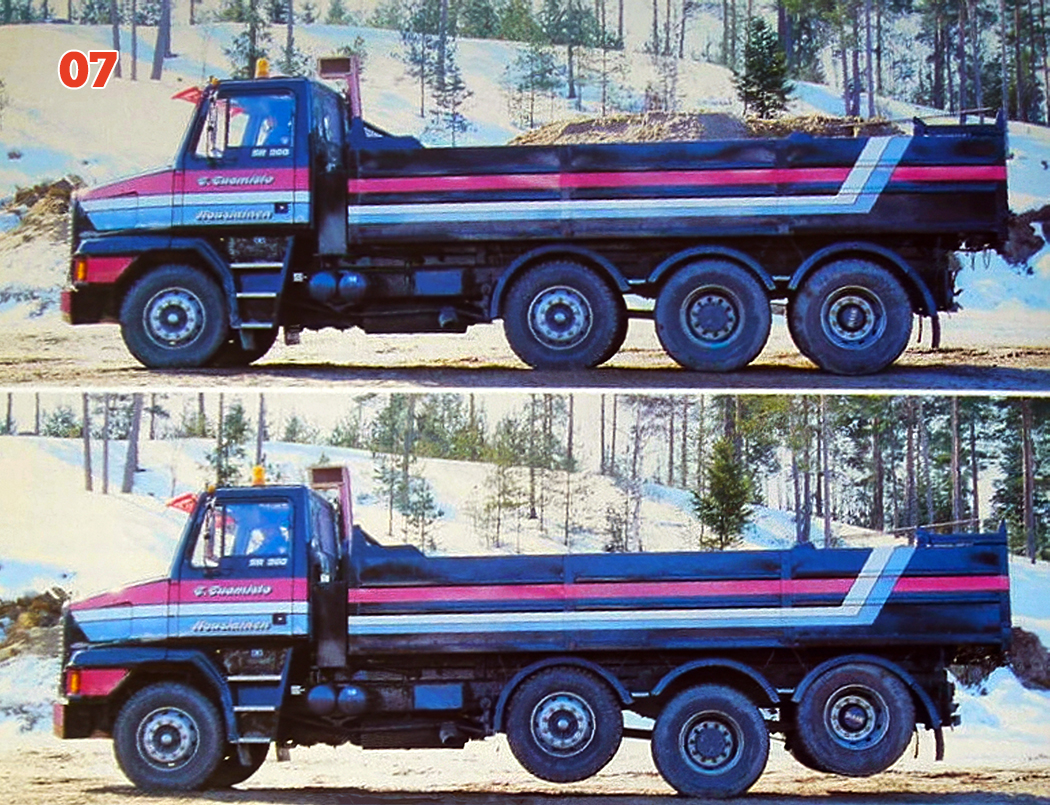
In 1949, Sisu introduced their new K series, which was a conventional type of tractor. This design would be used long term, and keeping up with earlier activities, the chassis was also used for bus production. At this time, more emphasis was given to the revolutionary, cost saving design of rear lift axles. The design incorporated hydraulic cylinders to lift the wheels clear of the ground when the truck was empty. In the early 1950s, Sisu forged links with Leyland Motors of the UK. This saw Sisu using the Leyland 8.7 liter diesel engine. A little later, Sisu also used 250-hp Rolls Royce diesels in their larger models, including heavy duty dump trucks. The K series continued to be manufactured in a number of variants and was also known as the R series.
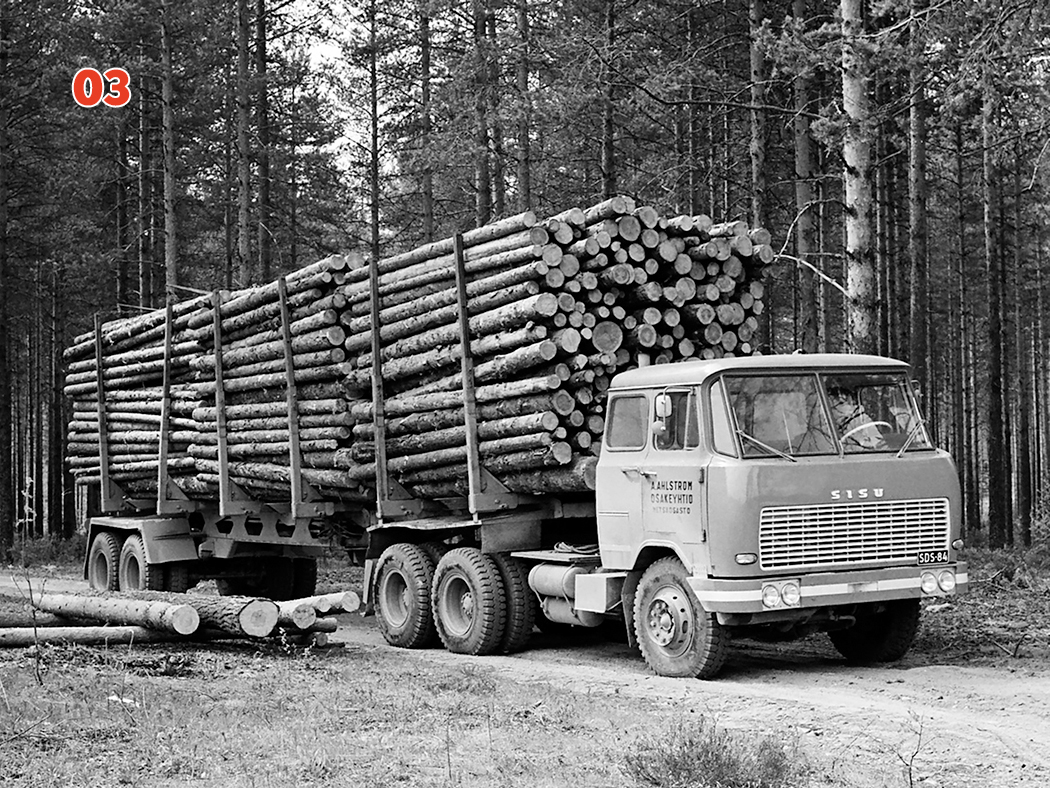
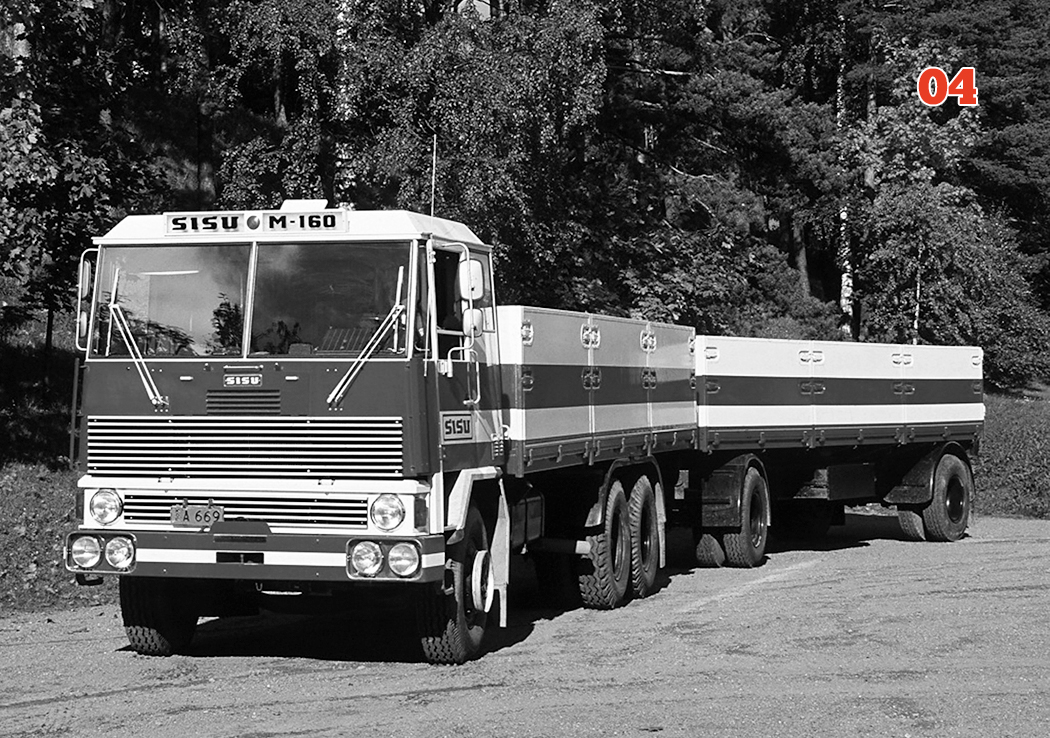
The 1960s saw the emergence of modern designed tilting cab vehicles by most world manufacturers. Sisu, not to be outdone, introduced the KB-112 in 1962 and the KB-117 in 1964. These cabovers were the first models to have a hydraulically lifted tilt cab, and they are thought to be the first ones in Europe, altogether. The KB’s replacement was launched in 1970 in the form of the M series, which came in four chassis options – 4×2, 6×2, 6×4 and strangely, the 8×2. Originally, the Leyland 690 and the Rolls Royce Eagle 265 engines were fitted in these models.
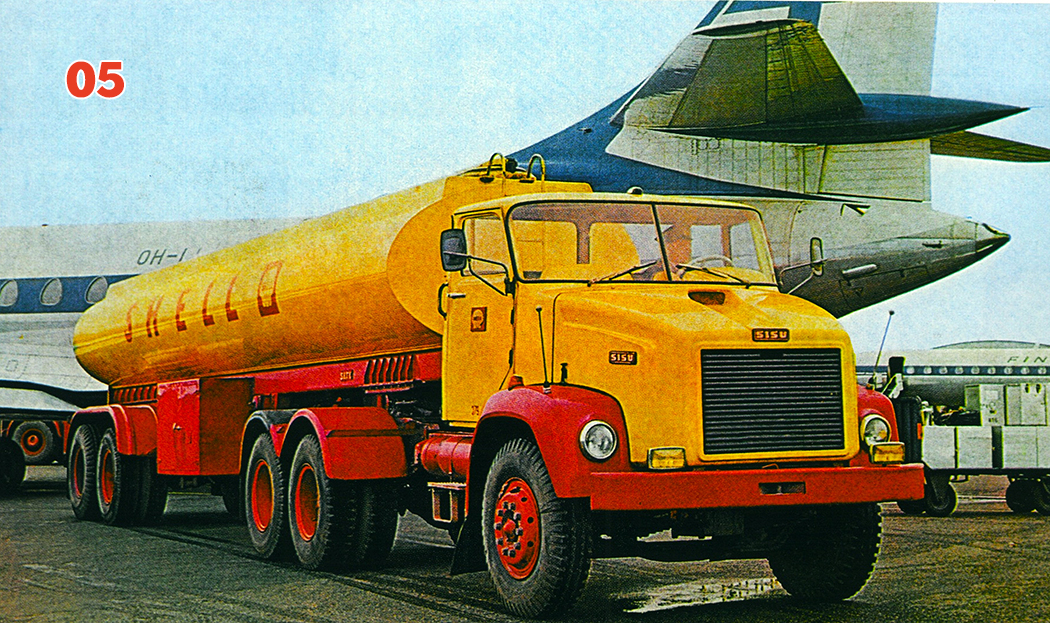
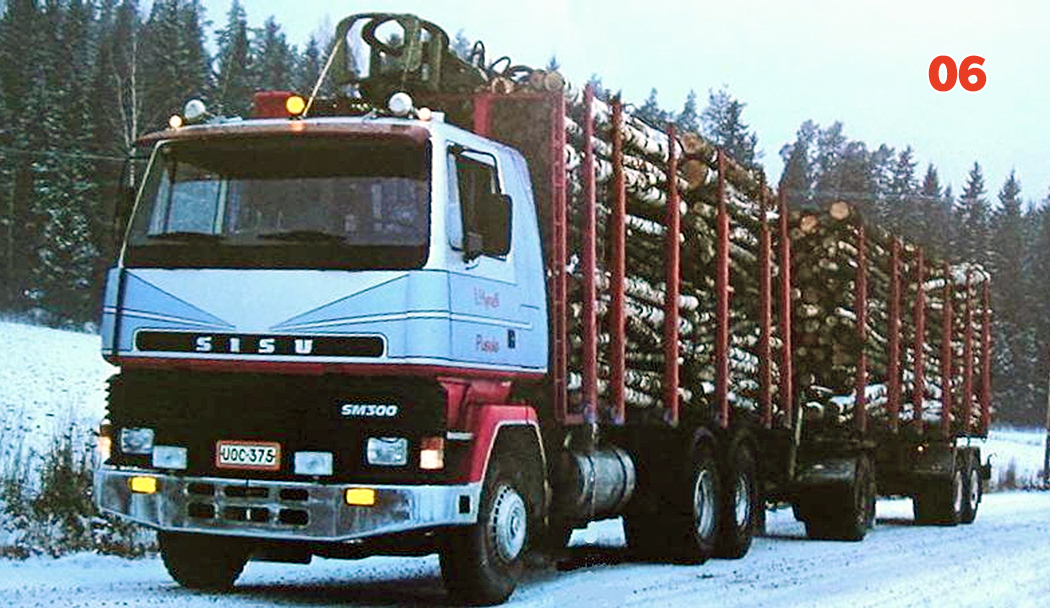
As all these modern tilt type cab trucks (COEs) were still being made, Sisu continued to produce conventional trucks in even larger numbers. One in particular was the K-142, and Sisu began experimenting with some weight saving ideas on this one (the truck was fitted with a hood and front fenders made from reinforced plastic). At this time, Sisu also adopted the idea of using the same cab for both their COE and conventional trucks. Nothing new here, but when it came to the conventional type, the main cab was made to tilt when the hood was tilted forward. This was on the S series which included the SK, SM, SN, SL and SR models. Valmet diesel engines were fitted in the smaller SK and SL models, while Cummins engines were installed in the larger SM types.
In 1983, Sisu appointed Jorma Jerkku as GM, and he embarked on a company streamlining exercise. Along with reducing the number of managers, he also relocated facilities, with the end result being some of them closing. Sisu were representatives for the Iveco brand in Finland and also had car dealerships. Both of these areas of business were discontinued with the cost cutting plan. As a result, the company became more stable, however, continuing with the austerity plan, the different areas of the business were split up. Without going too deep into it, the truck division would be known as Oy Sisu AB. Interestingly, this division would also be fragmented into different businesses, which later included Sisu Logging, Sisu Trucks, Sisu Defense and Sisu Components. A new company was established called Patria and Sisu Defense was absorbed into this newly created organization.
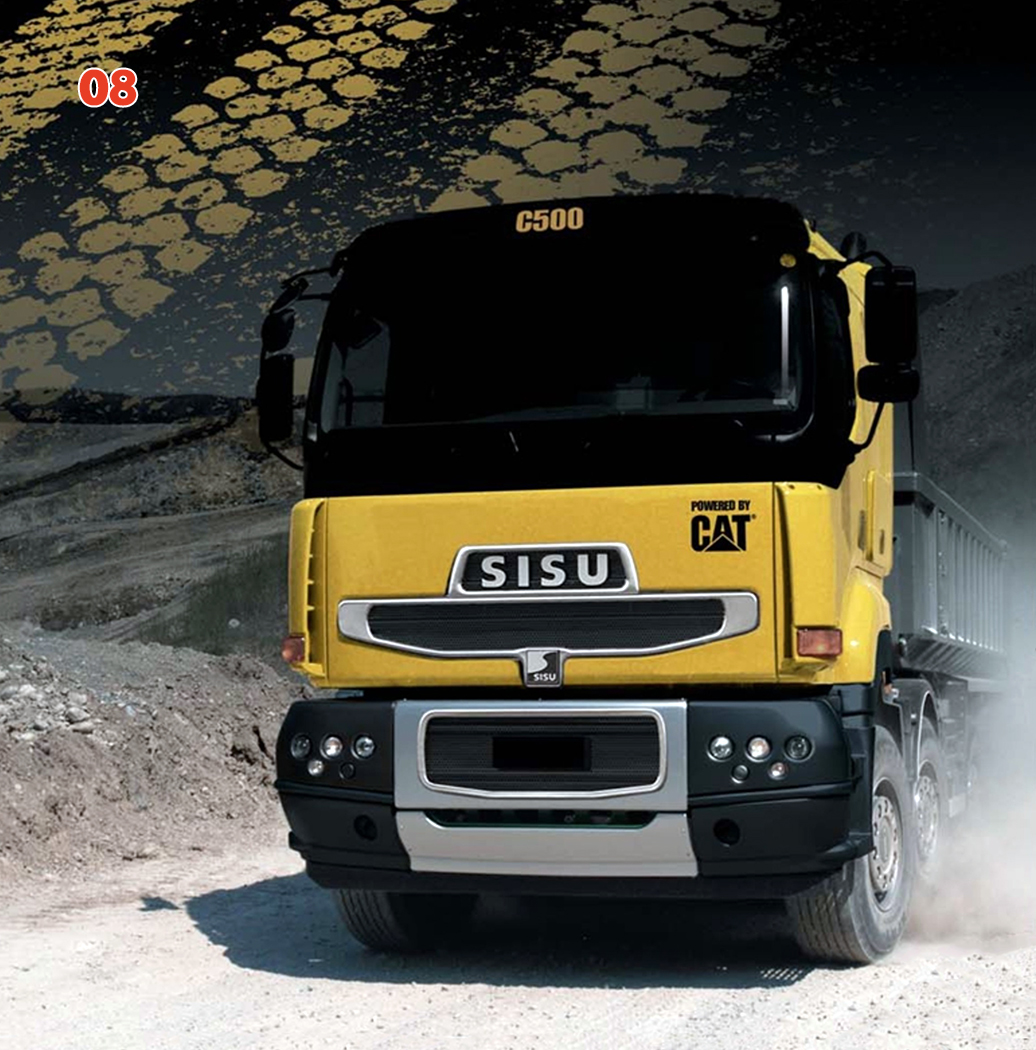
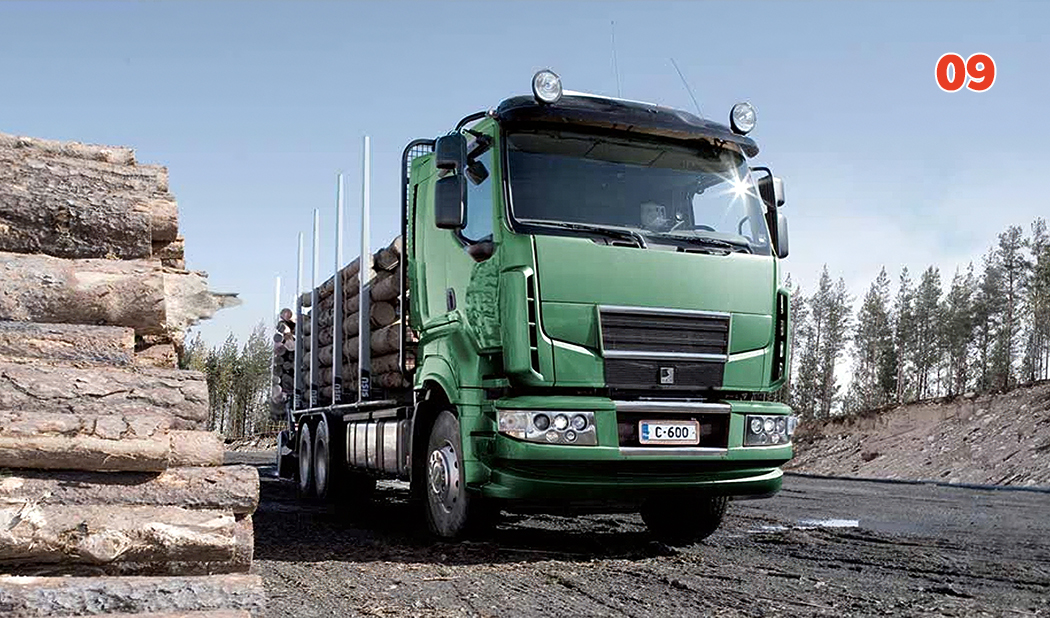
Then, in 1997, Renault (a French commercial vehicle manufacturer) came to Sisu with a proposal, and then later signed a co-operation deal with them. Renault would be represented by Sisu in Finland and Renault cabs would be used on the new C500 and C600 COEs. These were both powered by Caterpillar engines. The similar E series was launched later, which had the Renault Premium cab, and the option of either Renault, Cummins or Mack engines, as Renault, at that time, owned Mack Trucks. In the decade that followed, as Renault improved the cab, Sisu added these cabs to their trucks. The relationship with Renault and Sisu lasted until 2010.
Before that relationship ended, a group of Finnish investors purchased the company and renamed it Sisu Auto in 2004. The consensus in the boardroom was to manufacture Sisu trucks for niche markets. These would be in the sectors of logging, construction, public works and chassis dedicated to loader cranes. In 2007, the company decided to change its strategy on after sales service. This responsibility was given to a Finnish automotive company called Veho, who were a large dealer in Mercedes Benz cars and trucks. Later, Sisu went on to use Veho to actually sell their trucks.
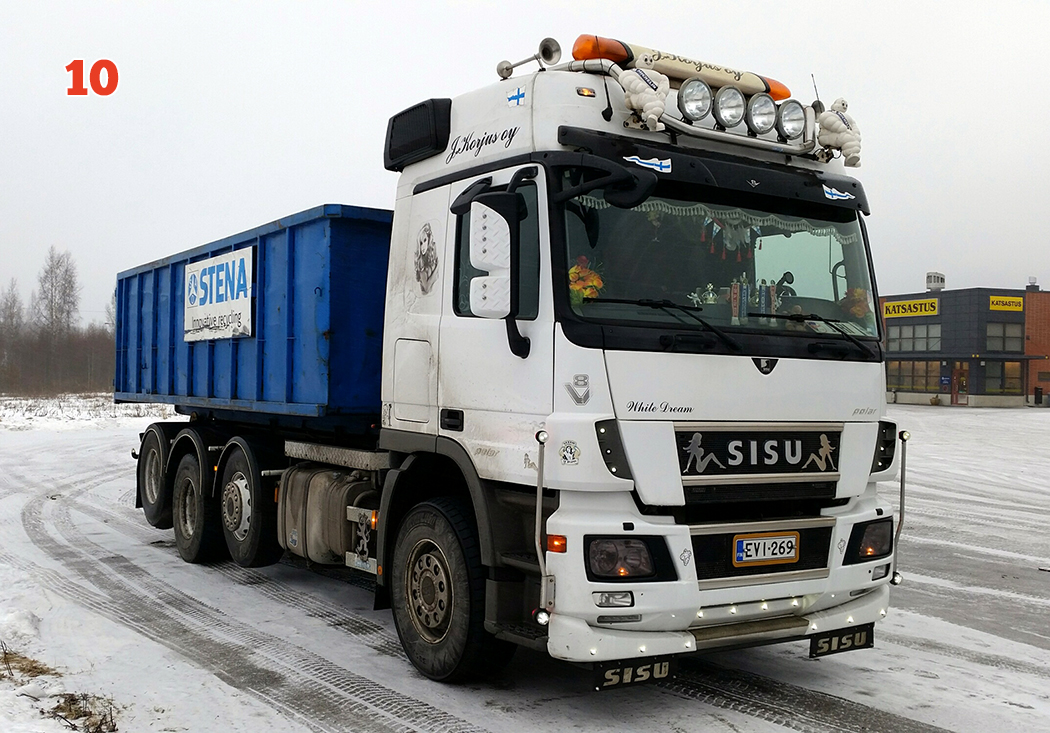
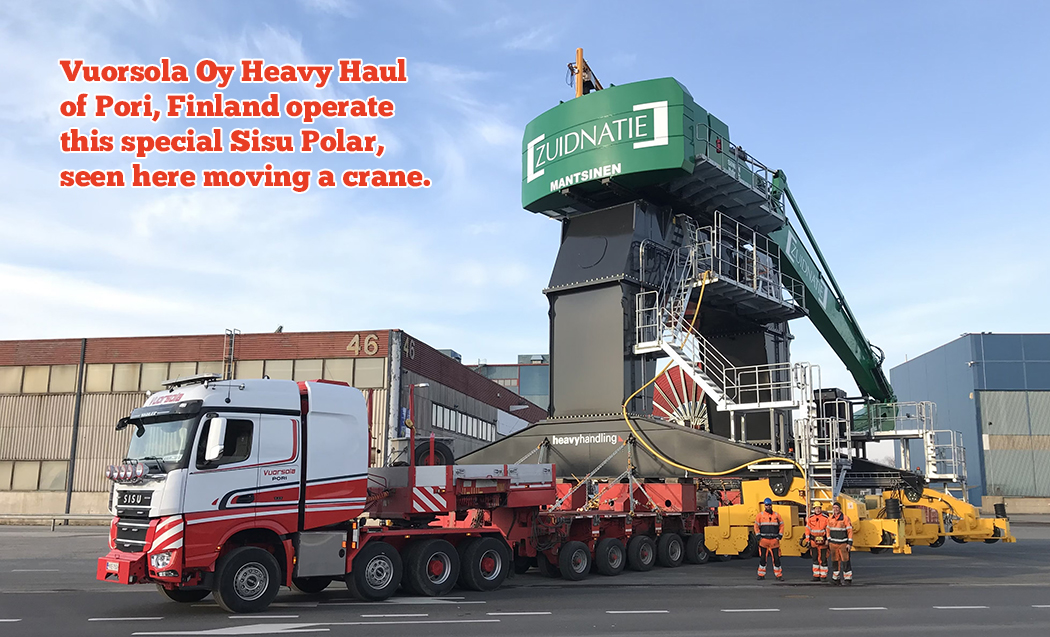
The connection with Mercedes Benz (MB) would be the beginning of the next chapter when Sisu signed a co-operation deal to use the German manufacturer’s components starting in 2011. The product line consisted of the “Polar” which came in two model options and were built for the previously mentioned niche markets. The trucks have the MB Actros cab, in different specifications, from day cab to high roof or the Mega Space. The two variants are the DK12M, which has the Euro VI MB OM 471 motor, and the DK16M, fitted with the Euro VI 473 engine.
The Polar truck has three gearbox options – MB Powershift G280 16-speed automatic, MB Telligent G240 16-speed manual, and the Eaton Fuller RTLO 20918 manual transmission. To the naked eye, anyone might think that the Polar is a Mercedes with a Sisu badge fitted to the cosmetically altered grille. Not so, as the chassis, front axle and brakes are pure Sisu, and the truck is fitted with those legendary Sisu lifting rear axles. The axles are still manufactured by Sisu and are fitted to a host of various makes of trucks, worldwide, however the US Marmon Group now owns this part of the company.
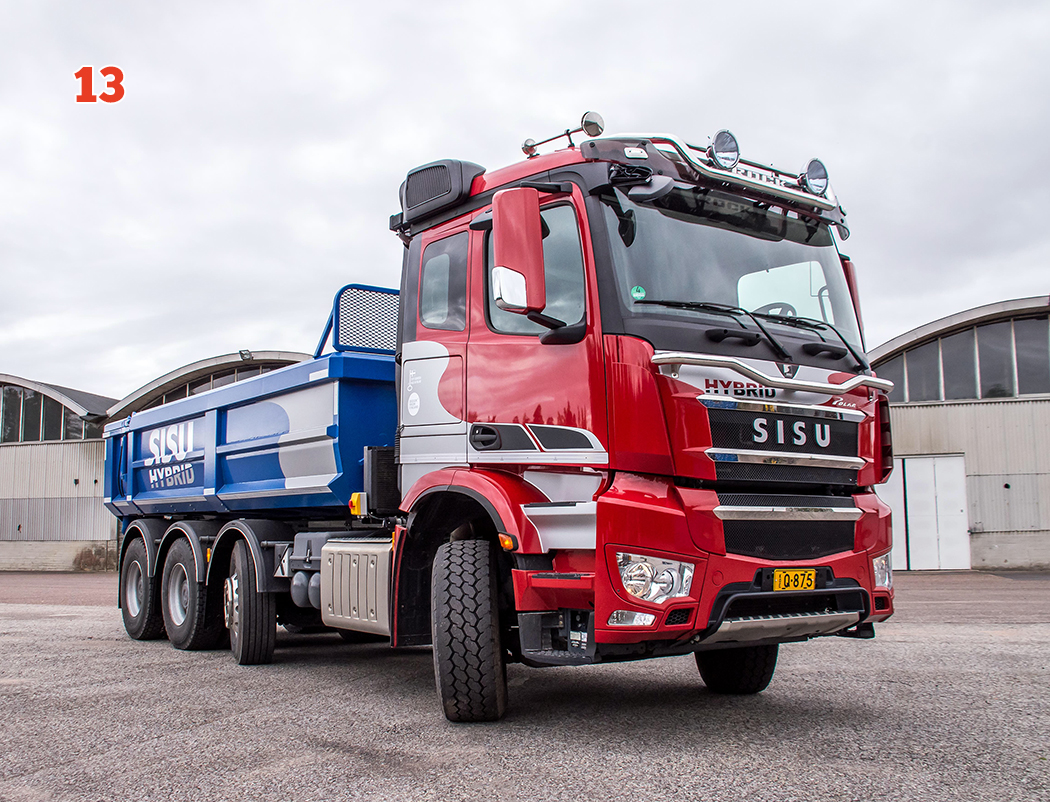
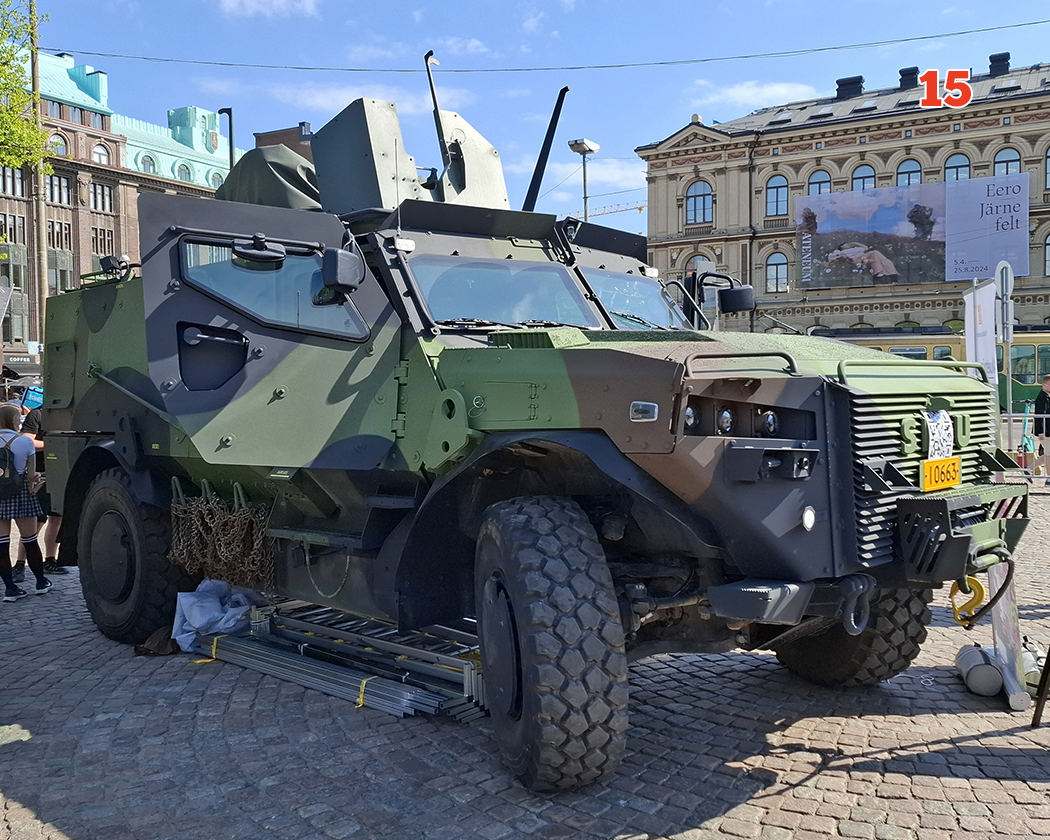
More recently, in 2015, Sisu Auto bought out Fabrika Autombilia Priboj (FAP), a Serbian bus, truck, trailer, special body types, and truck components maker. The commonality between these two manufacturers is Mercedes Benz, as both use MB cabs and components. In 2018, Sisu launched the 900+Hybrid, which has a 625-hp Mercedes R6 15.6 liter engine, coupled to a Danfoss Editron 250 kWH electric power unit, along with an Eaton Fuller RTLO22918B gearbox. Also, in 2018, the defense side of the business introduced the rugged GTP 4X4 Tactical Vehicle, which is powered by the 308-hp 6-cylinder Mercedes Benz OM926 diesel engine.
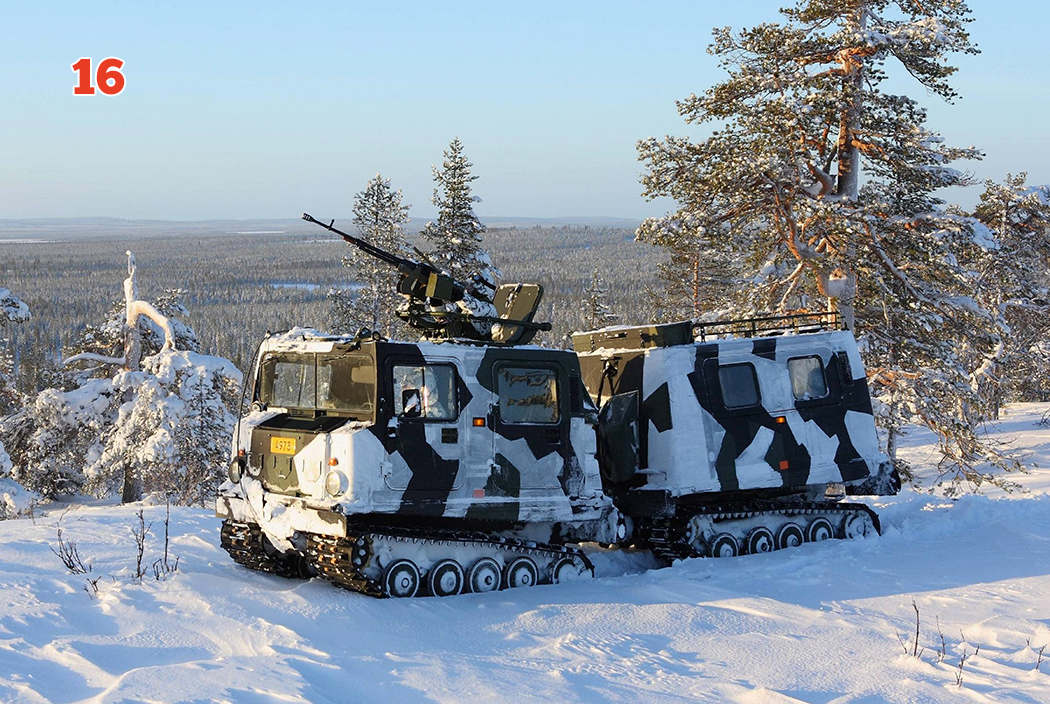
With over 95 years of experience and history, but now down to about only 100 employees, Sisu is not the company it was in its heyday, but they are still around in a streamlined presence, they are still 100% Finnish design, and they are still the #1 heavy truck manufacturer in Finland. Building seven different variations of the Polar model for specific and/or niche markets, they also have two defense vehicles – the GTP 4X4 Tactical Vehicle and the GTT all-terrain tracked unit. Commercial truck production over the last several years has been minimal, but the company continues to press on, and they are still proudly known as “Finland’s Finest” for their guts, grit and determination for all those years.
PHOTO CAPTIONS:
01. Two early model Sisu S-321s.
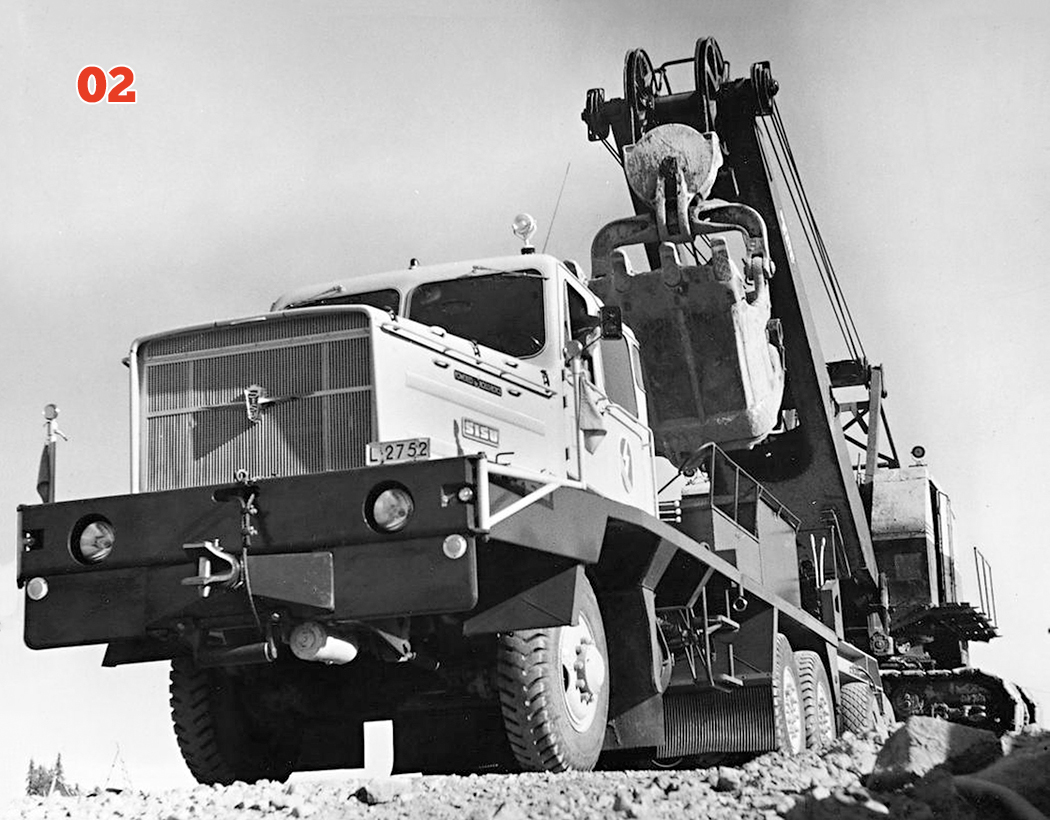
02. A specially ordered Sisu K-50SS.
03. A tilt cab KB112 with a log trailer.
04. A 1970s M series cabover.
05. A lighter K142 with a plastic hood.
06. A Sisu SM300 seen in the forest.
07. The cab on the SR-260 could tilt when the hood was forward (this also shows the lift axles).
08. The C500 with the Renault Premium cab, powered by a C13 Caterpillar.
09. The C600 had a C15 Caterpillar.
10. The Polar “Rock” variant built for construction applications.
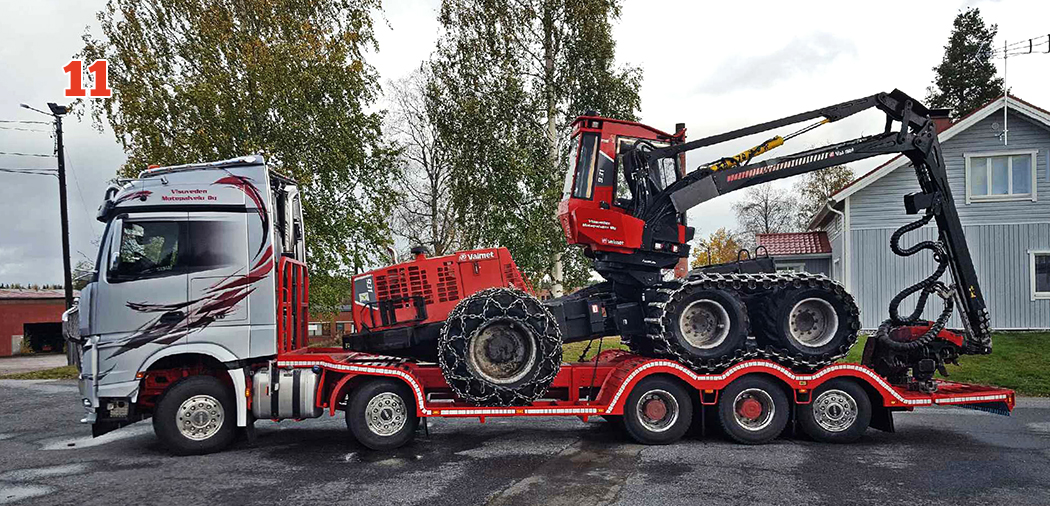
11. The Polar “Carrier” variant fitted with a step frame body.
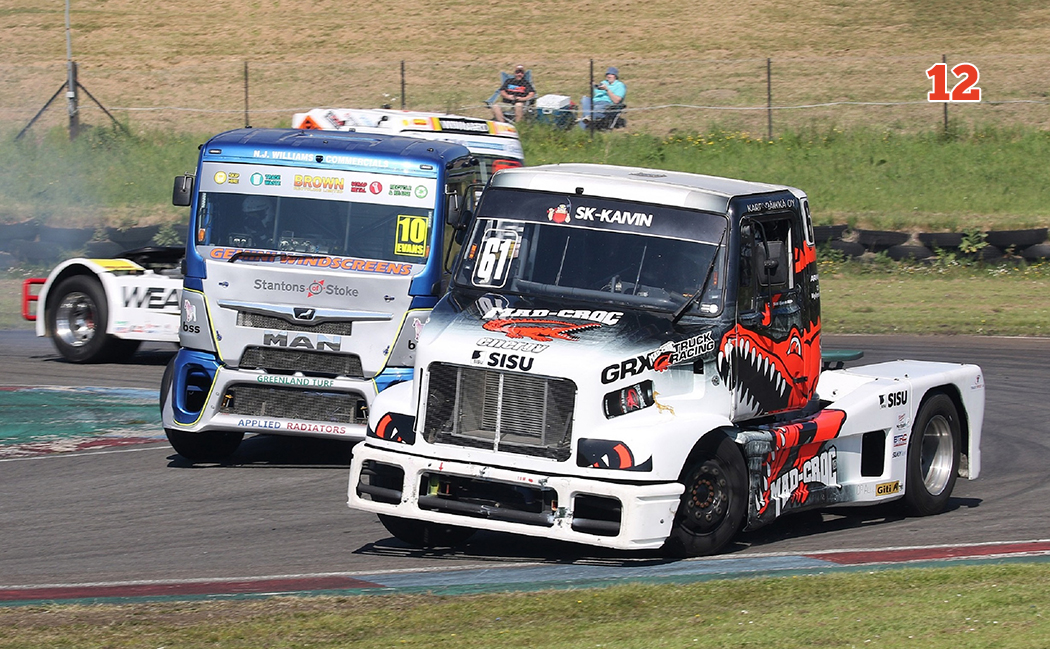
12. Sisu trucks continue to compete in races, and this SL250 was seen at a race in the UK.
13. The 900+Hybrid is powered by a combination of diesel and electric.
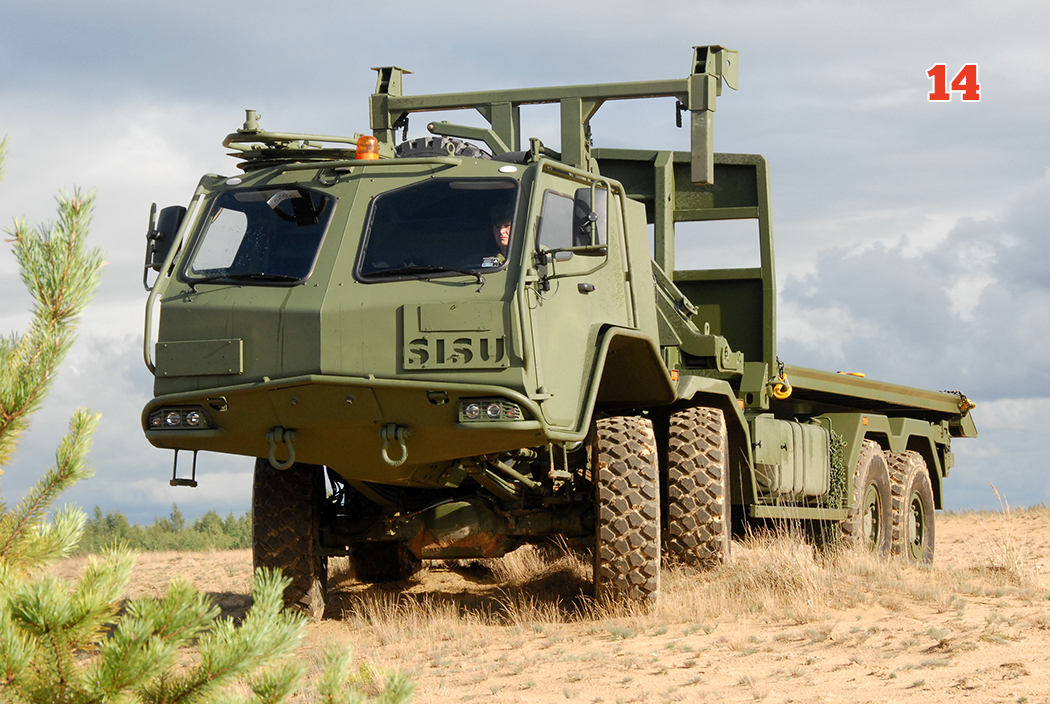
14. The “go anywhere” E13TP 8×8.
15. The GTP 4X4 Tactical Vehicle.
16. The Nasu is an all-terrain military transport developed for the Finnish army.