


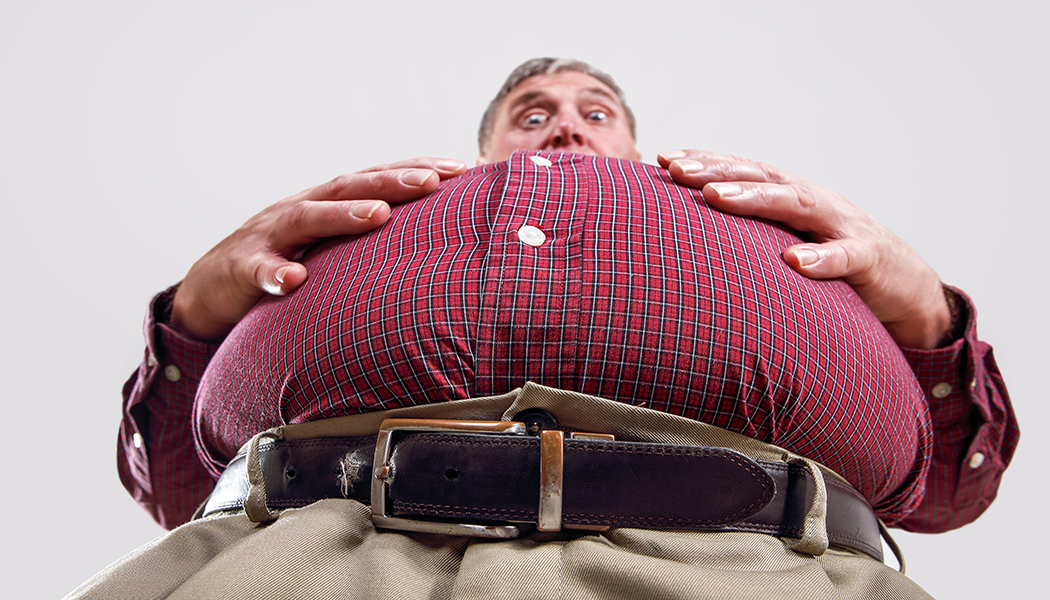
I have struggled with being overweight and obese (oh, how I hate that word!) all my life. Time and time again I have dropped a lot of weight and, time and time again, gained it all back, and then some. I have also despised myself for my lack of willpower. It must be a self-discipline failure if you can lose weight and yet let it come creeping back again, right? What is wrong with me? Why am I so weak? I’m guessing that some of you reading this are thinking, “Been there, done that.”
Truckers have some of the highest rates of obesity that put them at greater risk for poor health than vehicular accidents. Almost three-quarters of truckers struggle with obesity. Obesity is at the root of so many other health problems, such as type 2 diabetes, high blood pressure, sleep apnea, liver disease, acid reflux, heart disease, stroke, and arthritis, to name a few.
Weight loss programs like Weight Watchers, Nutrisystem, and Noom, are best known for their behavior change techniques: eat slower, use a smaller plate, write down every morsel you put into your mouth, stay within a small calorie range, and watch the pounds melt away. Exercise will help you burn even more calories, they say. It works! The basic premise is that if you just eat fewer calories, you will lose weight, and that is the end of it. But for many people, that is not the end of it.
For many, once they reach their goal weight, the pounds lost eventually come back, and they may weigh even more than they did when they started. The 50 pounds I lost during the pandemic while following a program have come sneaking back into my life to the tune of 30 pounds regained. And, although I know how many calories I should consume, the hard-to-resist cravings for certain high calorie foods has not gone away.
Thankfully, over the years, scientists have been looking into this phenomenon. Obesity is now considered a disease, not just a lack of willpower. Obesity is somewhere between 40-70% a genetic disorder, according to the journal Nature Reviews Genetics. This means that if your parent or parents were obese, there is a good chance you will be, too. It doesn’t seem likely that the billions of people in the world who wrestle with obesity all have the same terrible lack of self-control. Could there be something else going on in the body?
In light of new evidence, health care professionals are now being urged to treat obesity as a chronic disease and have even replaced the term “obesity” with “Adiposity-Based Chronic Disease” (ABCD). It’s complicated, but there are hormones that affect the way we think about and act toward food, and our responses to food depend on these hormones in our blood, not our lack of self-discipline.
In people with ABCD who have lost weight, the hormone ghrelin increases, telling our brains that we are hungry and need to eat, while other hormones that give us a sense of fullness and satisfaction decrease, causing our bellies to feel that they are not as full as they would like to be. This often results in cravings for food, despite having learned all the behavior techniques and healthy foods to eat. The great irony is that these hormones come out in full force after we have lost weight, so it’s like our own body is sabotaging our efforts. People who don’t have ABCD can walk away from cake or have a slice and be happy. People with ABCD cannot. It is easier to walk away from the cake when you don’t crave it, and that craving comes from these hormones making us feel happy when we eat. Sort of like drug or tobacco addiction, except we don’t depend on cigarettes or heroin for our survival. We do, however, depend on food.
The new weight loss drugs like Ozempic, Weygovy, Mounjaro and others, decrease cravings for food. They are so useful and many of the people taking them are reversing their other chronic illnesses – their blood pressure and cholesterol are normal, and sleep apnea and joint pain improve. Even Weight Watchers and Noom are now recommending these medications. Taking these medicines doesn’t end the need to exercise or eat healthy foods, but they do help to curb one’s appetite.
The downside of these drugs is they are expensive, often not covered by insurance, and can have side effects. It appears that once on such a medication, a person will need to stay on it – possibly for life – to avoid regaining the weight back. Each of us must make the decision whether this is a treatment we want to try if nothing else has worked. There are pharmacies that make the drugs (called compounding) much cheaper, but there are lots of scams out there where people are not receiving an actual drug that does anything, or worse, may harm them.
So, what I really wanted you to know is that you can stop despising yourself and your lack of willpower and self-control. You’re not a weak, worthless person – there’s a chemical reason that you’ve struggled with weight. Someday, I suspect these medicines will be affordable, just like medicines for diabetes and high blood pressure. I am still deciding if I want to use them myself. With more studies, we will see over time if they are as useful as they seem to be now. Until then, do the best you can, and stop beating yourself up.