


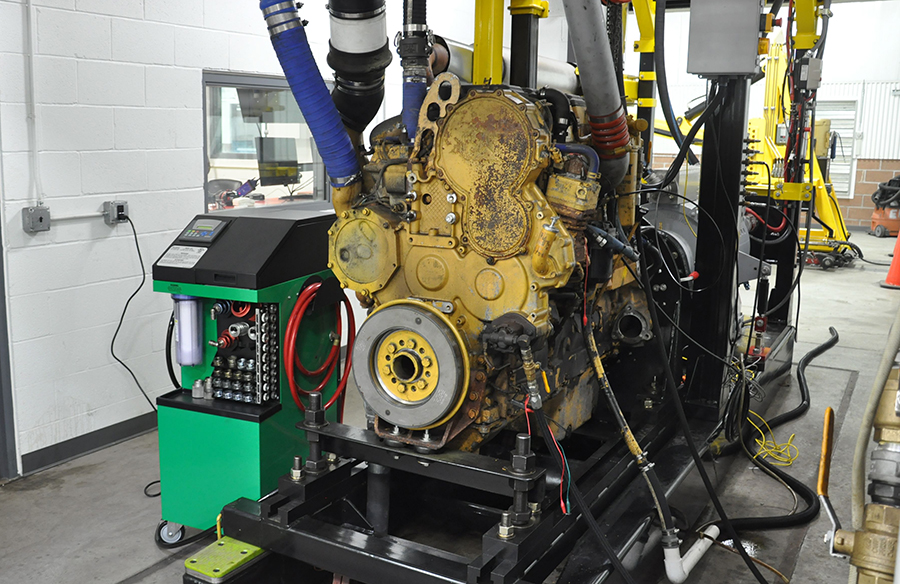
 It’s finally here! The CL8 Internal Engine Cleaning System has arrived at our shop. If you want your engine and oil to be really clean after your next oil change, we highly recommend taking advantage of this amazing new system. The cleaner your engine is on the inside, the longer it will run between rebuilds.
This system utilizes a thin oil with eight times the detergent of standard engine oils to flush out all of the old oil, carbon deposits, sludge, and other by-products of combustion and EGR soot from your engine. Once the oil in the engine is drained, the CL8 is hooked up to the engine and the ultra-high detergent oil is pumped through the engine. This is the beginning of a 4-cycle cleaning process. Then, the crankcase is filled with cleaning oil, the engine is started, and then it is idled for 5 minutes. The entire process takes about 21 minutes.
An engine wears out from the internal wear caused by its own dirt, which is a process of combustion, plus the fine dirt that gets past the air filter. This fine dirt is called “silicone” on an oil analysis. The root word of “silicone” is silica, which is a major component of sand. Now, with today’s engines using EGR and DPF systems, the amount of filth that an engine ingests is astronomical, and the back-pressure from the DPF is about 100 inches, which GREATLY accelerates the wear being done by the soot.
To put this into comparison, our quiet performance mufflers on the 2002 and older engines results in 6 to 10 inches of back-pressure in the exhaust system (versus the 100 inches of back-pressure from the DPF). The higher the back-pressure in the exhaust system, the more soot the piston rings have to ride on against the cylinder walls, which results in faster wear of the liners’ cross-hatch. Emissions also increase because of the combustion that is lost from the decrease in compression and from the accelerated wear of the liners. Once the cross-hatch is gone, the engine will begin to consume oil.
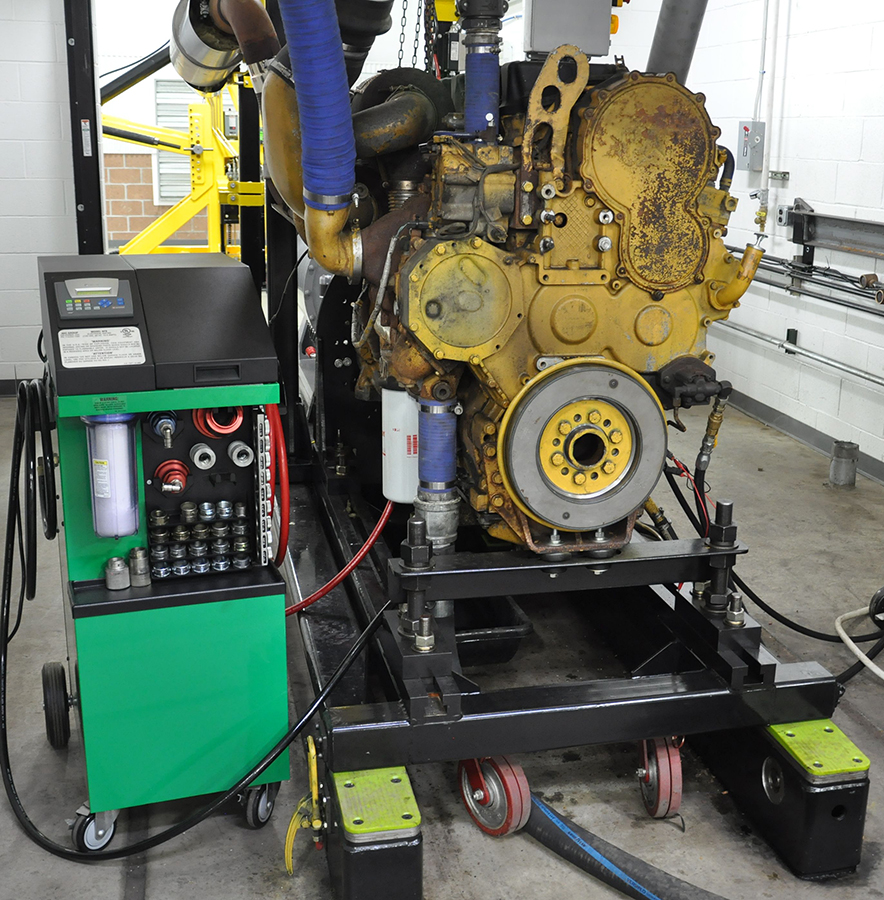 We currently have an Acert Cat test engine on our engine dyno. This engine has logged 1.3 million highway miles prior to us getting it, and we did an engine flush with the CL8 system. We found a reduction in the hydrocarbons, which means the combustion chamber is cleaner, even with all of the testing we are doing on it. The CL8 system is similar to the units that Snap-On and BG Lubricants sell to clean automatic transmissions, power steering systems, and brake systems, so this is not new to the automotive industry. But, it is new (and now finally available) for on-highway diesel engines in Class-8 trucks.
2002 and older trucks – what a great time in our country to own about 1,000 of these rigs! They are great trucks and deserve to be bought and refurbished by a select few owner operators. Why do I say a select few? These trucks will have in excess of a million miles on them. Because of this, they will require a lot of attention during the first few years of ownership to make them great again. These trucks sell for about $13,000 and up, and are best if bought by a mechanically-inclined person. If you’re not a mechanical person, I urge you to start reading, asking questions, and spending time at local garages and speed shops and learn to be.
I don’t care if you’re 50 years old, worked as an accountant or had a desk job, or don’t know the difference between a spark plug and an injector – you can still learn. I was 50 years old when I had to learn about computers. I used to write these articles with an ink pen and take pictures with a 35 mm film camera for the magazines. Now, I do it all on the computer, and yes, it’s tough for me! I don’t really understand these things, but I learn something new every day – and you should, too. So, if I can learn about computers, you can learn about the mechanical aspects of your truck.
In the past, I have written about Carl Kellner and DuWayne Ehrke and how they have purchased older trucks, taken them apart, rebuilt them, and now have great-running, reliable, fuel-efficient trucks. These two guys are owner operators – not mechanics! However, they took the bull by the horns and made things happen. Older trucks that have been well-maintained will make more money than a new truck. Having a 2008 or newer truck (that’s the year they started putting the diesel particulate filters on every new truck) costs an owner operator thirty thousand dollars per year in lost fuel mileage and replacement parts alone. And that’s not even counting the downtime, hassles, and premature engine wear, all of which are just as costly.
I recently spoke with an old friend that is the service manager of a fleet of 1,000 new trucks. He told me he has to contend with 40 breakdowns a week! That is 2,080 broken down trucks per year. How would you like to have THAT headache?! Not only does he have the broken trucks to deal with, he also has to hire nine drivers every week, or 468 drivers per year – and he has only one assistant to help him with this nightmare. Would you like to have his job or do you think you’re better off with just your one truck? Life is tough, but the more you know about how to fix your own truck, the easier your life can be.
I’m not asking you to know how to rebuild an engine, transmission, rear-ends, or install a clutch – it’s all of the other “little things” that a truck requires to keep it running in a smooth, powerful, and efficient manner. Please don’t be afraid to exercise that wrench on your truck and keep her running perfect. If you have any performance-related comments or questions, contact me through Pittsburgh Power Inc., in Saxonburg, PA at (724) 360-4080 or via email at bruce1@pittsburghpower.com.