


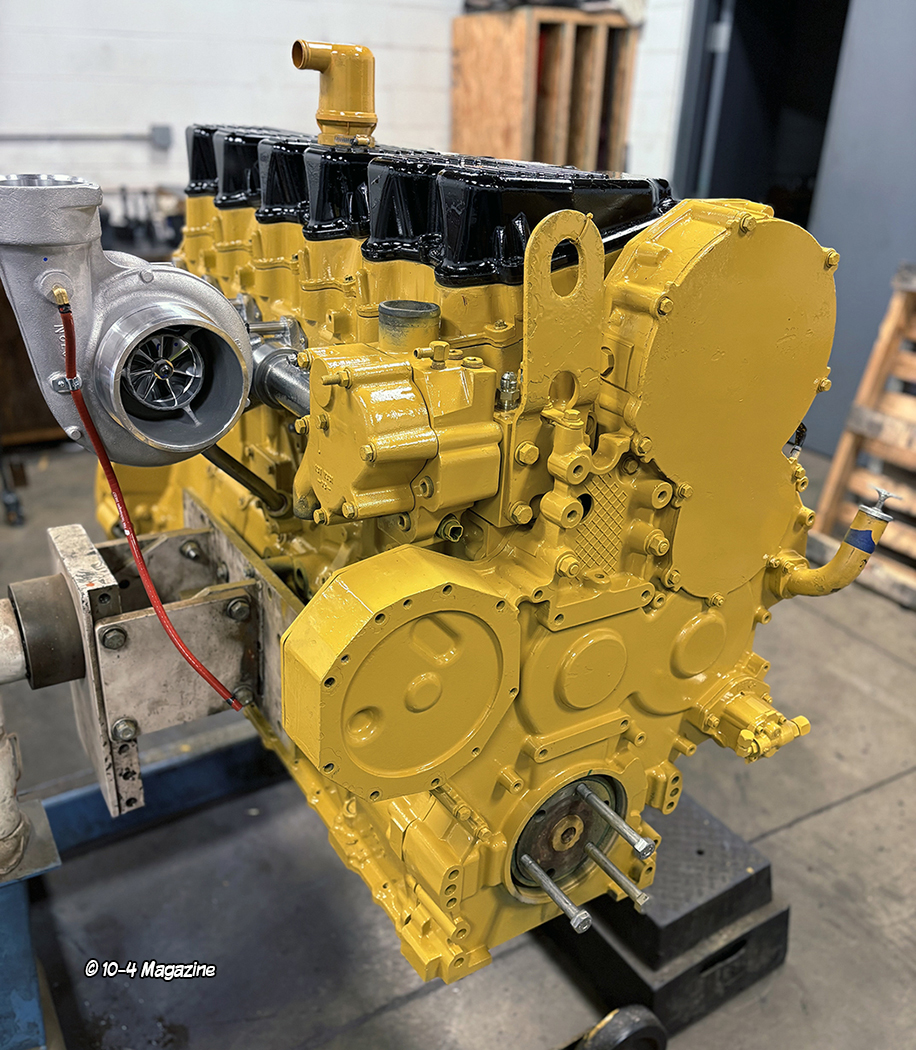
Every once in a while a project rolls into our shop that reminds us exactly why we started building engines in the first place. Here at Pittsburgh Power, we have spent decades developing engines that push the limits of durability, reliability, and performance. Over the years the industry has placed a tremendous amount of focus on fuel economy and attempted to squeeze every possible mile per gallon out of modern diesel engines. While that goal certainly has an important place, every now and then we get the opportunity to step away from the fuel mileage conversation and go back to our roots. This engine is exactly that kind of project. Fuel economy is not the goal here. In fact, fuel economy might be the very last thing on our minds.
This build is about one thing: power. Our customer plans to use this engine for sled pulling, a motorsport that demands incredible torque and massive horsepower delivered in short, violent bursts. When a truck hooks to the sled, the goal is simple: move as much weight, as far as possible, before the weight of the sled drags you to a stop. With that in mind, we started with a unique foundation for this build – a 16 liter CAT engine originally built for generator set duty.
Industrial generator engines are designed for heavy continuous loads and consistent power output, which makes them a very strong base platform. In this case, the engine left the factory rated at roughly 800 horsepower in its generator configuration. That is already a lot higher than the typical CAT C16 truck engines that are commonly rated in the 575- to 600-hp range. Structurally, these engines share the same core architecture as their on-highway counterparts. The C16 platform itself is a 15.8 liter inline six cylinder diesel known for its durability and high torque capability, which is exactly why it has become such a favorite among performance diesel builders.
But while the basic engine platform is similar, a gen set engine is a very different animal compared to what you would normally find sitting between the frame rails of a highway truck. One of the biggest misconceptions people have when they see a generator engine like this is assuming it can simply be dropped into a truck. That could not be further from the truth. This engine is absolutely not plug and play. In fact, nearly everything surrounding the engine is different and requires significant work to make it function in a truck application.
An engine built to be a generator has a different wiring harness, the ECM is different, the oil pan is different, the flywheel housing is different, even the accessory layout and supporting components vary from a traditional over the road engine. Converting an industrial engine like this into a high performance truck engine requires serious engineering, fabrication, and calibration. It is not something you can buy, shove into a truck, and expect it to work flawlessly.
Fortunately, challenges like that are exactly the kind of work we enjoy. One of the interesting elements of this build is the hardware we are installing. This engine will be running a PHD fire ringed head, an ARP stud kit, and a marine camshaft along with marine injectors. Marine components are designed to support extremely high loads and increased fuel delivery, which makes them particularly useful in high horsepower applications. More fuel, combined with the proper airflow and tuning, means additional horsepower. Getting all those elements balanced correctly is where engine building becomes both a science and an art, and our engineers have decades of experience.
Another detail about this engine is what it does not have – there are no Jake brakes installed on this motor. In an over the road truck that might seem unusual, but for a sled pulling application, they simply are not necessary. The engine’s purpose is to deliver extreme power during competition, not to assist with downhill braking on the interstate. Every component decision in this build reflects that purpose.
Once the foundation is ready and the major hardware is in place, our engineers begin the process of dialing everything in. Airflow, fuel delivery, turbocharger configuration, and timing all have to be carefully balanced. Around the shop we sometimes joke about adding a little extra “magic smoke,” but what that really means is applying years of experience to get the absolute most performance possible from an engine while maintaining reliability. Based on the platform, the fueling hardware, and the work our team is putting into this build, we fully expect this engine to produce just north of 1,200 horsepower.
That kind of output turns an already impressive engine into something truly special. And we have to admit – this one looks pretty incredible just sitting on the stand. There is something about a freshly assembled CAT engine that just looks right. The clean components, the serious hardware, and the sheer presence of a big diesel built for power make it hard not to stop and admire before it even fires up.
Projects like this remind us why we love what we do here at Pittsburgh Power. We build engines for many different purposes. Some customers are focused on efficiency and reliability, while others need durability for heavy work. But every once in a while, someone walks through the door who simply wants raw horsepower. This C16 build is exactly that kind of project. With a strong industrial foundation, serious fueling hardware, and the experience of our engineering team behind it, we expect great things from this engine.