


Here at Pittsburgh Power, we see a wide range of diesel engine problems come through our doors every day. From minor drivability complaints to full engine overhauls, no two jobs are ever quite the same. Occasionally, a repair turns into a lesson worth sharing here. Recently, one such case involved a Detroit Diesel Series 60 engine and a hard start complaint that uncovered a much deeper issue.
The Detroit Diesel Series 60 is one of the most well-known heavy duty engines ever produced. Introduced in the late 1980s, it was among the first electronically controlled diesel engines used in on-highway trucks. Its inline six cylinder design, overhead camshaft, and reputation for durability made it a favorite in long haul trucking, buses, and various vocational applications for decades.
The truck arrived at our facility under its own power, but the driver reported increasingly difficult cold starts. The engine would crank longer than normal before firing, and the issue had been getting progressively worse. The owner wanted to address the problem before it turned into something more serious. As with any diagnostic process, our technicians began with the basics. Fuel pressure tests were done, and they came back within specification. The electrical and starting systems were checked and showed no obvious faults. With no clear answer from external testing, we made the decision to dig deeper.
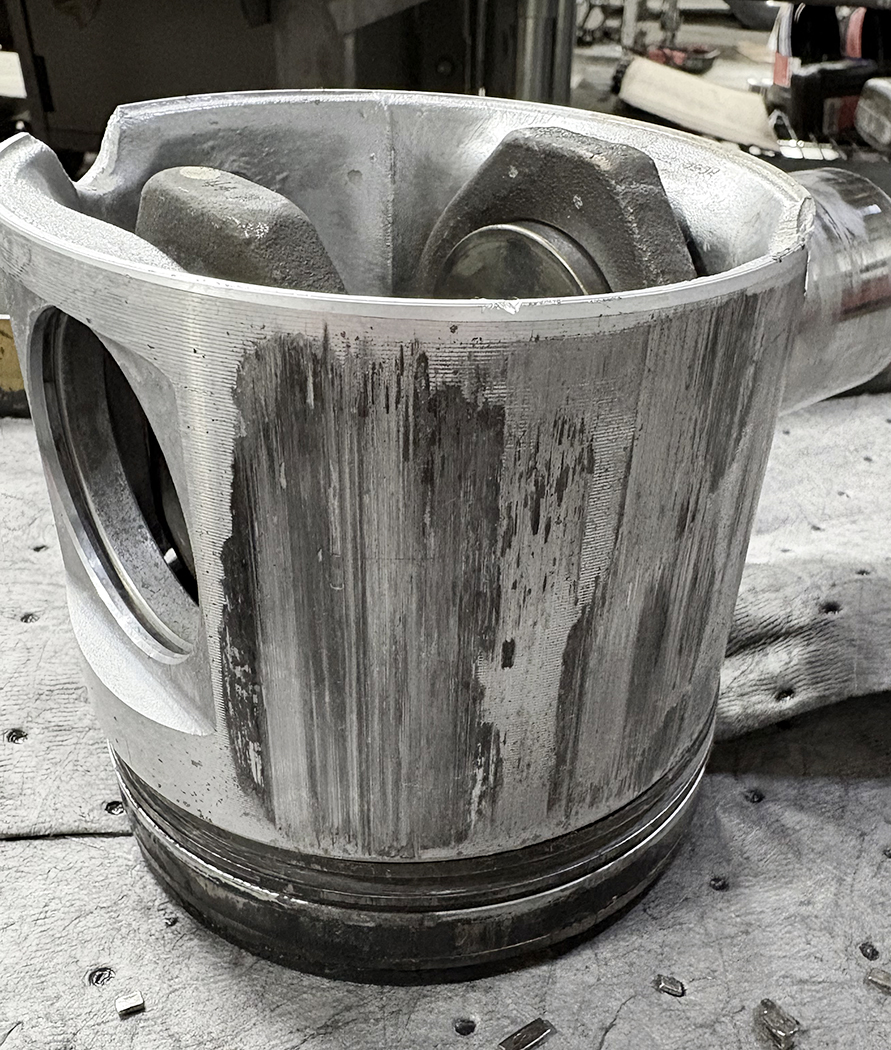
Given the symptoms, the next logical step was to pull the head for a visual inspection. What we discovered immediately raised some concern. Cylinder number three showed severe vertical scoring along the cylinder wall. This type of damage is not typical of normal wear and pointed directly to a mechanical failure. After getting authorization from the owner, we removed the piston from the affected cylinder. Once the piston was out, the root cause became obvious. The oil control ring had been completely destroyed. The ring was pulverized, and fragments had gouged the cylinder wall as the engine continued to operate. The cylinder wall damage was extensive and would have only worsened had the engine remained in service.
Piston rings play a critical role in any diesel engine. They seal combustion pressure, regulate oil on the cylinder walls, and help to transfer heat from the piston to the liner. In high compression engines like the Series 60, proper ring installation is absolutely essential. When rings fail, the results can be catastrophic. Fortunately, the damage was isolated. The remaining cylinders showed no signs of scoring or abnormal wear. The crankshaft, bearings, camshaft, and valve train were all in good condition. Before any repairs began, the engine was thoroughly cleaned and flushed to remove metal debris and prevent secondary damage elsewhere in the system.
The troubling part of this story came from the engine’s recent history. The owner informed us that the engine had been rebuilt not long ago by a small independent shop. Based on the evidence, we strongly suspect the oil rings were not installed correctly during that rebuild. Proper piston installation requires that all three rings are correctly seated in their grooves, evenly compressed, and lubricated before the piston is inserted into the cylinder. A good ring compressor is essential. If even one ring does not seat properly and the piston is forced into the bore, the ring can crack, weaken, or break.
In this case, it appears the top oil ring may not have compressed correctly. Instead of stopping and correcting the issue, the piston was likely forced into the cylinder. The result was a damaged ring that failed once the engine was put back into service. That failure led directly to the scoring we observed in cylinder number three.
At Pittsburgh Power, we have been using the same ring compressor for more than thirty years. It has never failed us. There is an old saying in this industry that they do not make them like they used to, and this job reinforced that belief. Proper tools and proven procedures matter, especially when someone’s livelihood depends on the reliability of their equipment. The repair process involved replacing the damaged piston and cylinder, restoring all the proper clearances, and reassembling the engine to factory specifications. After completion, the engine was primed, started, and tested. The hard start issue was completely resolved, and the Series 60 now starts cleanly and runs exactly as it should.
The moral of this story is simple but important. Choosing who works on your engine is not a decision to take lightly. A rebuild that seems like a bargain upfront can quickly become far more expensive if attention to detail is lacking. Diesel engines demand precision, experience, and respect for the process. At Pittsburgh Power, we believe doing the job right the first time is the only acceptable way to do it. This Detroit Diesel Series 60 serves as a reminder that shortcuts in the shop can turn into long detours on the road.