


The Swedes live in a magnificent country marked by significant geological events, multiple ice ages, and tectonic shifts creating a stunning landscape of rocks, valleys, and countless lakes, not to mention forests as far as the eye can see. In the trucking sector, this country, with more than 10 million people, is very lucky when it comes to trucks, with more flexible legislation than most of their neighbors. Swedish law allows longer trucks, and some owners have embarked on imposing projects that measure more than 80 feet long. These large surfaces offer an immense opportunity for both painters and fabricators to cover these traveling canvases with art.
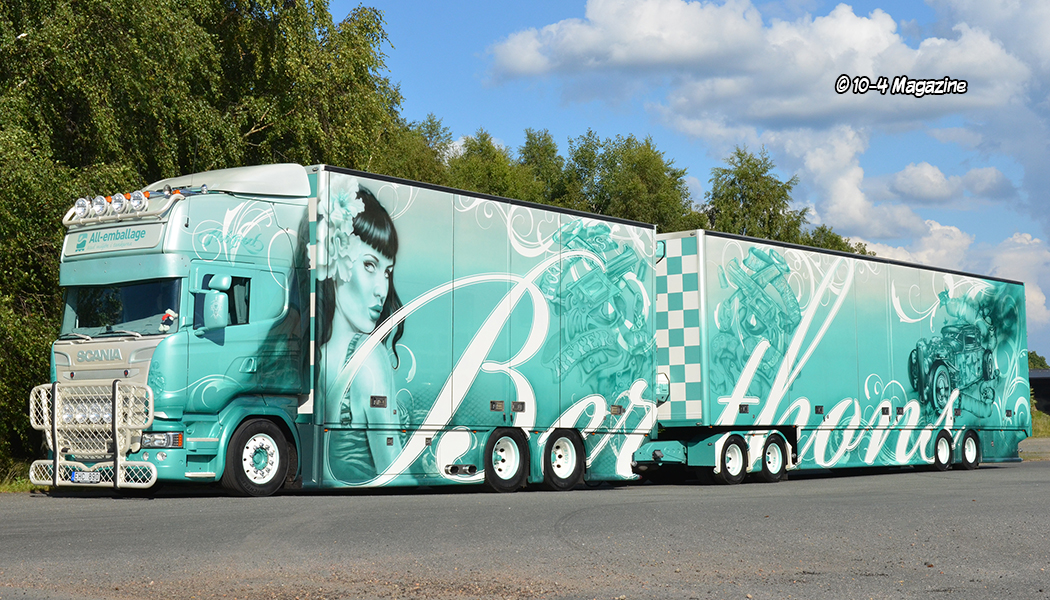
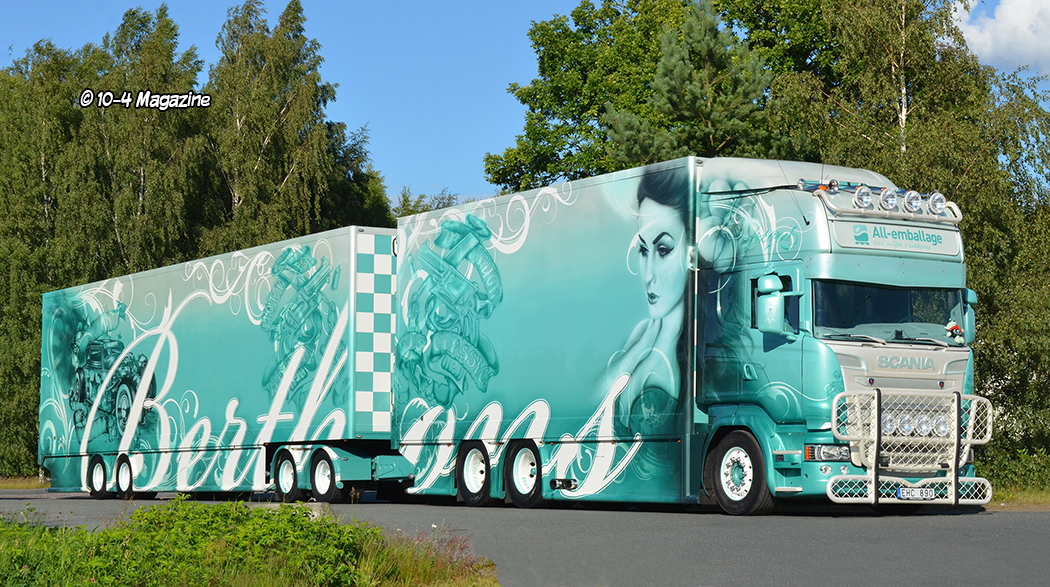
For his first custom truck, Berthon Jönsson wanted to make an impression by creating a beautiful Scania for the 25th anniversary of his company. Jönsson has two passions – his four dogs and cars. If the idea of having his canines painted on the sides of his ensemble came to mind, it was quickly abandoned in favor of the genesis of his favorite type of modified vehicle – the hot rod. Started in the 1950s, these types of modifications showed up in Swedish cars shortly thereafter, as the hot rod culture was embraced. The noise, the bad boy image, the feeling of freedom, of defying prohibitions and laws, appealed to Berthon during his childhood and later adolescence, and this passion never left him.
The vehicles of this culture are, by definition, from before 1949. Beyond that, in Europe, they are classified in the “Custom” category. The base used is essentially an American car, most often a Ford, and commonly a Model T, Model A, or a Model B, dating from the 1920s through the 1940s. The avowed goal of these transformations is for the car to be fast, lightweight, and loud! The first models caused many deaths because of their lack of safety features and high speeds, so later builders modified their machines for better handling.
Hot rods were often customized to the owners’ desires – the hood was pierced with louvers, the roof was chopped or removed, and the fenders were cut down to just two thin strips of metal or removed. Another exterior modification was a lowered chassis and the diameter of the front wheels reduced to cut wind resistance and lower the vehicle’s center of gravity. In addition, in an effort to get noticed, most hot rods were painted in flashy colors, with the most common being yellow and red, or possibly black with brightly colored flames.
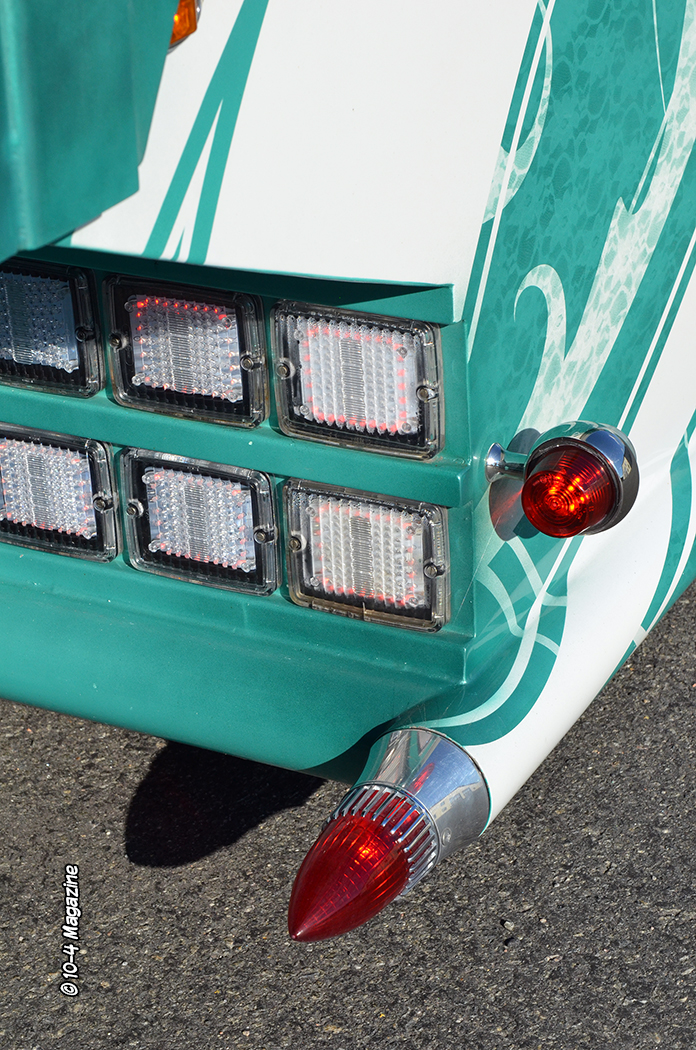
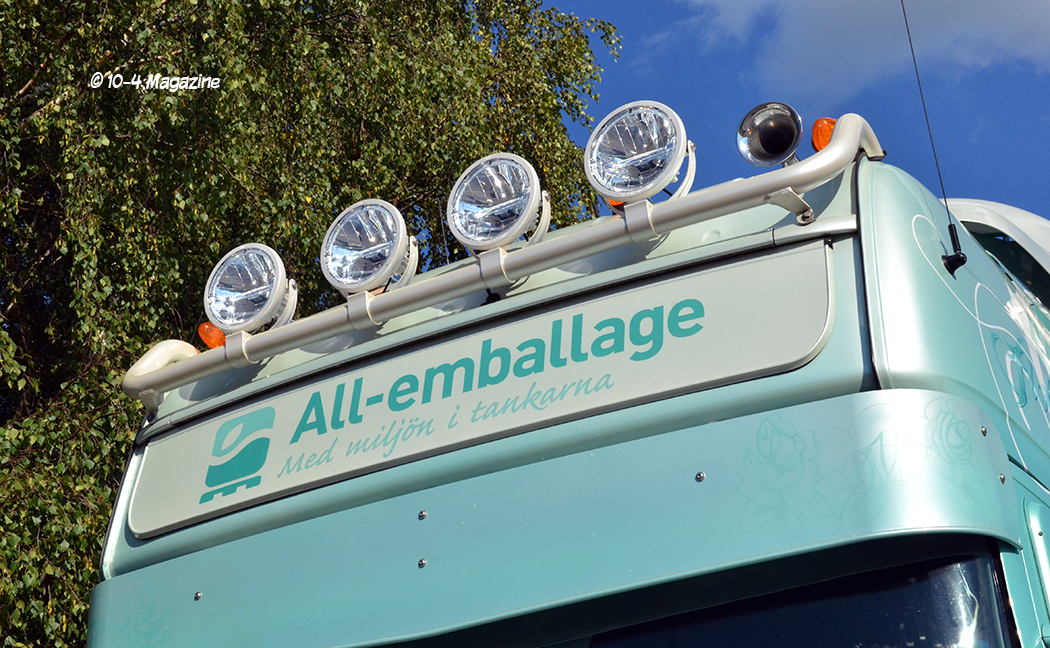
For Berthon Jönsson’s Swedish project, flashy colors were useless, as Berthon wanted his combination to be as tasteful as possible. The three Dutch specialists he hired to do the work agreed with Berthon about how it should look when finished – clean and classy. Those builders were Steve’s Place for the body work (the rear bumpers were decked out with real 1957 Cadillac lights), MW Designs for all the interior and exterior decoration, and Special Interior for the inside spaces. Berthon teamed up with the best in the custom truck scene in his area for this project, for sure.
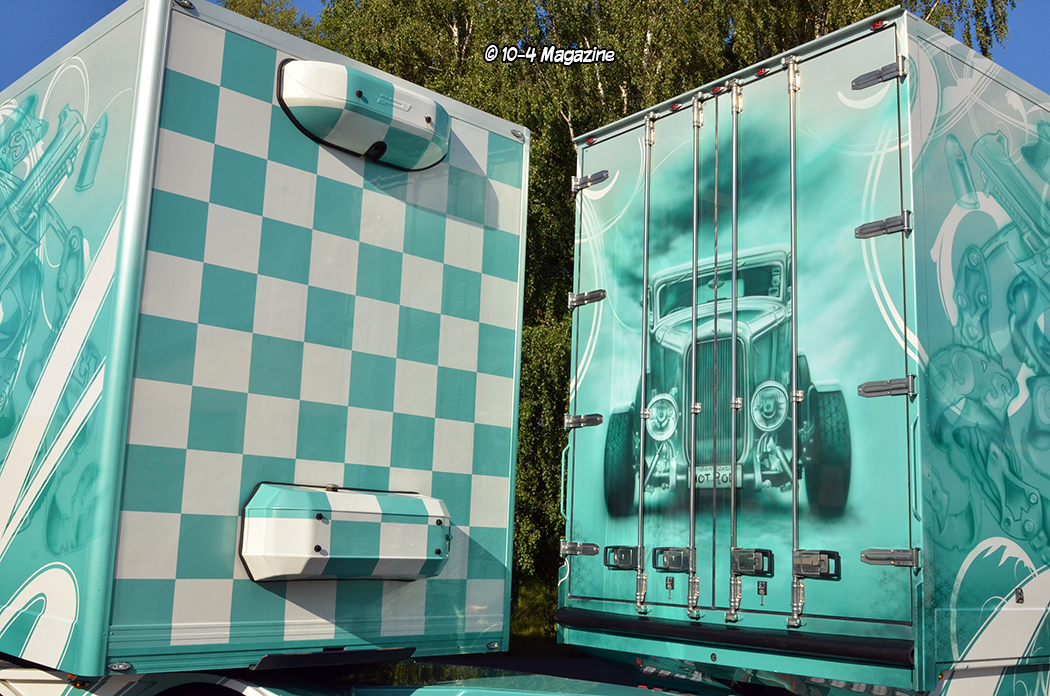
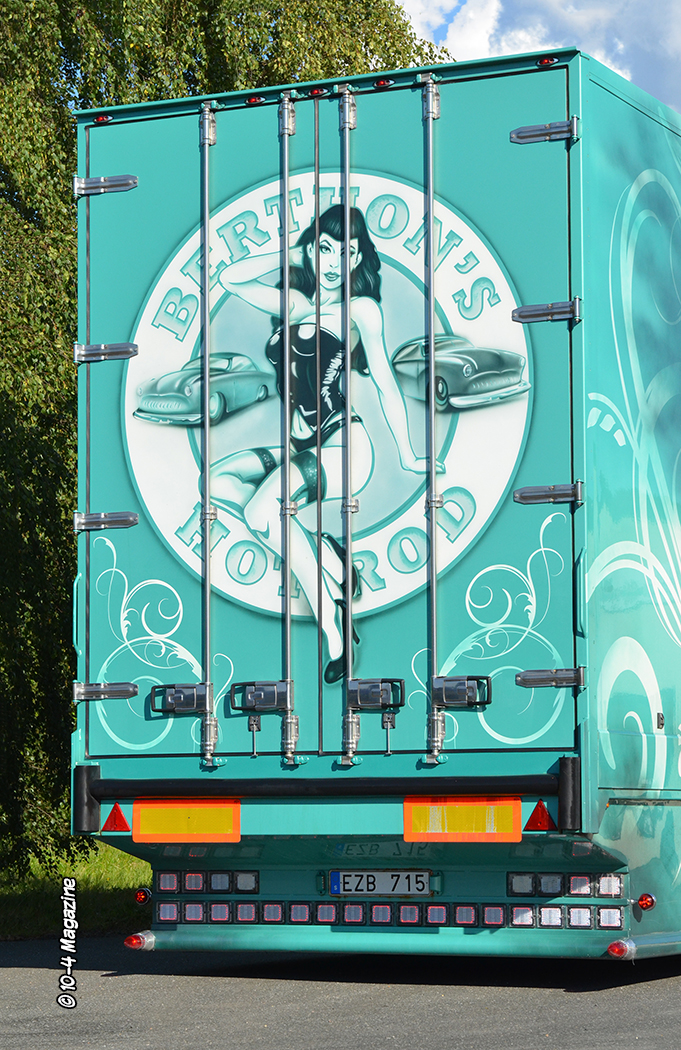
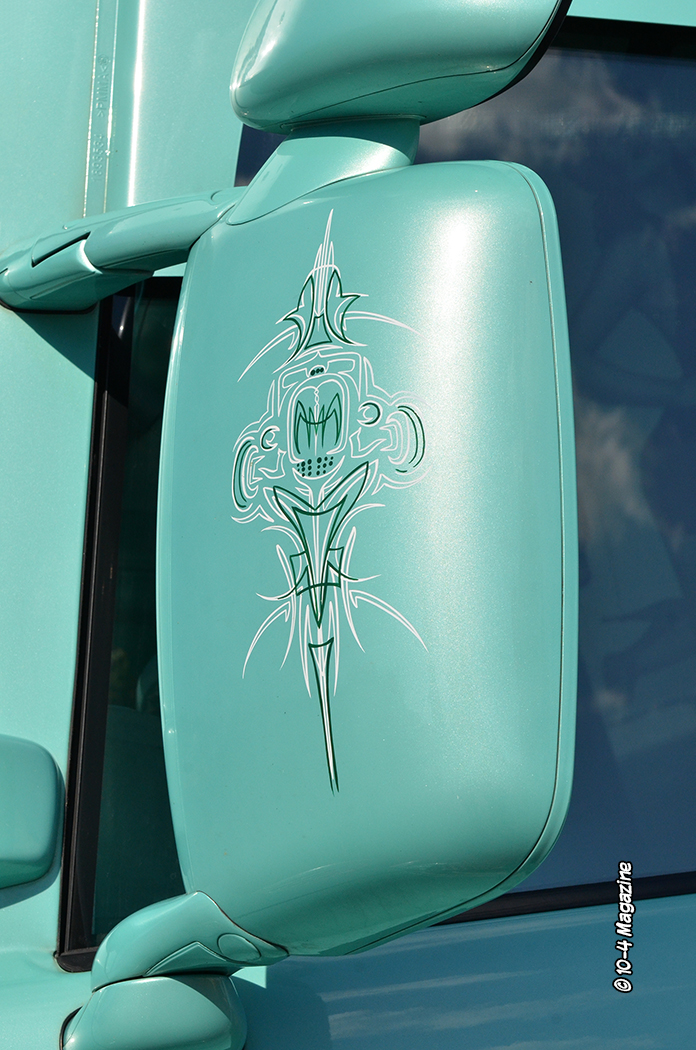
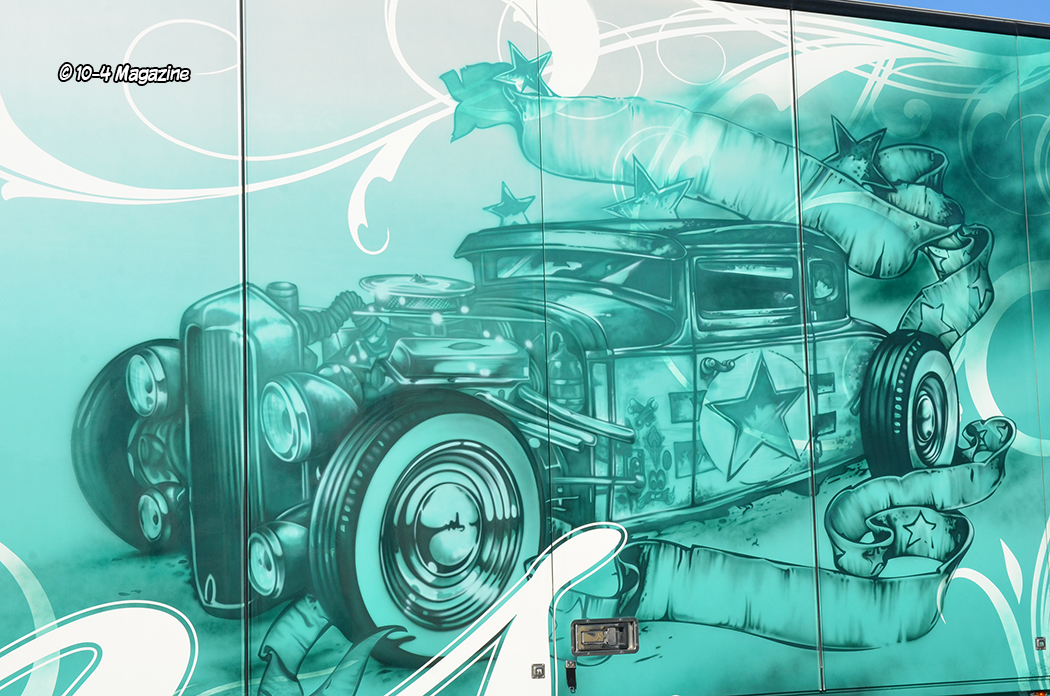
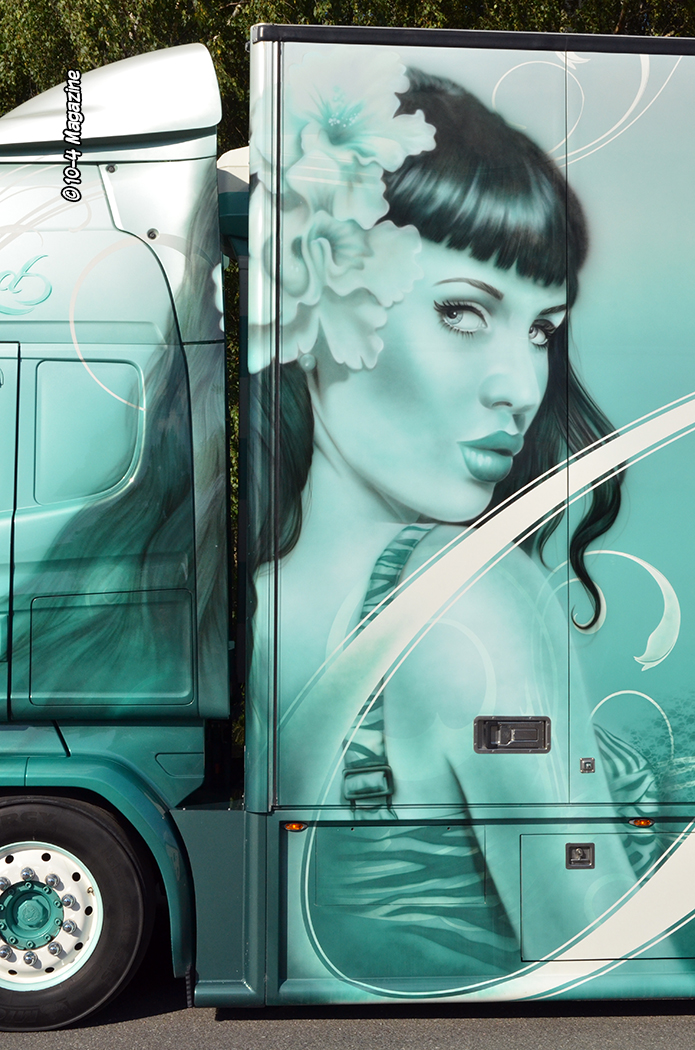
By the time it left Steve’s Place, the entire unit already looked great. But, from there, it went to MW Designs to be painted, where it really came to life. Covering the entire combination with a mix of pin-up portraits, vehicles, popular sayings, checkers and other imagery from the hot rod era in sea green and pearly white, this rolling billboard is a sight to behold. On each side, a pin-up girl, an essential feminine element of hot rod culture, is visible on the cab and the front of the body. Other murals depict tattoos and artwork of the time.
On the trailer, along with the other iconic art, the quintessential hot rod is shown in all its glory, along with other images and vehicles on the back of the truck and trailer. On the lower part of the rig, the Berthons name appears in a prominent script along the entire length of the combination. The result is a unique look not seen on the usual trucks on the road or at truck shows – even the fanciest ones in this part of the world.
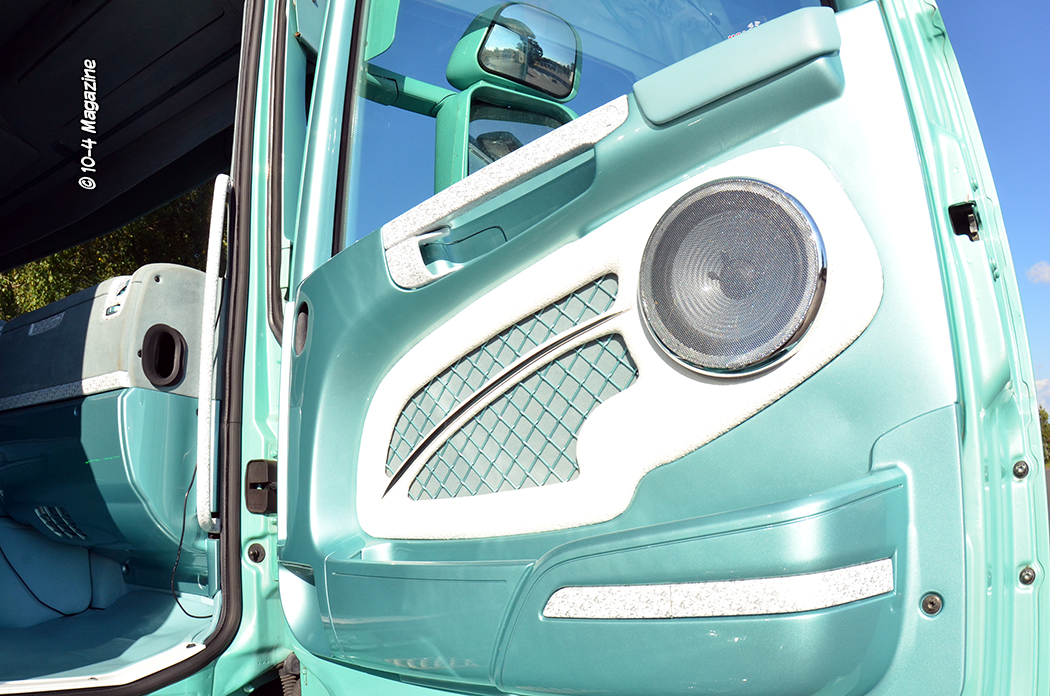
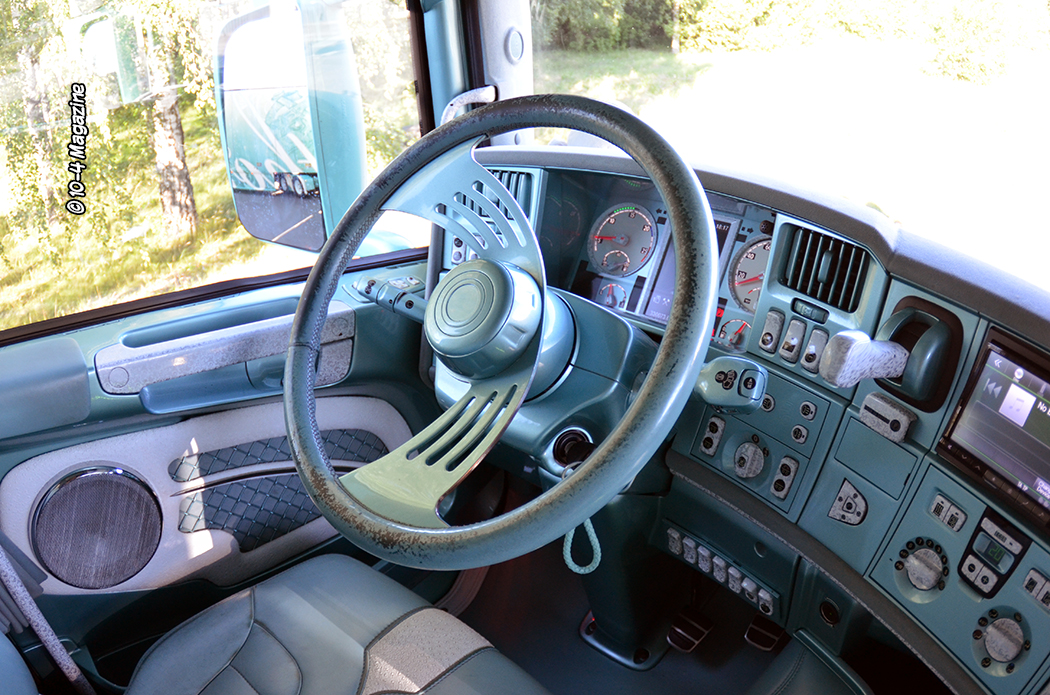
The inside of this rig, done by Special Interior, got extra attention, too. Berthon wanted something never seen before, using colors identical to those of the exterior, and noble materials. White ostrich leather and sea green Alcantara, a synthetic material made to look and feel like suede, dominates the interior. From floor to ceiling, nothing was left to chance, with more reminders of the era, like pin-ups, pinstripes, and neon.
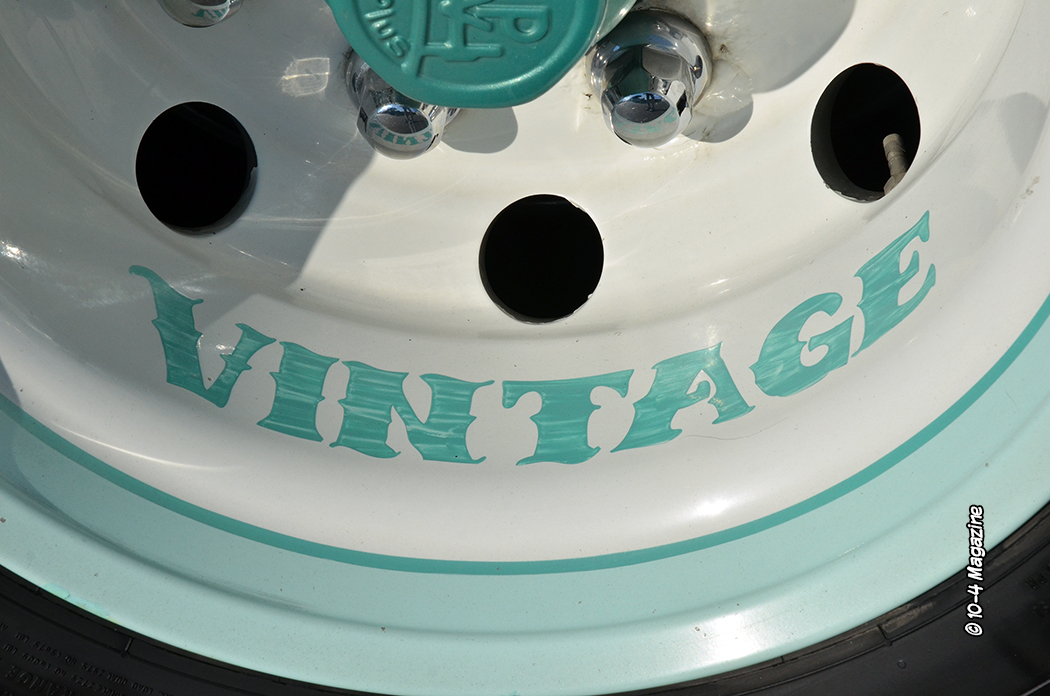
Thanks to our French contributor, Xavier Stefaniak, for this feature and the photos. The pictures tell the story of the detail on this truck (even the wheels are painted and lettered), so we will let the pictures do the rest of the talking for this cool Swedish masterpiece!