


Where has this year gone? It feels like just days ago we were celebrating Christmas, then the inauguration of a new president, and here we are halfway through summer! Kids will be returning to school, and the dog days of August will give way to cooler, more seasonal, days. Don’t give up hope yet – we have been through too much to throw in the towel now. If you are like me and the air conditioner doesn’t work in your old classic ride, you might want to reach for another fresh, dry towel. You just have to do what you can to look “cool on the stool” out there on the open road.
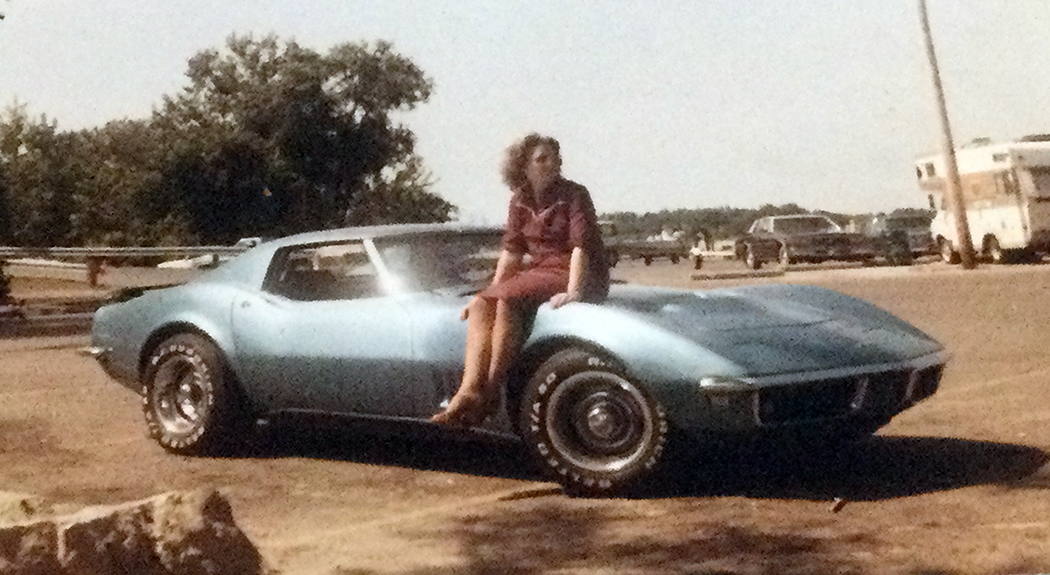
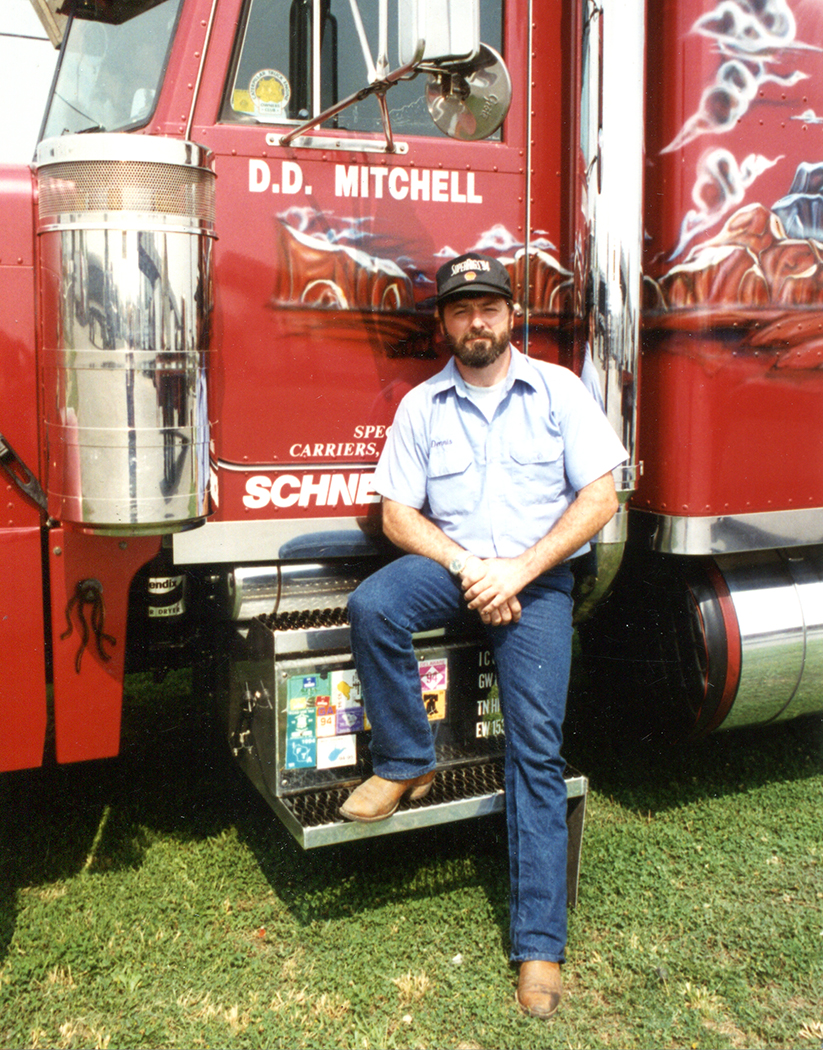
August is the time when many small towns hold their summer festivals and often car or truck shows. It’s always a treat for me to attend these events and to talk with the owners of those cool “old” cars, reminiscing of our earlier days. I’m of the age when most of us had at least one muscle car. Even if it wasn’t fast, we drove them like they were. Sometime in the late 1980s we started to see a change with the presentation of big trucks, along with the jacked up or lifted four wheel drive pickup trucks, at these events. In 1989 I traded in my fully restored 1968 Chevy Corvette with a 390-hp 427 for a 1986 Peterbilt 359. I think someone said to go big or go home. Just for the record, I think I went whole hog. However, those early days were crucial in the image we presented to the world.
This may be hard for a few of our readers to believe, but I think this was the start of the good ole’ days. Deregulation had set the stage for new trucking startups and owner operators were making a big impact as leased operators began filling the need for independent contractors, thereby strengthening many of the mega carriers we still see today. We were also starting to see aerodynamic styling in Class 8 trucks. Fuel economy became a thing, along with fully stocked chrome shops at almost every truck stop.
Along with all that shiny stuff, most of them still had a coffee shop or restaurant serving the professional driver, as well. Drivers greeted one another by their CB handles, not by their first name (many of us never knew what their given name was even though we had known them for years). Cell phones were not prevalent yet, unless you count the bag phone. Yes, I had one, but I didn’t use it unless it was absolutely necessary. The CB (Citizen Band Radio) was still king, and America was listening. I think I bought my first radio in 1976 when my older brother and I made our first cross country trip. We knew if things went wrong we could count on a trucker helping us out in our time of need. It’s difficult to believe, but in the early days, “drivers” or true “truckers” were known as the knights of the highway.

I have to ask myself what went wrong. How did we get so far from those good old days to where we are today? How many drivers would like to go back to this simpler time? Here, here, here… sign me up! If you’re wondering how I got to thinking along these lines, let me explain. The president recently signed an executive order stating all drivers not only needed to read and understand English but must also be able to exhibit those skills when asked by DOT. I don’t have the official count, but many are claiming it took a great number of drivers off the road. I can confirm that some states are now randomly stopping drivers to clarify that they can in fact read and comprehend English, but some are complaining that the regulations are too strict, saying, “If they can drive, why do they need to speak in a different language?” Well, that brings up another question… who said they can drive?
Those of us who hold a current state issued CDL have completed the requirements prescribed by our issuing states. They are supposed to be unified and adhere to federal regulations, but how can we be sure they are not just selling licenses? Should individual states recognize foreign licenses or give credit for training not acquired in the USA or under questionable programs? There is an argument for unified or at least minimum qualifications and I’m all for equal opportunities, but only within reason, and not at the cost of safety.
I mention this because I needed to renew my CDL this year. After years of driving and tons of experience, I still got the drivers manual out and brushed up on the test questions. And it never fails – there are a few questions that can have more than one correct answer, but the test administrators are just looking for the “book” answer. It is amazing how much we think we know, but when the time comes, we can’t recall the correct answer. That’s when we should be relying on experience.
The last time I had to renew my license, they offered the test in over 20 different languages. Really? Our road signs aren’t in 20 different languages – they are in English! Our DOT officers don’t speak 20 different languages, so let’s see if we can’t simplify the whole process. I for one completely agree with our president – the official language of the United States is English, and all of our road signs are in English, so every commercial driver must have a basic ability to understand those signs… for safety’s sake. They must also be able to interact with law enforcement, either by conveying concerns or relaying vital information, in the event of some kind of emergency. This just makes common sense. Is that asking too much?
When I went to renew my CDL, I was a little nervous about the test since I don’t use an electronic logging device. I was not sure if there would be questions about ELDs on a normal CDL driver’s test. That’s right, you read this correctly. I registered with my secretary of state, made an appointment to be tested, and then presented myself with a current CDL to the administrator at the time of testing. Like I said earlier, I was a little apprehensive about the test, as I am getting older and sometimes my memory doesn’t keep up with my ambitions.
A sure sign of aging is when a person starts carrying a notebook for daily assignments. I like to refer to it as my personal mileage book – it tells me where I have been and how long it took me to get there. The reality is, when I got to the counter the administrator never even looked up. He asked for my license and told me to read the top line of the eye chart. I had difficulty the first time, since I wear glasses with corrective lenses, so he told me to put them back on. I read that top line and he looked up and asked, “Cash or check?” After paying my $85, he said, “Here you go. Your new license will arrive by mail in 10 to 15 days.”
That was the whole ordeal. There was not one single question on anything to do with trucking. Now, to be fair, I have had a commercial license since before the introduction of the CDL. My first chauffeur’s license was issued in 1979, and I had a military license as early as 1976. Before that, I had a farm license, issued by the county, to operate farm equipment of all sizes. It may be hard to comprehend, but 14 year old kids were driving grain trucks and trailers to school during harvest season to deliver crops at the local elevators. There have been times during my tenure where the record of my driving exploits read out like the “Who’s Who” of motorsports, but that was a long time ago, and I have gotten over the “how fast those trucks will go” thing. At present, my driving record is clean, or at least it doesn’t show any adverse infractions.
I have been reassured that the state did look at my previous records and credited me for safe operating, therefore no test was required. But I am still a bit perplexed about not testing drivers when a written test could point out deficiencies in training or experience level. Too many drivers have been licensed overseas and transfer here to advance their driving careers or for monetary gains. However, the difference between driving in Eastern Europe and the United States is huge, with the starkest difference being which side of the road we drive on!
There is also a speed differential between driving in the US and Europe. The length of our trailers and, for the most part, the fact that we still run conventional tractors and not COEs, is very different, as well. Here in the US, we typically run tractor-trailer setups, while European countries run truck and trailer configurations (lorries). Our road width and lane restrictions can also give a false sense of confidence. I often see drivers rolling at 70 mph or more, in heavy traffic, wearing bed clothes, with their bare feet on the seat or near the dash, not even close to the controls. With their seat reclined way too far back, they follow the truck in front of them too closely. We used to call this tailgating, then it was jokingly referred to as “drafting” – now it’s the precursor to a rear-end collision.
I would like to state for the record, if you are wondering, the center median is not a parking spot if the truck stop is full. It only takes a split second for another driver to be distracted and lose control. This can not only destroy your equipment, but in the most extreme case, it can contribute to a fatality on the road, so just don’t do it. End of rant.
To get back to my original point, I just got back from a run to the west coast originating here in Michigan. During this trip, I was purposely watching to see if there was any difference in the number of careless drivers. I did notice across Nebraska and Wyoming that the average speed was slower than a few months ago. The drivers there appeared to be more diligent and attentive. I have no way to tell if things were any safer or not, but it does look like some type of improvement is happening. I do believe there should be some sort of refresher course for seasoned drivers, as well. The equipment we see and operate today is vastly different from the type and style we drove back in those “good ole days” I spoke about earlier.
As drivers, we also need to get updated or rebooted to comply with the latest technology. On a side note, this would be a great time for the federal government to allocate additional funds for certified technical assistance or advanced training in conjunction with the commercial driver’s license training programs. If I was in charge I would place a premium on older drivers with excellent driving records to mentor or instruct in that training. That’s how I learned nearly 50 years ago – first by riding in the jump seat, and then later transitioning to the driver’s seat. There really is more to driving a truck than just holding the steering wheel.
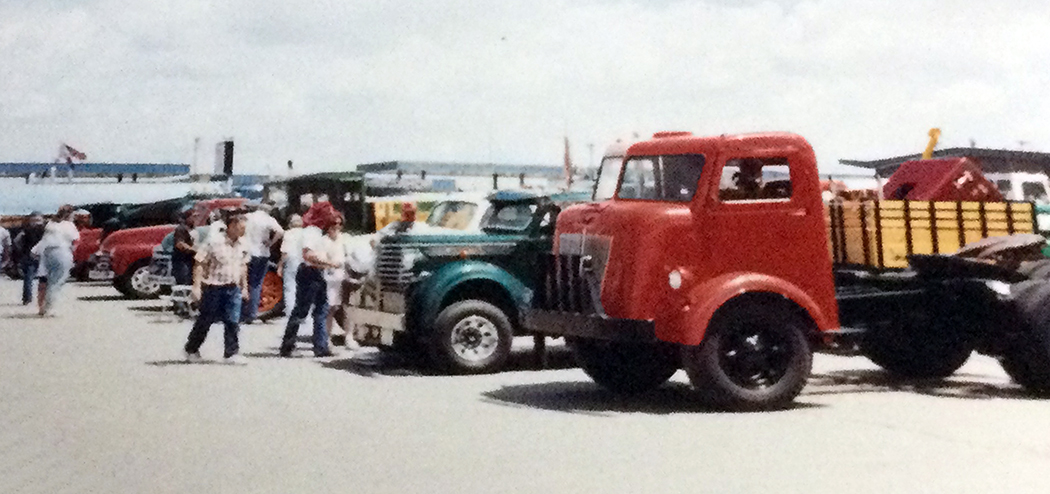
Back in the old days, there were no simulators or computer screens, and when at work (driving) you can bet I never looked like I was going to bed or just got up. The Wagon Master (my father-in-law and mentor) made certain I was completely dressed and wearing boots, even when in the jump seat. We hauled cattle in those days and never knew when we would have to address something in the trailer.
As you have heard me say many times, “Prior Preparation Prevents Poor Performance” (or something like that). Another good lesson is, “Money talks, and BS walks” – just be sure before you step in some you aren’t wearing flip flops or in your bare feet! Let’s be safe and courteous out there on the highway this summer, and if you get the chance, take in a car show or two, 10-4!