


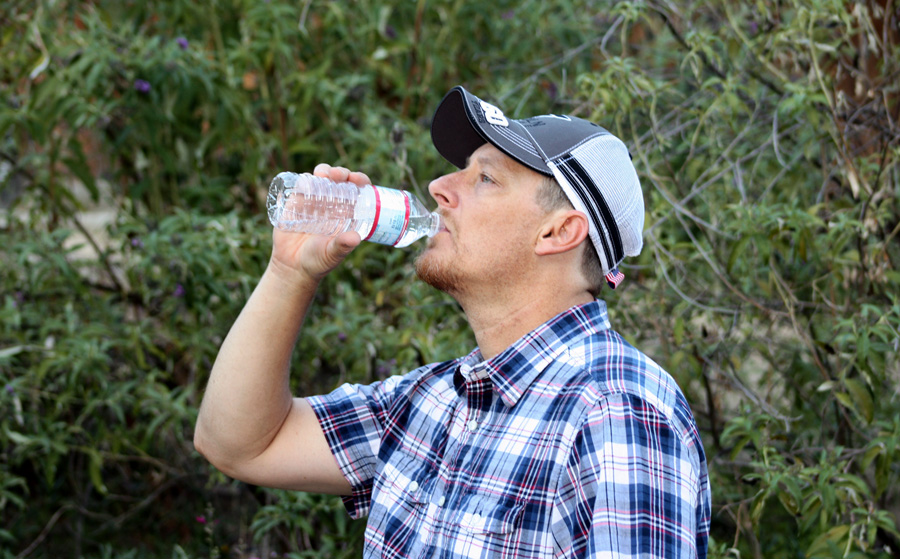
 It has been super hot and dry in many parts of the country this year, with drought affecting the Midwest like nobody’s business. Just like crops, people have to receive enough water on a regular basis to stay healthy. This is called hydration, from the Greek word for water. When you lose more water than you take in, it’s called dehydration. A young man cutting trees at my house the other day in 95 degree weather refused my offer of water, telling me, “The more you drink, the more you sweat.” It occurred to me that he’s probably not the only guy in town who believes that – it’s not true. You will sweat until there’s no more fluid left, become severely dehydrated and die. Human beings are made of about 75% water – that’s why replacing the fluid is so important – even life-saving!
How do we lose water? We normally lose water every day through breathing (the water we exhale is the condensation we see in our breath on a cold morning). Urination and moving our bowels are other mechanisms for losing water – the toxins and wastes we don’t need get filtered out through our kidneys and intestines and water goes with it. We are able to keep cool because we sweat – the sweat evaporates, keeps our body temperature normal, and helps us feel more comfortable. An abnormal loss of water includes vomiting and diarrhea, excessive sweating, or having a large burn. A person might sweat because of very strenuous activity, fever, or prolonged exposure to sun and/or heat. A combination of strenuous activity and high temperature can be especially dangerous.
How much water should a person drink every day? The prevailing wisdom since I was a kid (and that’s a long time) is that you should drink 8 eight ounce glasses of water a day. Recently, there has been a little more in the paper and on TV saying that there is no real scientific evidence behind that. There are complicated formulas you can use to figure out how much water you need, but it is generally considered healthy to drink eight glasses of fluid per day. Coffee, tea and milk are all fluids, and they can all be counted in those eight glasses a day (not just water).
Perhaps the best way to think about having enough fluid on board is to be aware of your thirst. The body uses thirst as a signal to warn us to drink more, that it doesn’t have enough fluid. The goal should be to not feel thirsty; this way, you know you are hydrated. As soon as you notice you are thirsty, drink something non-alcoholic and sugar-free (alcohol and sugar soon make you feel thirsty again). If a person is feeling thirsty all the time, there might be something else going on, like diabetes (too much sugar in your blood makes you feel thirsty no matter how much you drink). This is something to get checked out with your health care provider if it is happening to you regularly.
How do you know when you are dehydrated? Signs and symptoms of mild to moderate dehydration include headache, dry mouth, drowsiness, dizziness or light-headedness, less urination, and thirst – this is usually a reliable sign for adults, but children and elderly people sometimes don’t feel thirst as readily as adults and don’t realize they are getting dehydrated. If babies and small children are dehydrated, they may have fewer wet diapers or they might not have tears when they cry. The signs and symptoms of severe dehydration include extreme thirst, confusion and/or irritability, lack of sweating, very little or no urinating (and very dark in color), tenting of the skin (it doesn’t go back to its natural position when you pinch it – it stays raised), and rapid heartbeat and breathing.
Mild to moderate dehydration can usually be treated at home or on the road by just drinking more fluid – water and electrolyte replacement drinks (Gatorade is one brand) and, of course, chicken soup. Electrolytes are salts and minerals that your heart and muscles need to function normally. If you are sweating a lot during some activity, it’s best to drink an electrolyte replacement drink. Drinking plain water lowers the amount of sodium (salt) in your blood which can lead to serious heart problems.
If the dehydration is caused by excessive vomiting and diarrhea, you have to get that stopped before you can rehydrate. This may involve a trip to your health care provider. If nausea and vomiting are too severe, a person generally can’t keep down fluids and may need to have an IV started – fluid that goes directly into the blood stream. Severe dehydration is a medical emergency! This means either calling 911 or having someone take you to a hospital. Children and elderly people get dehydrated more quickly than your average adult, so if your child or parent/grandparent is sick, keep an eye on them to make sure they don’t get dehydrated.
The best way to prevent dehydration is to keep cool. Stay indoors with a fan or air conditioning when necessary. If you have to be on the side of the road for a long time, stay in your truck and out of the sun. Make sure to carry bottled water and electrolyte replacement drinks with you on long trips. When you are exercising a lot, make sure to stop and drink every few minutes. So, now that you’re finished reading this, if you don’t already have extra water in your rig, get some. If you are already prepared, way to go! Don’t worry – summer will be over before you know it. In the meantime, take a few extra steps now to ensure that you don’t get dehydrated.
1 Comment
Nice job, Norma! Thanks for your candid insight, and making complex health hints seem easy to digest!