


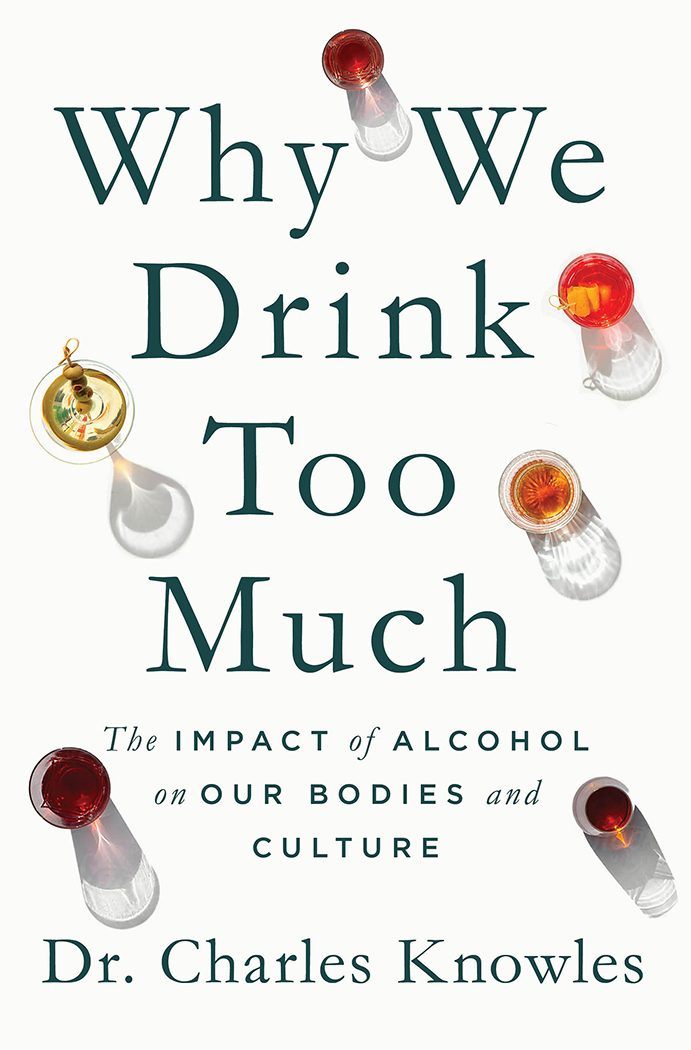
It seemed like a good idea at the time. You had a drink. And another. Someone ordered a round and it’s always polite to reciprocate, right? You toasted to the future, to friendship, your families, and to your health – but you didn’t feel so healthy the next morning, ugh. In the new book “Why We Drink Too Much” by Dr. Charles Knowles, you’ll see why you can’t wait to do it again. So, you had a few drinks on New Year’s Eve, or more than a few, and you’re not alone – in 2018, the average adult on the planet drank more than 1.5 gallons of ethanol, which is “an ingredient in drinks.” That’s equal to more than 206 cans of beer per year, per person. Monkeys drink alcohol. Elephants do it, insects do it, and tree shrews do it. Humans have been drinking alcohol for tens of thousands of years. But why? Somehow or other, you had to “learn to drink,” Knowles says, and once you did, drinking was reinforced because it was fun. Your brain was rewarded with a rush of dopamine. The behavior motivated you in one of two ways: if you drank to celebrate or because everyone else was drinking, your “externally generated motivations” were triggered. If you were drinking to relax, to self-soothe, to forget or feel better, your “internally generated motivations” were working overtime. Inside your body, your organs are toiling hard, too. Alcohol goes to your stomach, then to the liver, which processes as much as it can. What it can’t process leaks into your circulatory system, to your heart and your brain, and you get drunk. And maybe you want to stop, but you’re not sure how. Knowles, a surgeon, offers some advice for those who drink too much. And he ought to know: some ten years ago, his “thirty-year relationship with alcohol” nearly made him take his own life. New Year’s Eve was fun. New Year’s Day, not so much. You knew that was going to happen, but you drank anyhow and “Why We Drink Too Much” explains why. The first thing you’ll want to know, though, is that it’s not the breezy book you might want. The author dives deep into science, neurology, biology, and ancient history, taking the facts slow, so they’re easy to understand. He doesn’t scold or belittle anyone, but he’s quite firm when he tells readers what alcohol can do, long-term. Throughout his narrative, Knowles answers questions that readers want to know about biology, cravings, and why some people can be “social drinkers.” This is all wrapped in a stunning biography that will resonate with readers who need it, and with those they love. Before you head to that next party or celebration, check out “Why We Drink Too Much,” and if you’re worried about yourself or a loved one, reading it might be a good idea now.