


The golden days of summer have passed and that autumn air is refreshing. The leaves are cloaked in passionate reds, golden ambers and russet browns. Our children will spend hours raking them up only to have a few minutes of fun running through them and hiding from each other before they have to redo their efforts and rake them up again.
As a child in Michigan, we had many large maple trees in the front yard, and every year it was our job to clean them up and haul the massive mounds of leaves to a burn pile. Dad would cover it with a tarp to keep them dry until around Halloween, when we would have a huge bonfire. Neighbors would come from miles to roast hot dogs, marshmallows, and drink fresh cider. It was our country version of a block party.
There would be many cars, pickup trucks, farm tractors and bicycles parked in dad’s hay field. After we were full of hot dogs and cider we would load up on one of the hay wagons and dad would pull us all over the neighborhood with his old Case farm tractor. We would ride through farm lanes and down the dirt county roads laughing, singing, and snuggled under the straw – everyone had a wonderful time. A few may have stolen their first kiss and secretly held hands under a blanket. I wouldn’t know, I’ve only heard the rumors.
That was a simpler time then, but the lessons learned carried me through a lifetime of opportunity, friendship, and education. Sometimes that slower pace gives us more time to reflect on what’s important in our lives. Money can’t buy happiness or gain you respect, but it can purchase things to make our lives easier. In the modern world, where we are all racing around, so involved in our own little circle of activities, we seldom take time to look around or take notice of the simpler things that hide in plain sight.
This month I got a message from an old friend in the trucking business. What he sent me was an article penned by someone named Doc Blackman, and the premise of the piece is focused on an old thermos found resting on the dash of their father’s Peterbilt, which had spent many years parked in the pasture. It wasn’t until after he (the driver) had passed that the sons found a note written to them giving instructions on life. “If you are reading this, my miles are done. Don’t cry for me, roads don’t end, they just change drivers. This thermos is yours now. Keep it full, keep it hot, and keep it going. That’s all life ever asks of us.” Wow! How many of us have wondered what the meaning of life is and what it has in store for us?
As a driver, we all have time to think, to ponder, and to run scenarios in our heads. What is the meaning of a life well lived? Who gets to set the standard and judge us by our accomplishments? In my life, only the Lord will judge me, and I hope my accomplishments will be satisfying enough to gain passage to the everlasting kingdom of heaven. The years we live in this world are relatively short, and even though they comprise a lifetime, we will be gone far longer than we are here. The legacy we leave may be the best indicator of who we were. I’m reminded of this every time I walk through my backyard. I see a few of you wrinkling your brow and wondering, “What does his back yard have to do with a legacy?” Stay with me, as I try to explain.
When we think of a family legacy most of us think about important people, those of royal blood, or of great wealth. But in reality, everyone leaves a record of their existence in the memories retained by others after we have departed from this life. Have you thought about what kind of memories you are leaving? My mother used to say, “In one hundred years no one will remember how I kept my house, but everyone will remember what kind of children I raised.” That’s a powerful statement, and she was right. She has been gone for a few years now, but her great grandchildren are still aware of her through stories passed down from their parents. Her old kitchen recipe books are still passed around during the holiday season to rekindle memories of my childhood.
These memories include things like raking leaves, making hot s’mores (chocolate treats with marshmallow and graham crackers) around the bonfire, and riding horses through the fields after our father had harvested the crops. These same memories are triggered when I see an old truck parked in a field of tall grass or along the side of some farmer’s fence row. If those trucks could talk, the stories they would tell could hold us captive for days, weeks, even for a lifetime. Most of these trucks are a living time capsule. Their stories are told through the dents, scratches, and broken glass that shatter our modern world.
I can’t help myself – even though I know this is hallowed ground, I must open the door to feel the true measure of who rode this warhorse to victory. When I look through the broken and dusty windshield of these old relics, the most striking feature I see is the steering wheel. Often times they are cracked and broken, taped together with black electrical tape, to protect the hands of some unknown driver who piloted this worthy steed through rain, snow and wind, and unseen by the very same folks who would benefit from his efforts. That too is a legacy – one written in wrinkles on his face, rough callouses on his hands, and the loss of time spent with all the people who meant the most in his life. Long nights wrapped in that steel cage, peering out the windshield, chasing life one mile at a time. The reference to his past is reflected in the mirrors. Behind is the wagon that chases him, and the traffic going the other way represents what he missed. Still, he is chasing his destiny, which is chronicled in every sunrise and written in every sunset. He carries the weight of the world on his shoulders.
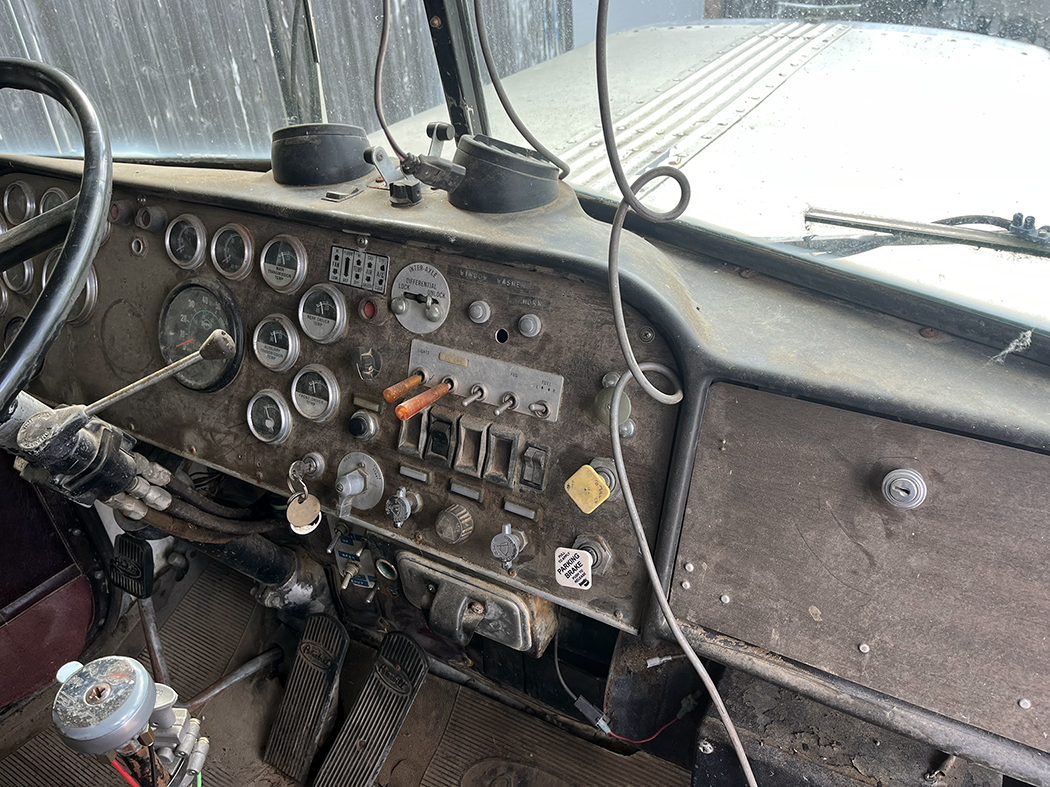
As I look around the cab’s interior, I notice how bare it is of the luxurious amenities we now associate with today’s trucks. Gone are the padded dash, the air ride seat, the automatic transmission, and the refrigerator. In their place is a simple flat dash with only the necessary gauges needed to monitor the mechanical limits of this machine. I have to wonder if I hooked a battery up and flipped the switch would the dash light up with that low amber glow through the cracked glass of gauges made 60 years ago? Would they stare back at me through bloodshot eyes and wink, for a second, when there is the bump in the road?
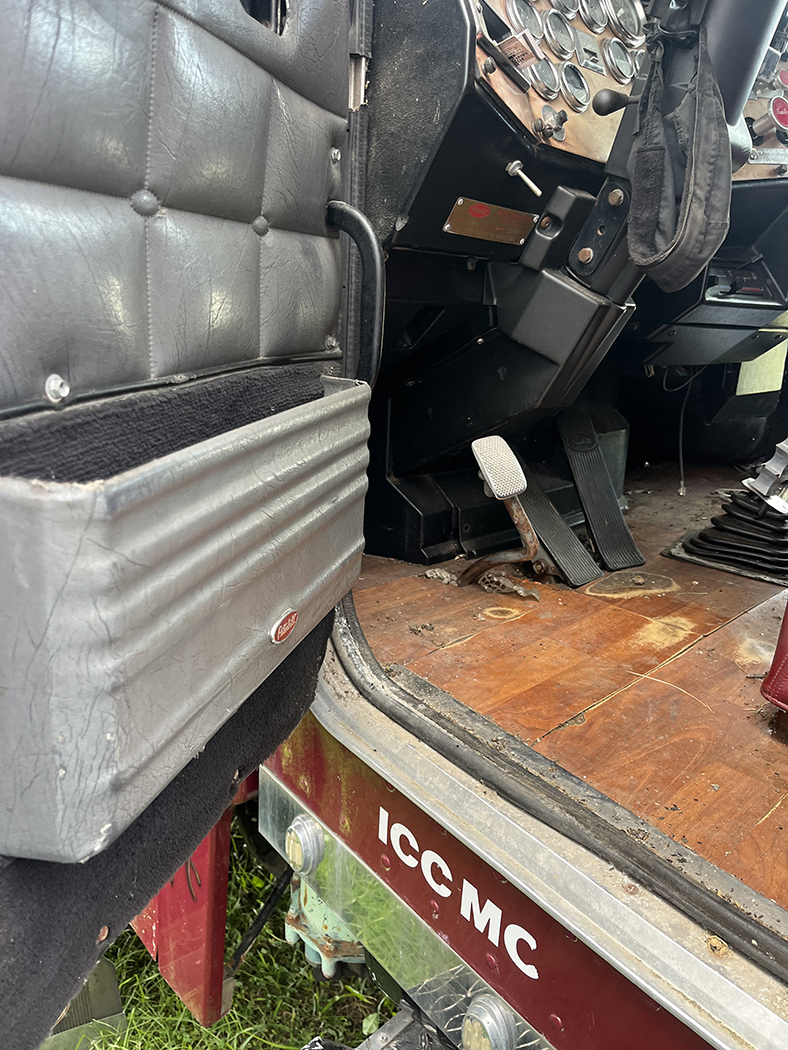
Also in that cab, I notice that the seat is torn, and the fabric is worn thin from years of use, tilted to one side, from all the miles leaning on the windowsill. Looking at the floor, I see the accelerator pedal tilted to one side from the constant pressure for just enough fuel to top every hill, but not too much as to burn the engine down. The brake pedal is also worn smooth from the boots of that same driver, feathering the pressure, to keep from smoking the brake shoes and flaming out as they roll off the hills and maneuver through traffic. Yes, there is a third instrument called a clutch lever. It too is twisted and sanded smooth from years (or maybe decades) of use.
These trucks of old didn’t have cruise control or GPS tracking. They were guided by masters of their domain, real drivers that knew how to manipulate the machine to respond to their every command. Most have a map holder on the driver’s door and none of that fancy carpet for the floor. Many started with an insulated rubber mat to block the heat from burning the driver’s feet, but over the course of time, they too have worn thin, exposing the shiny aluminum floor.
The vibration from the floorboards told the driver he could still feel his feet, as he stomped them, to get the blood circulating in the lower extremities. If you look, there isn’t much for a heating system to the floor, and often there is still an old jacket or blanket tucked behind the seat, or maybe around the shifter boot, where it protruded through the floor. Now, it resembles more of a housing complex for small rodents than a comfort aid for a wayward driver.
Note of reference: in the cabovers, the shifter tower was connected to the frame and not to the cab, so when the cab flexed, it opened a gap between the shifter base and the floorboards. This allowed both heat and cold to infiltrate the interior. It wasn’t until later that they figured out how to use cables to shift an auxiliary transmission, allowing the builders to close the gap and let the shift tower float with the cab. To combat this, most drivers took their jacket off and ran the shifter through one sleeve, then wrapped the rest around the shifter base to seal it. This also helped to reduce the temperature change in the shifter head when changing gears or just resting one’s hand on the shifter knob.
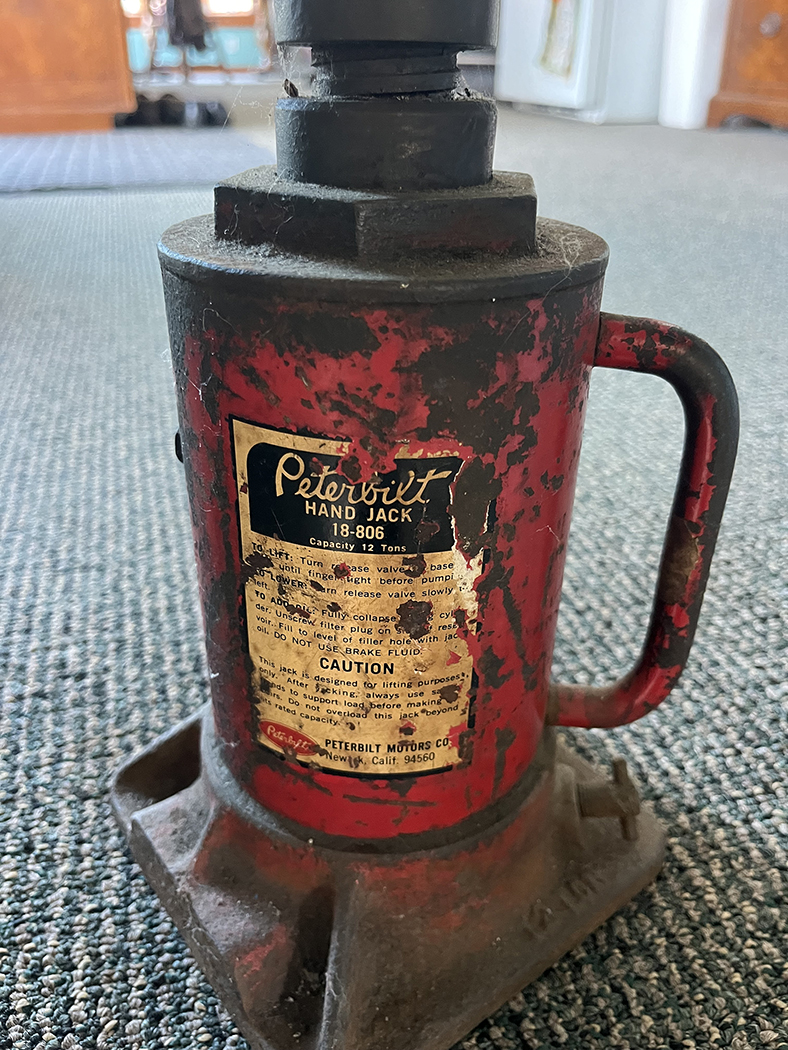
The rest of the cab is of minimalist design with nothing to write home about. The second seat, bolted to the floor, had a toolbox underneath it and contained a bottle jack and lug wrench. Yes, drivers did their own roadside repairs and fixed or remounted tires on the shoulder of the road. The doghouse is worn thin, too. What was once padded vinyl is now sun faded and cracked from too many power naps leaning across it, crawling in the back over it, or using it for a dinner table. Even the bunk is stripped bare – its once comfortable mattress pad is gone and all that’s left is a few pieces of cardboard, scattered about and chewed by the new residents (rodents and bees).
The drivers of yesteryear weren’t the Hollywood divas we see today. They were resistant, resourceful and respected! Later in life, many of them walked with a limp from years of slamming around between the doors and climbing into the seat, day after day, year after year, and never complaining about the condition. What they were building wasn’t just a legacy, it was the foundation of what we now call an occupation. These old drivers regularly braved frostbite, heat stroke, and heart attacks from too much caffeine and not enough rest.
The drivers of yesteryear, much like the machines they piloted, didn’t scream for attention or boast about how important they thought they were. They simply went about their business, moving the goods needed to the places they needed them to be. Along the way they were misunderstood, mistreated and simply missed at home. Today, we throw around terms like “old school” and “trucker” even “legend” to honor some who shine as today’s brightest stars. I would ask, is this a true measure, given the standard set in a time of sacrifice by the men and a few women who truly are the legends of their time? Do we do justice to the machines that forged a tradition of doing the impossible at a time when it took muscle, blood and bone to command the steel, glass and rubber of the 18 wheels of time to build the legacy we ride on today?
Fifty years from now I don’t think anyone will be saying, “Man, look at that cool old Volvo” or “Damn, look at that classic Cascadia!” They will more than likely say something like, “Can you believe back then drivers were ushering in the age of driverless trucks? They were so stupid they ran themselves out of a job. Let’s be honest, the Rubbermaid trucks of today won’t make it that long. It’s not just the fact they aren’t made that well, but more to the point, the drivers (or steering wheel holders) of today don’t respect the machines enough to care for them like the drivers of the past.
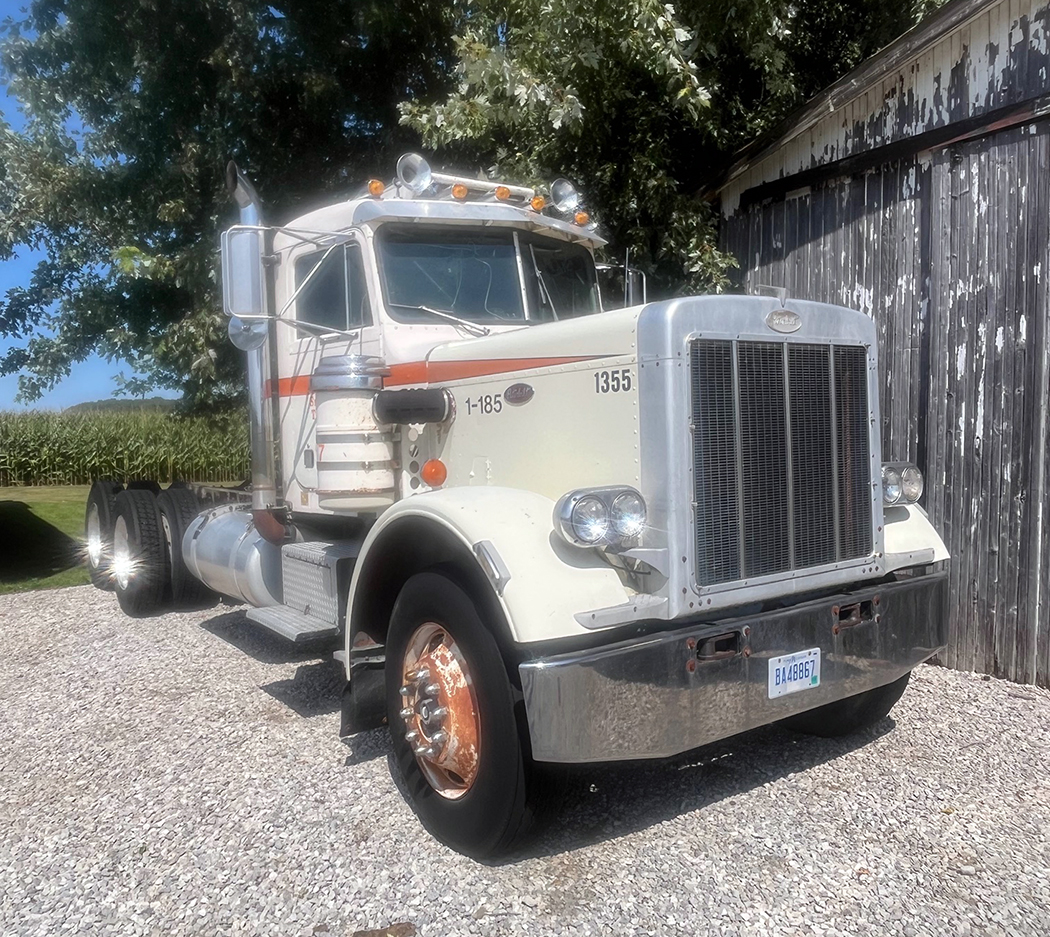
Few of today’s operators care for their employers like in years gone by. Years ago, many drivers spent their entire career at the same company, and those companies survived for several generations (history passed down from father to son). Most of those experiences are the very basis we operate on today.
The next time you glance out the window and see one of those relics from a forgotten time, slow down and take a moment to really see it and pay your respect to the machine. Tip your hat or nod your head in recognition of an icon. Give a blast on your air horn (if you still have one) to salute the driver, should they still be around. Should you have some time to kill, safely pull over, park, and find your way back to the place it rests. If you can, find the owner and ask for a tour – don’t just assume it’s junk and snoop around. If you’re looking to buy an old truck and the owner says no, respect that and let it be. Don’t come back to pester them every month.
But, if you are really interested, engage the old guy in conversation and listen to the stories from his past, like the hair-raising tales of how he held it on the road after blowing a steer tire or the time his brakes faded rolling overloaded down a steep grade. They all have at least one story about a snowstorm and the time they nearly froze to death. These aren’t Discovery Channel renditions of a “how it could have been” – it’s the real story, straight from the master’s mouth. After the fact and over the course of time, the stories get a little more interesting each time they’re told, but that’s half the fun of hearing their stories.
Most of the time these trucks are not for sale – not because they don’t have value, but because they connect the owner/driver to their past. It’s common to hear, “One of these days I’m gonna get it out.” That day will most likely never come, but it’s the comfort of knowing there is still a part of their past that inspires them to dream, reminisce, and remember their glory days gone by.
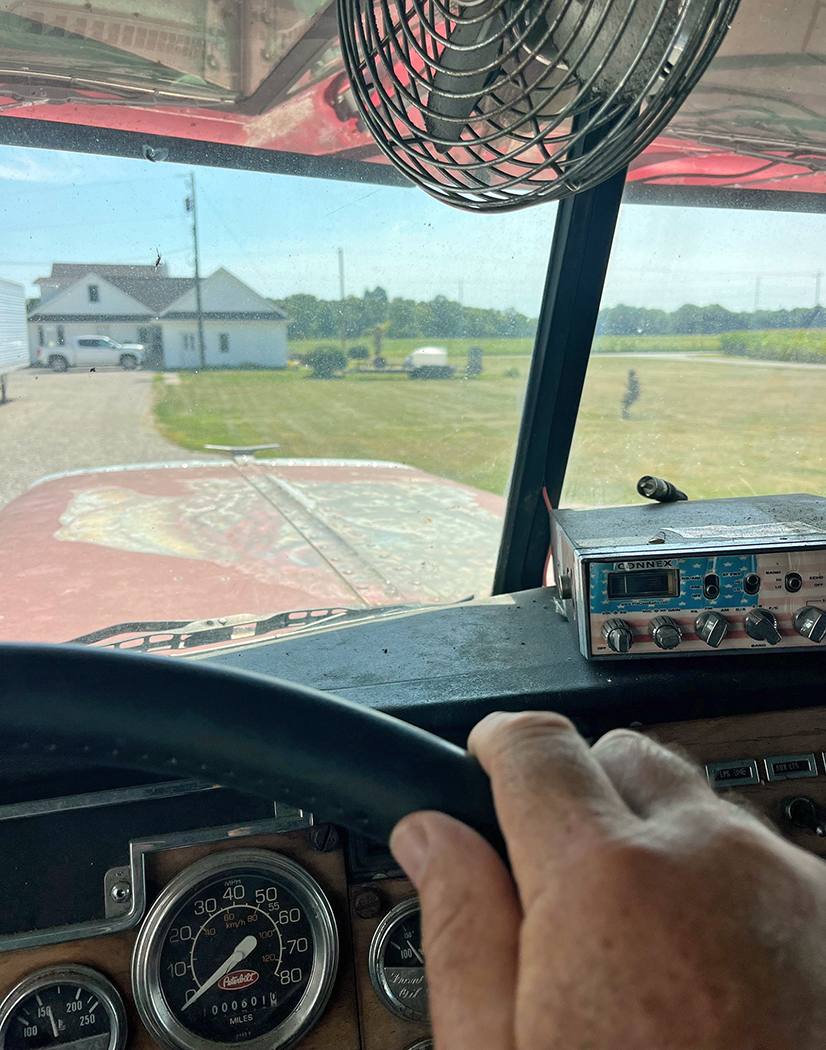
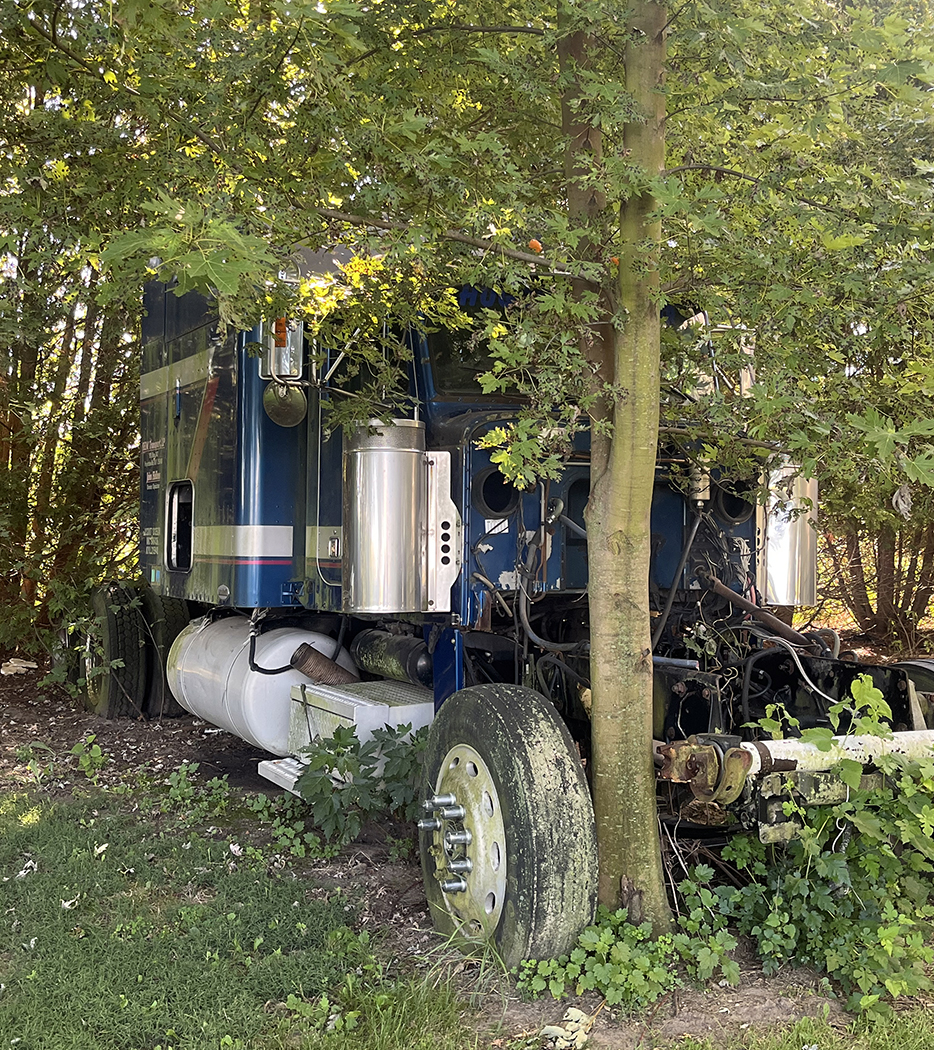
I mentioned earlier in this article how I’m reminded of these things when I wander through my own backyard. I too have one of my early rides – one I’ve owned, driven, and dreamed about for more than 30 years. I drove it for 22 years and crisscrossed almost every major interstate highway (along with a fair number of two lanes) along the way. It will not be for sale, at least not in my lifetime. After that, the family may sell it, as their connection isn’t the same as mine. I too will, from time to time, open the door and climb into the cab (moving the mice aside) and grip that wheel with a familiar feel. Just sitting there looking over the faded and peeling hood gives me solace – it comforts my aching soul that longs for the days of C.B. chatter, chicken lights, and one more tall cup of coffee before hitting the road.
I can’t help but get emotional thinking about strolling the boulevard in the old days with the big rollers of that time. The cabover KWs, International 4070s, and many GMCs with 2-stroke Detroits, just to name a few. We were young, alive and living a dream! Early friendships were forged that still stand. Most of the trucks are gone – wrecked, scrapped, parted out for glider kits or, like mine, parked in the backyard.
As for the drivers, they too have faded into the general population, almost unrecognizable to most, but still proud of their contribution. The legacy they left can be seen in the withered lines on their face and the quiet respect they pay to the next generation of road warriors. It is incumbent on each of us to pay homage to the drivers and their iron horses of yesteryear, especially when we find them hiding in plain sight!