


October is Fire Prevention Month, and I hope that you are up for a little history of how this came to be, and I also want to honor the brave Brotherhood of Firefighters! I believe these men and women form a unique bond because of what they do. Be it full time, if they serve on a volunteer fire department, or if they are fighting wildfires up in the mountains, they are truly united as one. I’m writing this in September when we all remember 911, as well. “They went in when everyone else was going out” became a motto to honor the firefighters, police officers and first responders who kept going in. Never forget!
First the history – the legend was for years that Catherine O’Leary’s cow “Daisy” caused the Great Chicago Fire, the devastating blaze that raged from October 8-10 in 1871. It destroyed 3.3 square miles of the city, killing about 300 people, and leaving 100,000 homeless. They are pretty sure the ignition point was the barn on the O’Leary property at 137 DeKoven Street, which is now 558 DeKoven Street. The exact cause remains unknown, and Mrs. O’Leary’s cow being responsible is most likely a myth. However, her family unfairly became a scapegoat and suffered from the public’s suspicion.
The fire began southwest of the city center and then leapt the south branch of the Chicago River and destroyed much of central Chicago. It crossed the main stem of the river and consumed the Near North Side. It had been an unusually dry summer and fall, and that, combined with gale-force winds, pushed it north through the city. Most of the buildings, sidewalks and streets were built with wood, making it all highly flammable. It was days before the damage could be completely assessed because of the remains still being so hot.
Eventually, they determined it encompassed an area of more than 2,000 acres, destroyed more than 73 miles of roads, 120 miles of sidewalks, 2,000 lampposts, and 17,500 buildings. The property damage alone was thought to be $222 million, which was about a third of the city’s valuation in 1871, which would be approximately $5.7 billion in 2025 dollars. After the fire, there was a period of rapid reconstruction. The city improved building codes to help stop the spread of future fires and quickly rebuilt to those standards. A donation from the United Kingdom helped establish the Chicago Public Library.
In response to the Great Chicago Fire of 1871, President Calvin Coolidge proclaimed a week in October as Fire Prevention Week in 1925. The event was sponsored by the National Fire Protection Association and has grown from a week-long observance to a full month dedicated to public education and fire prevention efforts. It serves as a reminder of the Chicago Fire and the importance of preventative measures. Fire departments and organizations use this time to provide public education and promote fire safety for all ages.
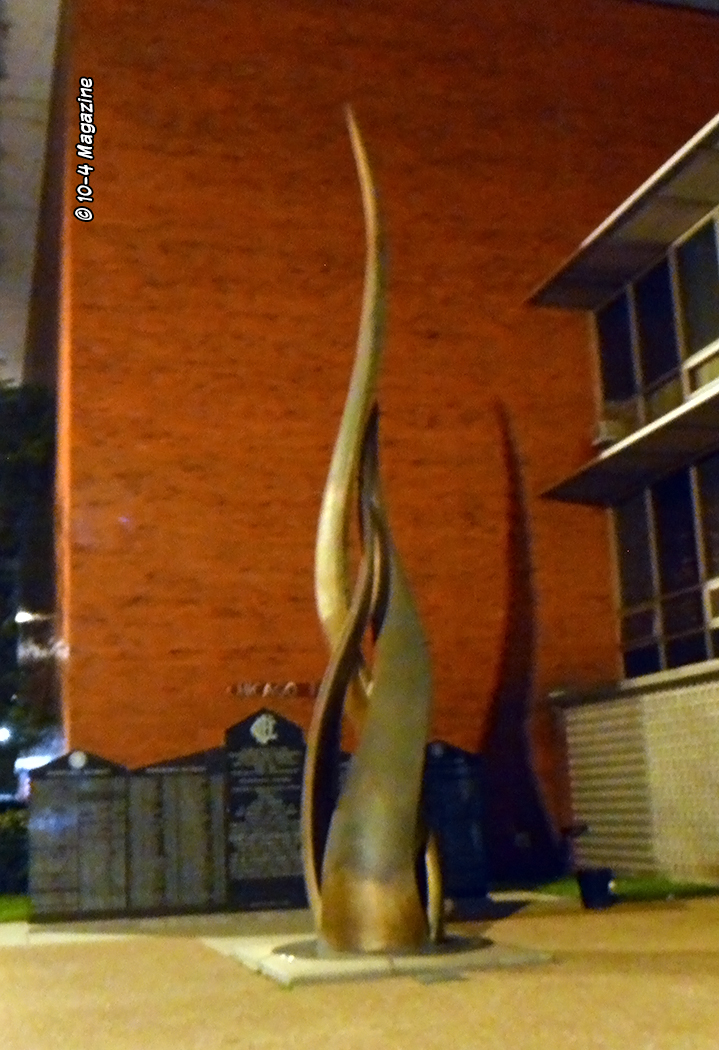
In 1961 the Robert J. Quinn Fire Academy was built on the site of Mrs. O’Leary’s barn – the supposed starting point of the Great Chicago Fire. On the west side of the building is a 33’ tall abstract bronze statue called “Pillar of Fire” in remembrance of the tragedy. Artificial streetscapes are located inside the building, which is used for mock firefighting exercises, and classrooms are in a three-story wing on the southeast side of the building. The site was later designated as a Chicago landmark on September 15, 1971, 100 years after the Great Fire happened.
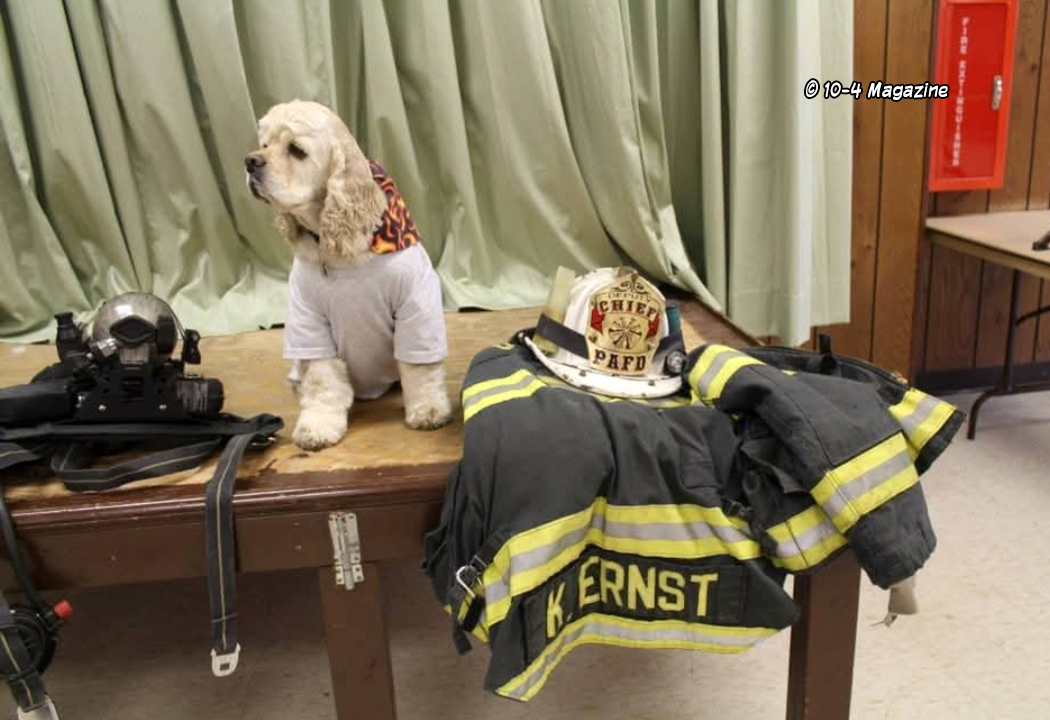
I have a friend named Kevin Ernst who has been a volunteer firefighter for Star Hose Company #1 in Port Allegany, PA for 39 years. For the last 25 years, he has been one of the three chiefs in the department. He trained his cocker spaniel to stop, drop and roll, and would take him to the fire house Fire Prevention Week. The kids, as well as the adults, loved him. There is commitment to educating people in the community about preventing fires and what to do if one happens, and sometimes it’s the “different” ways you teach that people will remember the most.
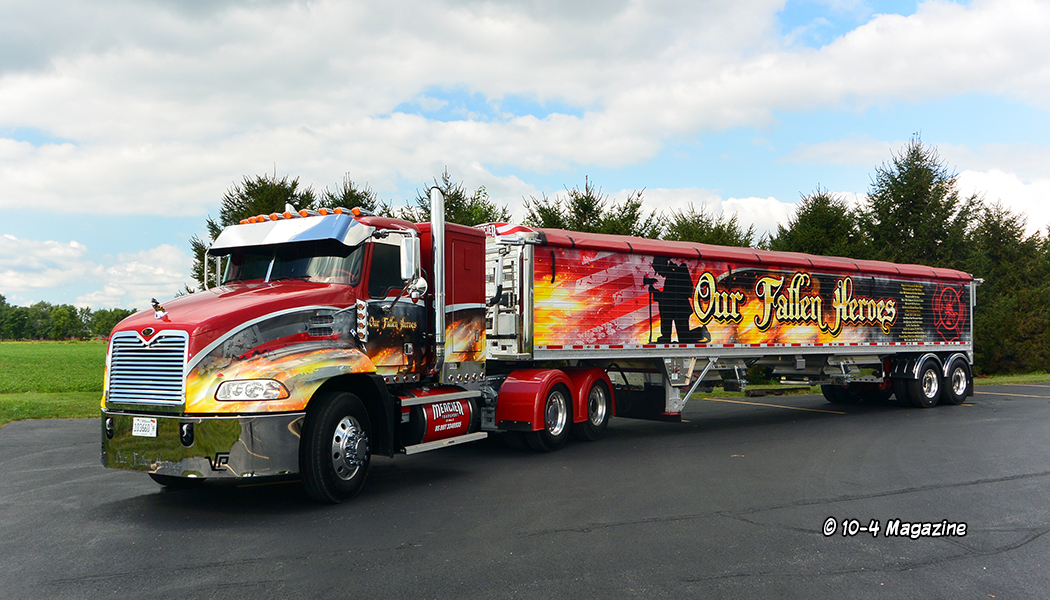
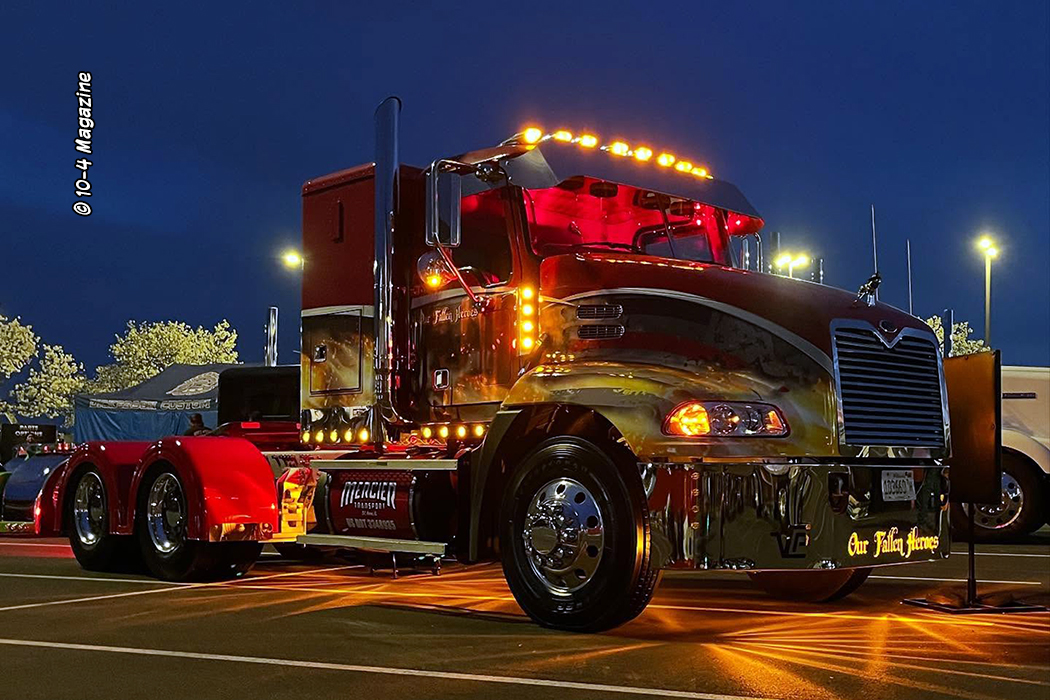
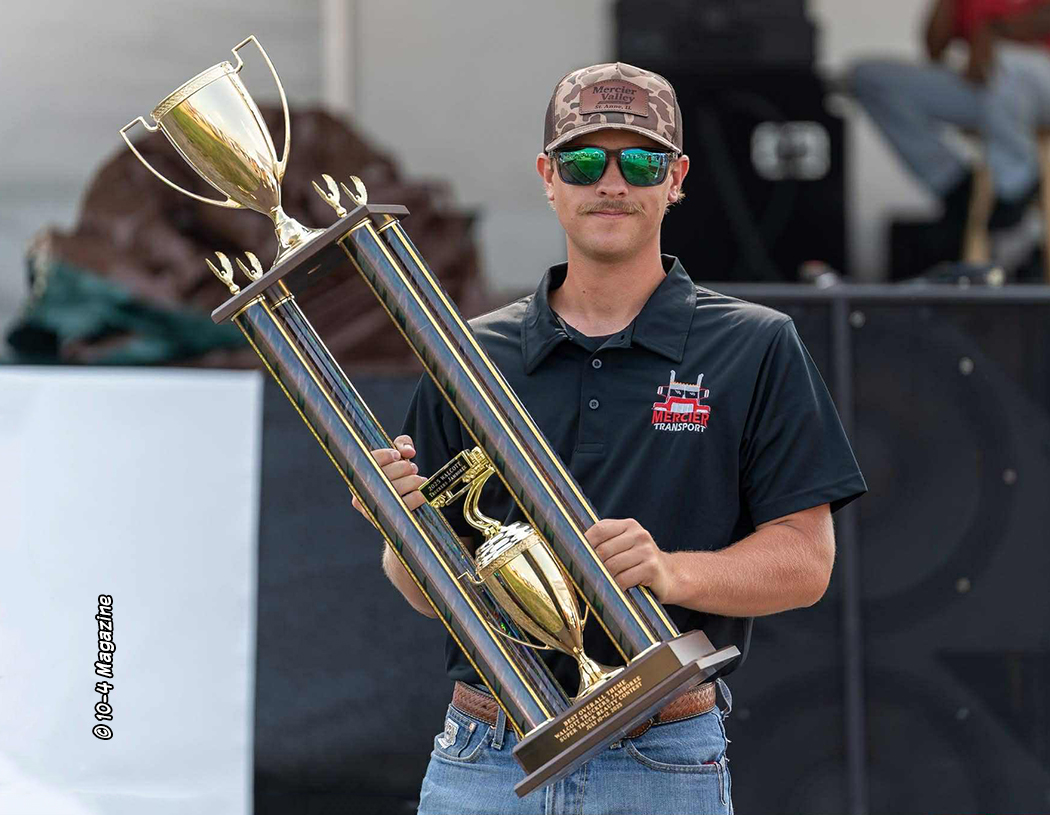
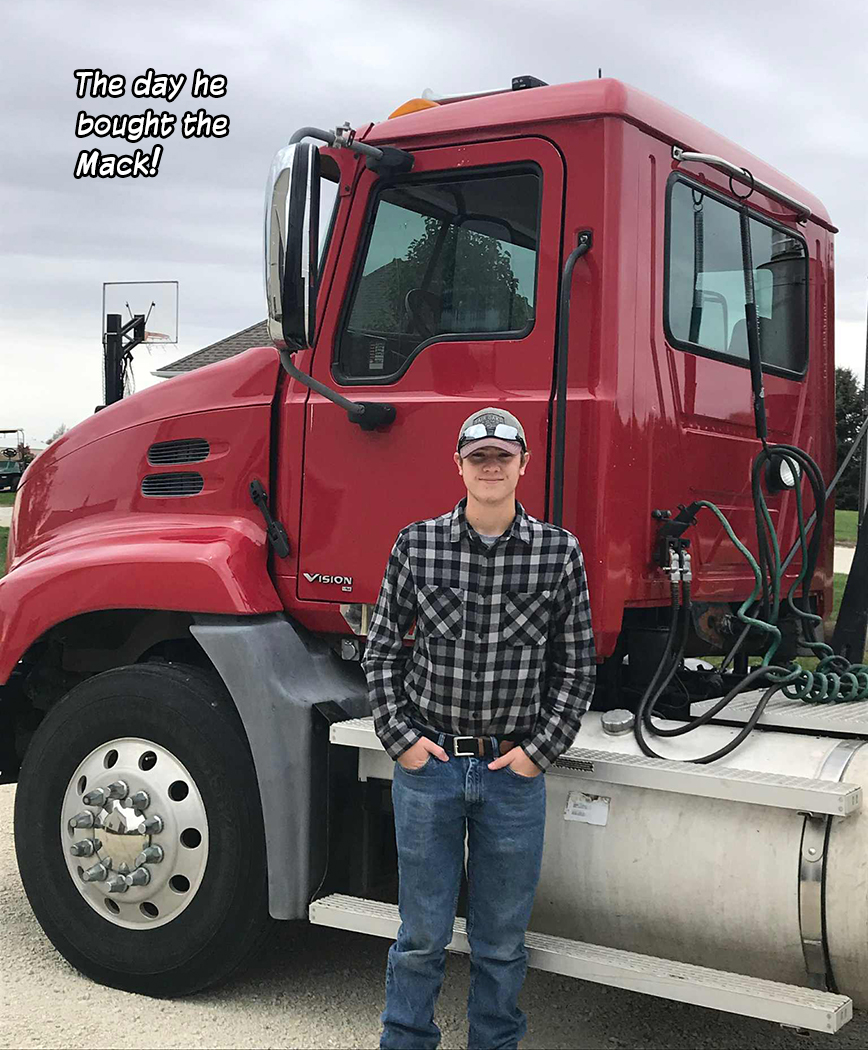
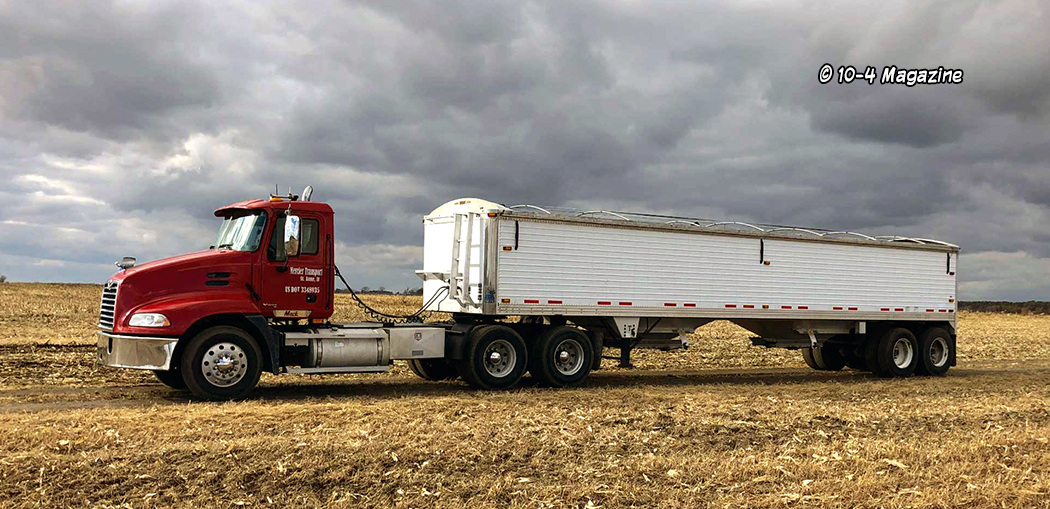
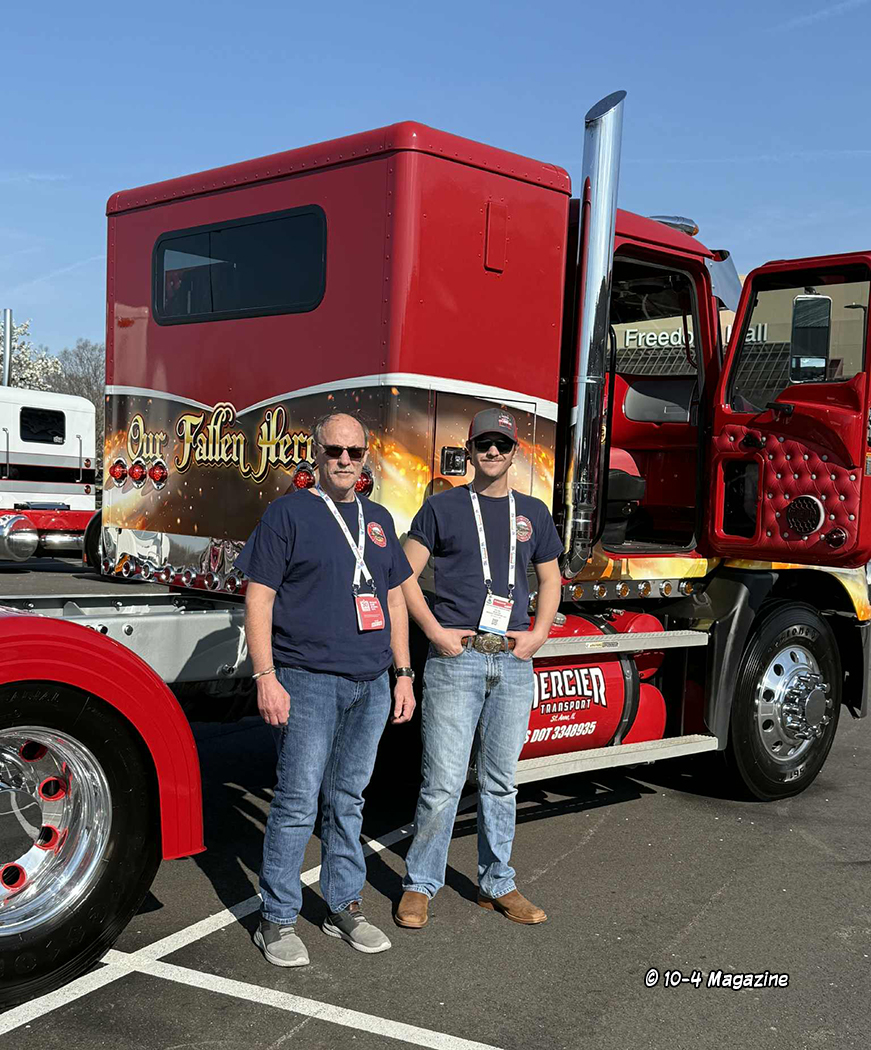
Dylan Mercier (24) of St. Anne, IL has put together a truck and trailer to honor all firefighters who have fallen in the line of duty, as every one of them is a hero. Here is how this beautiful tribute came to be. Dylan loved riding in a truck during harvest on the farm. His favorite was a red R-Model Mack, and his love of Mack trucks has stuck with him. As he got older, he got to drive different trucks and help with harvest. Before the law was passed that you had to go to a school to get your CDL, he drove around in a cornfield until he was prepared enough to take his test, and yes, he passed.
When Dylan was 17, his parents, Ralph and Lori, started looking in The Truck Paper for a Mack nearby. It was after he was 18 that they found his 2005 Mack Vision E7427 at CIT Trucks in Normal, IL. The original plan was for Dylan to start his own company with the truck, but the price of insurance changed all that (it was just too much to make it worth it). That’s when he began thinking
about what else he could do with the truck. One thing he knew for sure was that he wanted to make it stand out.
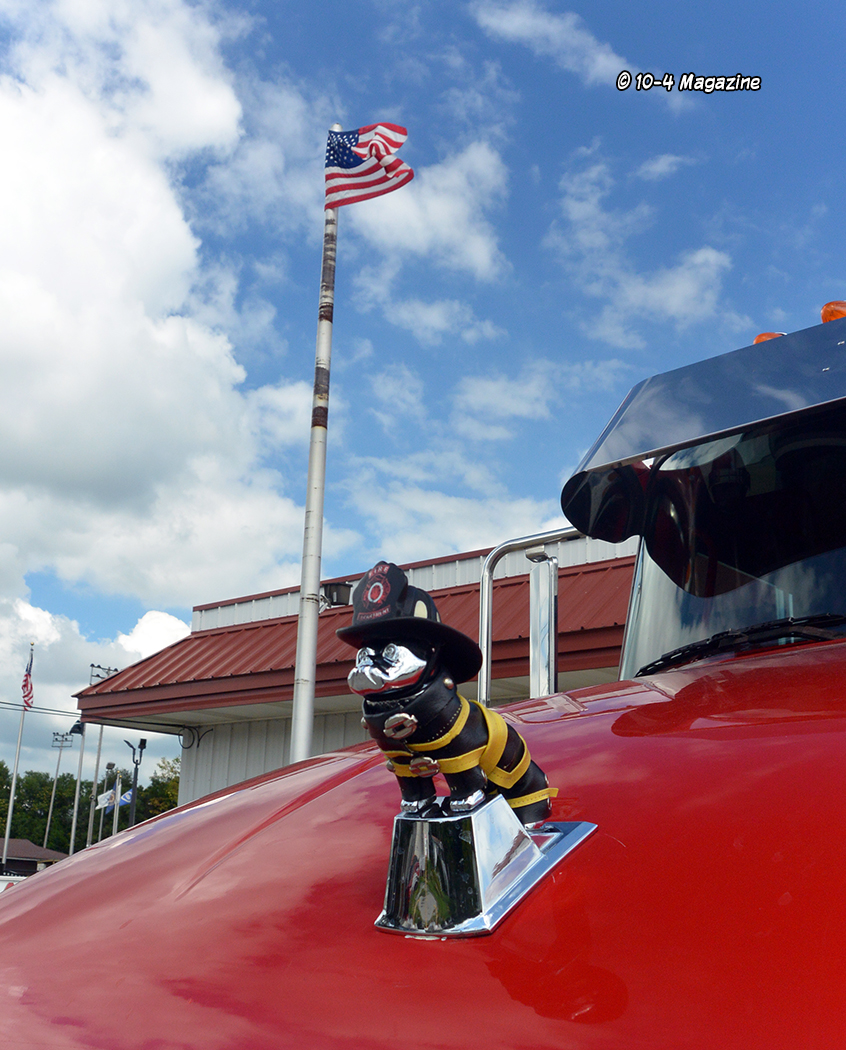
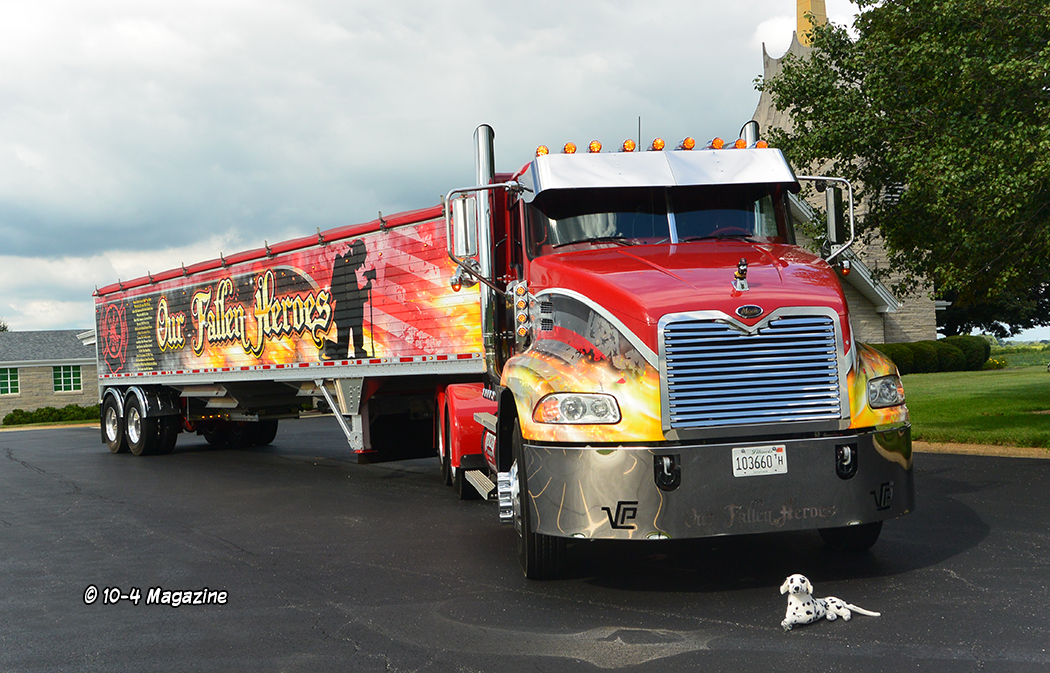
His dad was a volunteer firefighter for the Papineau Fire Department and was Lieutenant for 27 years. Since 2016, he has served as the St. Anne Fire Trustee President. Dylan became a cadet firefighter as soon as he could when he was 14. After dressing his bulldog hood ornament in a tiny firefighter outfit, he got inspired to start putting the truck together and build something special. When I asked him if his little bulldog has a name, he said, “No!” I guess we are going to have to work on that.
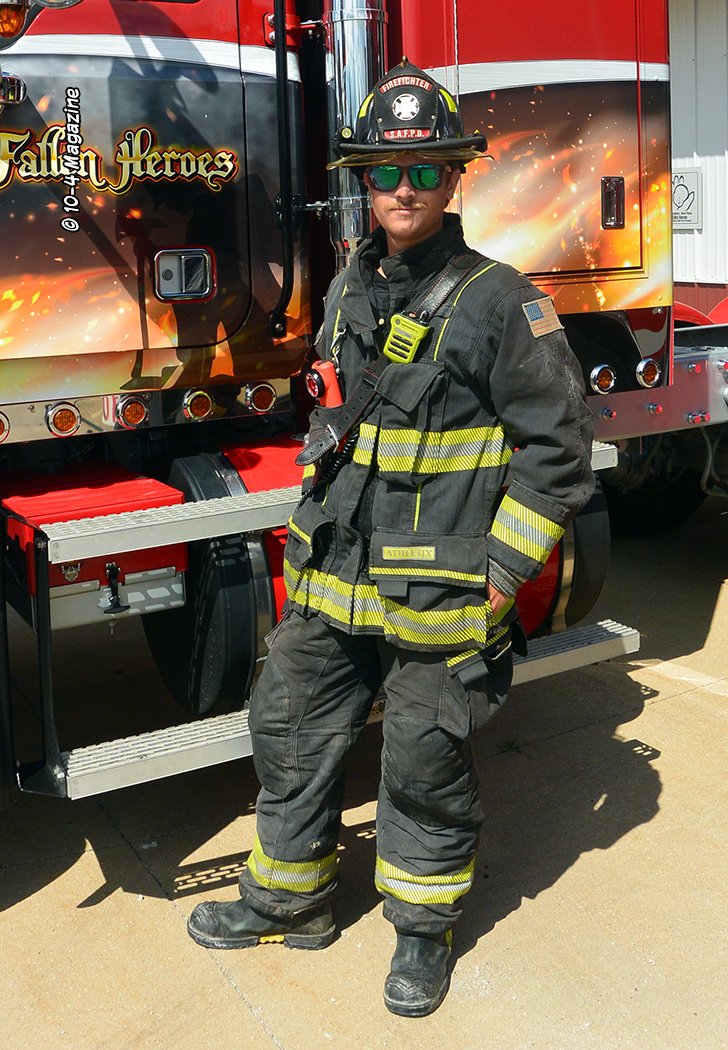
When Dylan was 18 years old he went to Firefighter Academy and became an interior firefighter and engineer (the engineer is the one who drives the fire truck). He can drive the truck, fight the fire, then drive it back to the station. The order of rank is Cadet, Firefighter, Engineer, Lieutenant, Captain, Assistant Chief then Chief. He hopes to become Chief one day in his station in St. Anne, IL, which is just south of Kankakee.
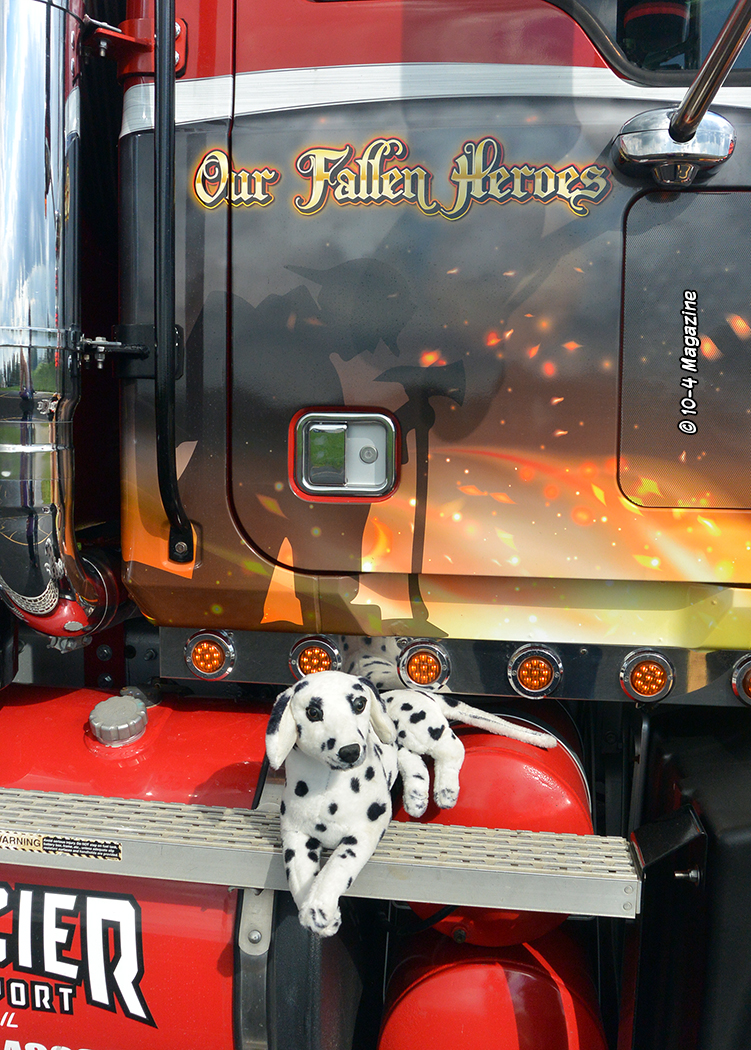
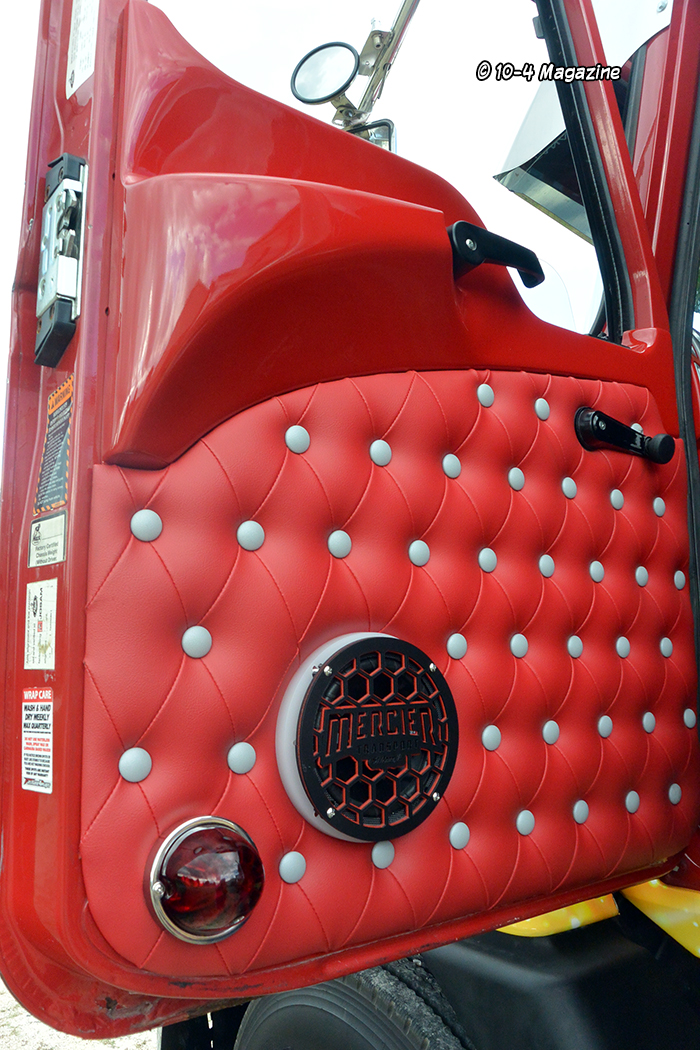
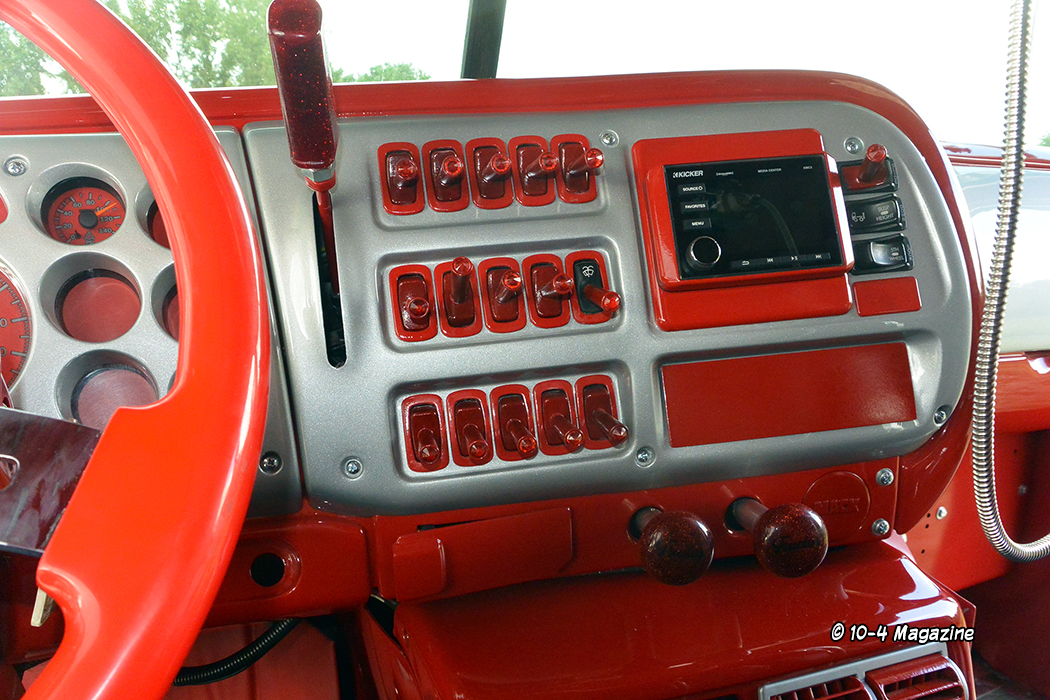
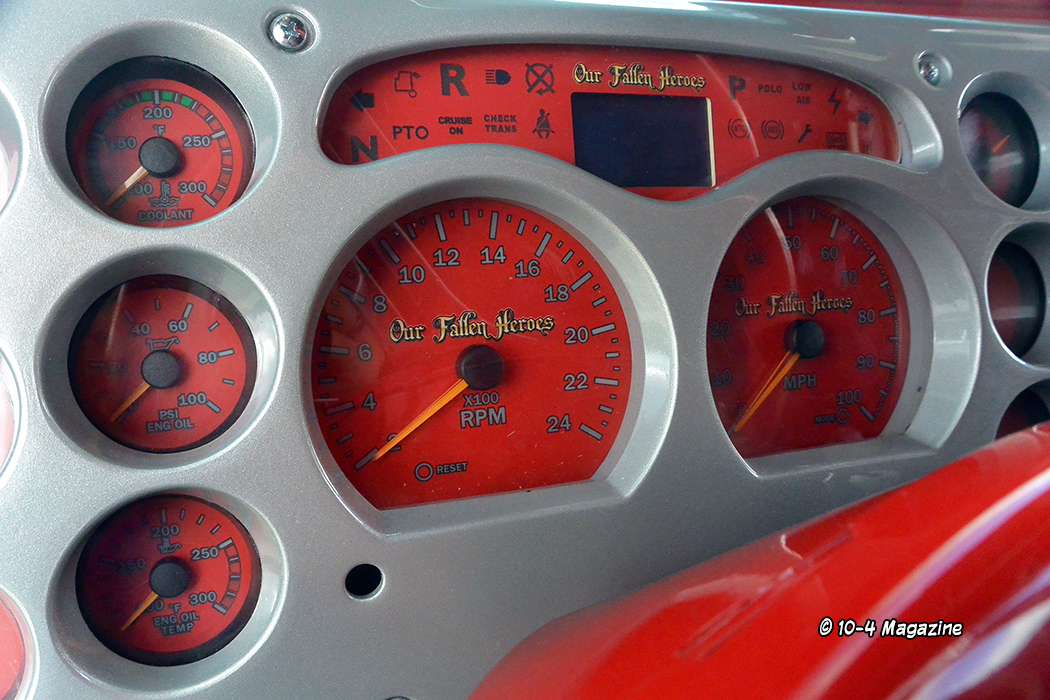
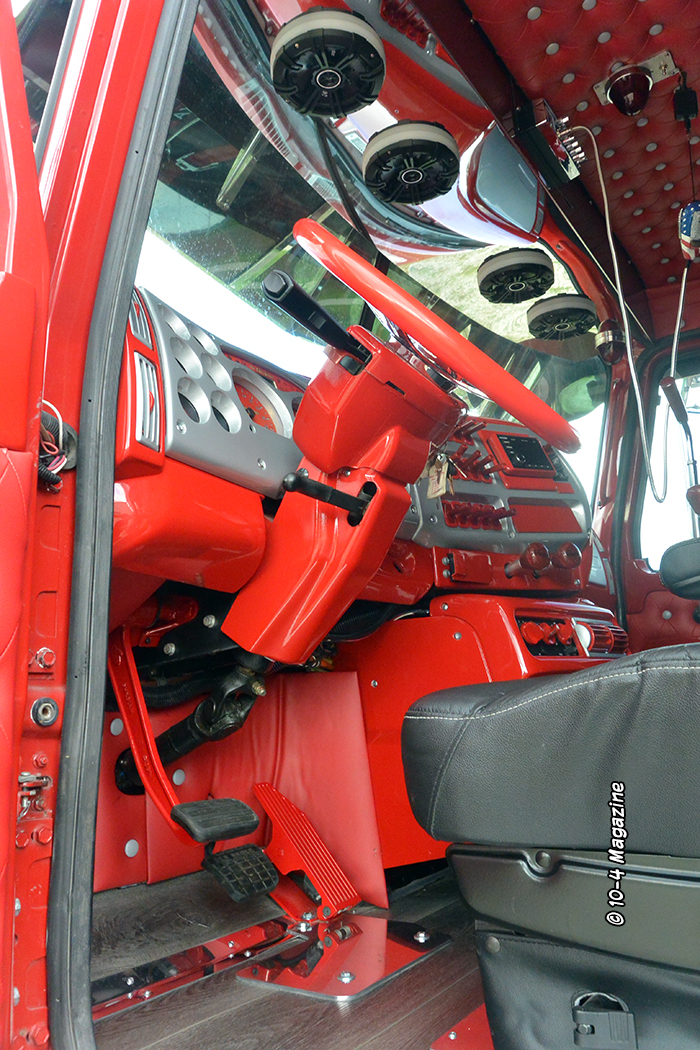
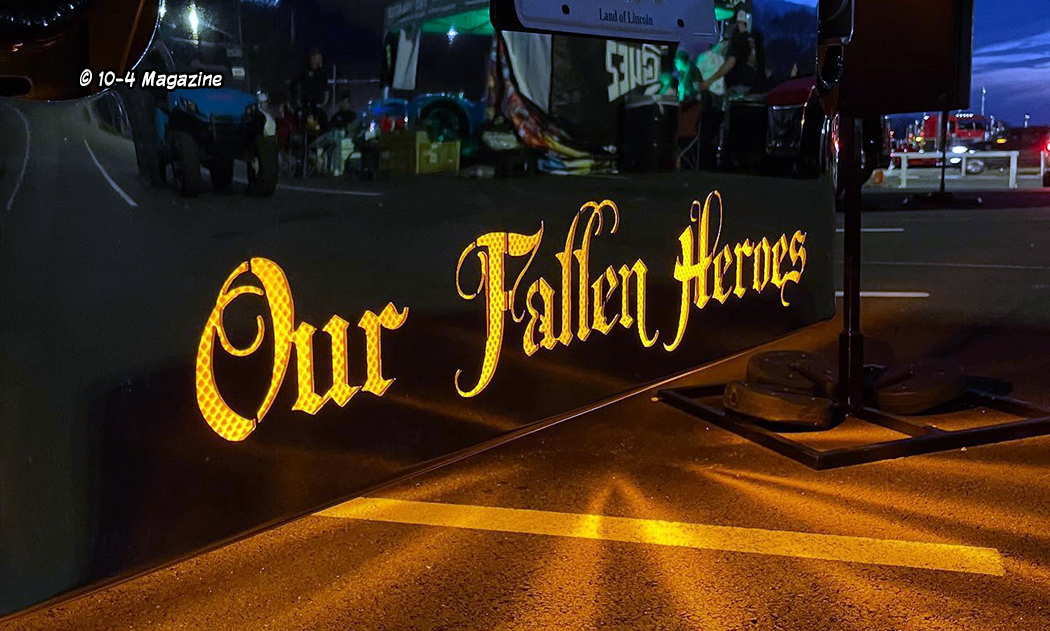
Brainstorming one day he settled on the “Our Fallen Heroes” theme for the truck and, over the years, she has changed to become the beautiful tribute she is today. She has an Eaton 10-speed transmission and Mack 3.36 rear ends from the factory, so she’s not technically a pure-bred by Mack standards, but she doesn’t have to be, because this little dog stands tall! After the theme was decided, Fastlane Wraps in Chebanse, IL designed the graphics and the truck was wrapped. The top part of the truck is the same red that is under her wrap (of course she’s red). They also designed and wrapped the first trailer, as well as the new Wilson trailer, seen behind it today.
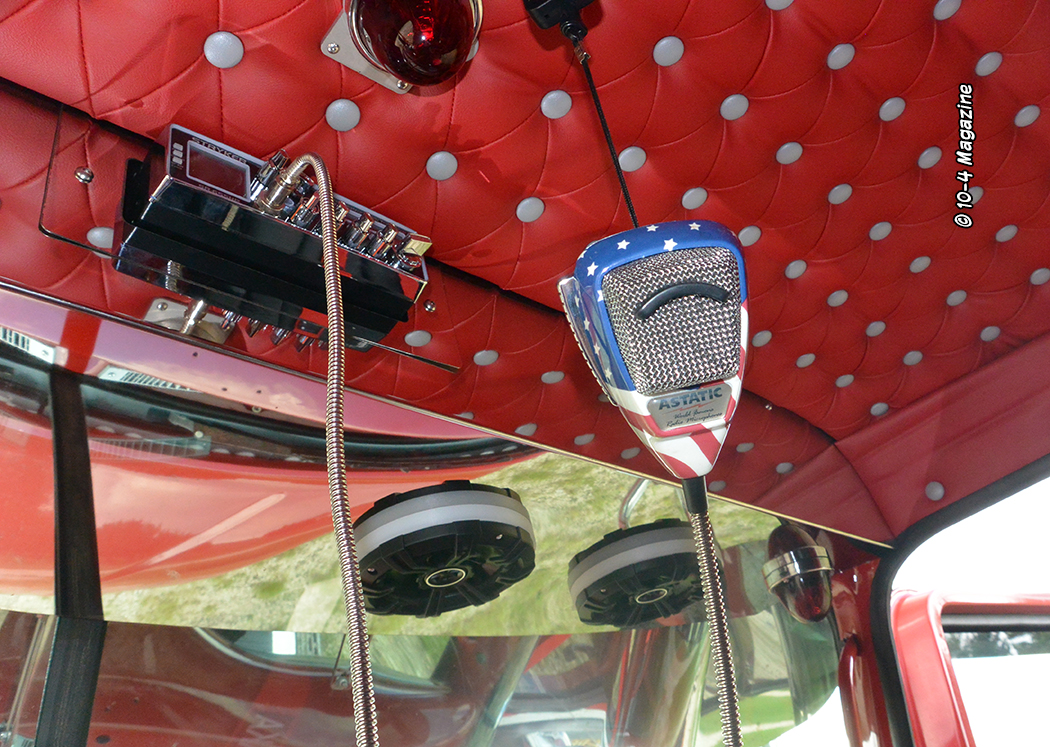
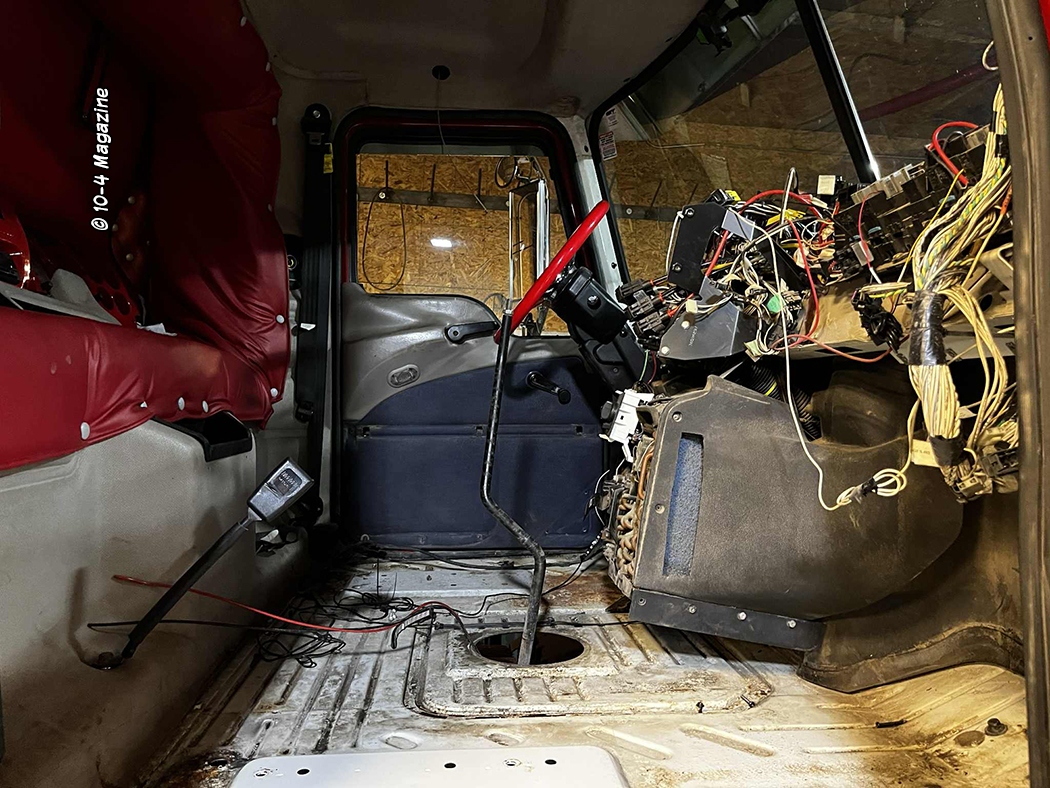
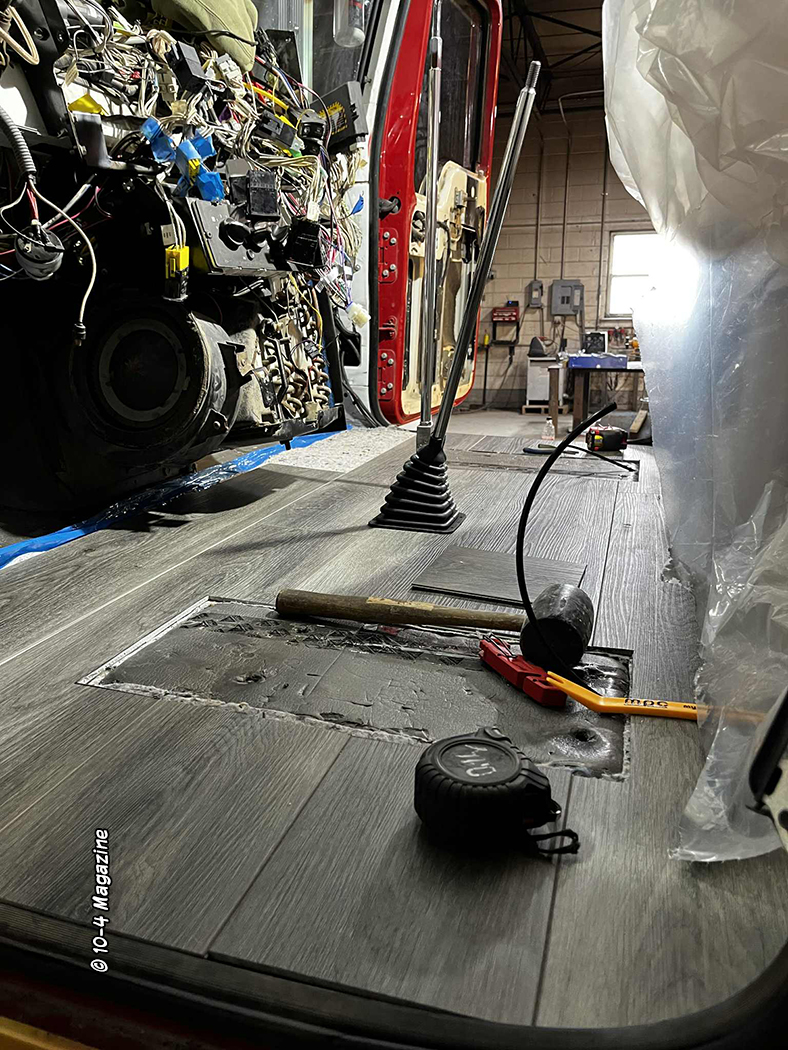
Other additions started happening to the truck, like ATG Custom Sleepers donating a new sleeper and doing all the beautiful interior work. Tom Milhan and Norm Floria are awesome people, and we got to meet them two years ago, when I had the privilege of driving 10-4’s very own Trevor Hardwick’s new Peterbilt from there back to Washington after they worked their magic for him. Sureco Tarps donated parts and then took Dylan to the Wilson booth at a farm show in Decatur, IL in 2021. This meeting started the ball rolling, and Mark Brazzell, who is the Wilson Grain Trailer Product Manager, helped get Dylan a new Wilson trailer! Dylan would really like to thank everyone who has contributed, in any way, to making this dream a reality, be it parts, labor or love.
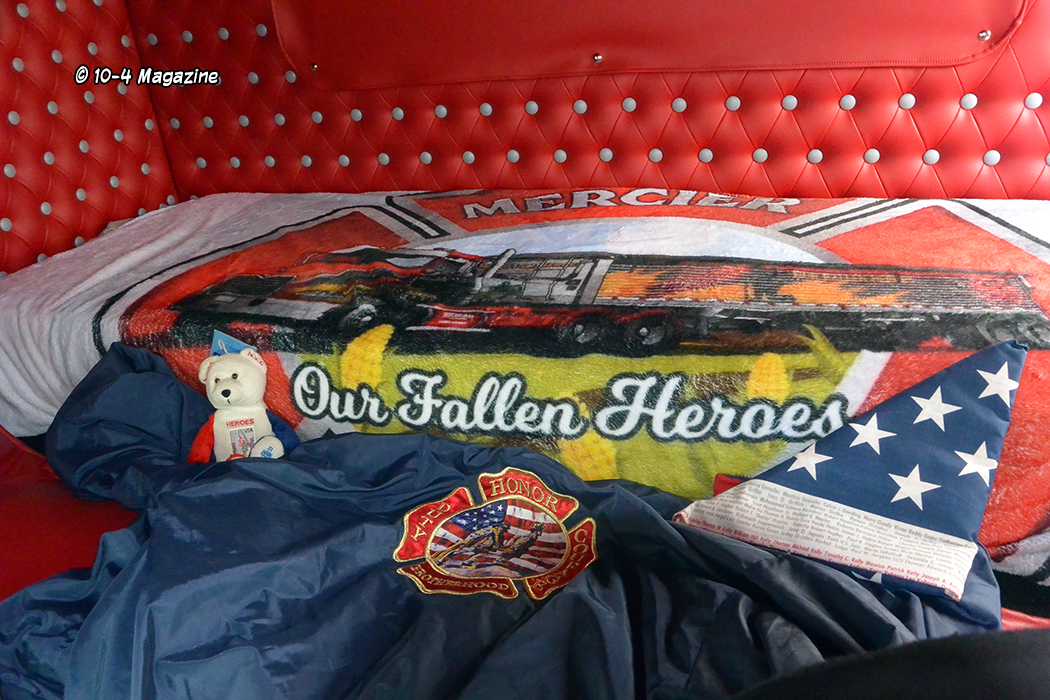
Inside Dylan’s sleeper, he had a blanket made with a picture of the truck and trailer and “Our Fallen Heroes” on it. Along with the blanket there are a few other very special things. Our friend Janice Skidmore gave us her brother’s NYFD jacket he was wearing on 911. Along with the jacket was his flag, with the names along the edge, and a 911 Beanie Baby. She wanted Dylan to have them and display them when he shows the truck to help remember her brother. Janice lost her battle with cancer on April 1, 2024. I miss our late night talks when I was trucking, and she was working as a guard at various locations in Reno.
I had the distinct honor of going to Kankakee, IL on a beautiful sunny (and cloudy) day to shoot Dylan’s truck and see his favorite fire house – Company Number 2 in Kankakee – which is no longer in service. The doors on this house were originally built for horse and wagon fire apparatus. It is still beautiful and made a nice backdrop for some of the shots we took of Dylan’s Mack bobtail. While we were there, a fire engine happened to be going by, so we asked if they would join us and, after they got permission, we took pictures of their engine with the Mack truck, too. Before we left for our next location, Chief Brian LaRoche stopped by and chatted with Dylan about the changes he had made to the truck since he’d seen it last, and he was kind enough to let me take his picture with the truck.
Our next stop was the St. Anne Fire Department station where Dylan works. He was able to pull the trucks out of their bays for the photo opportunity. The engine he usually drives is a Spartan Fire Engine 17. He put on his gear, and I was impressed with how they leave it so they can get in it quickly. Time is always important when they get a call, as every minute counts. Then, we went back to his yard to hook up the trailer and go around the corner to the First Reformed Church of Wichert, which is where his parents were married, and take more pictures. I think it was a fitting place to take photos and remember everyone this trailer is meant to honor.
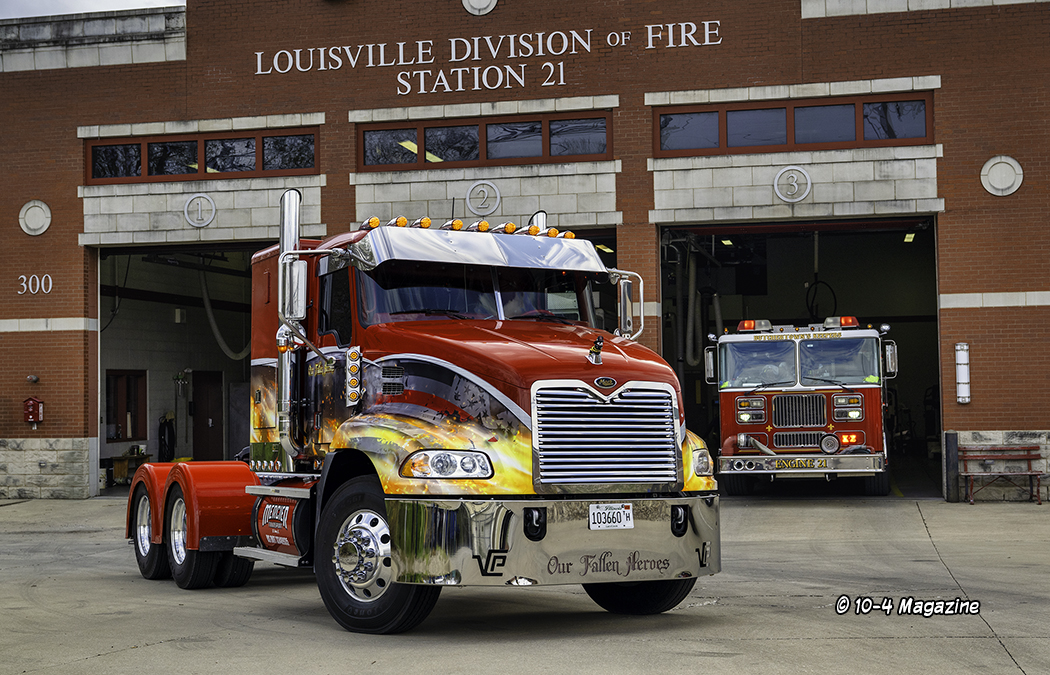
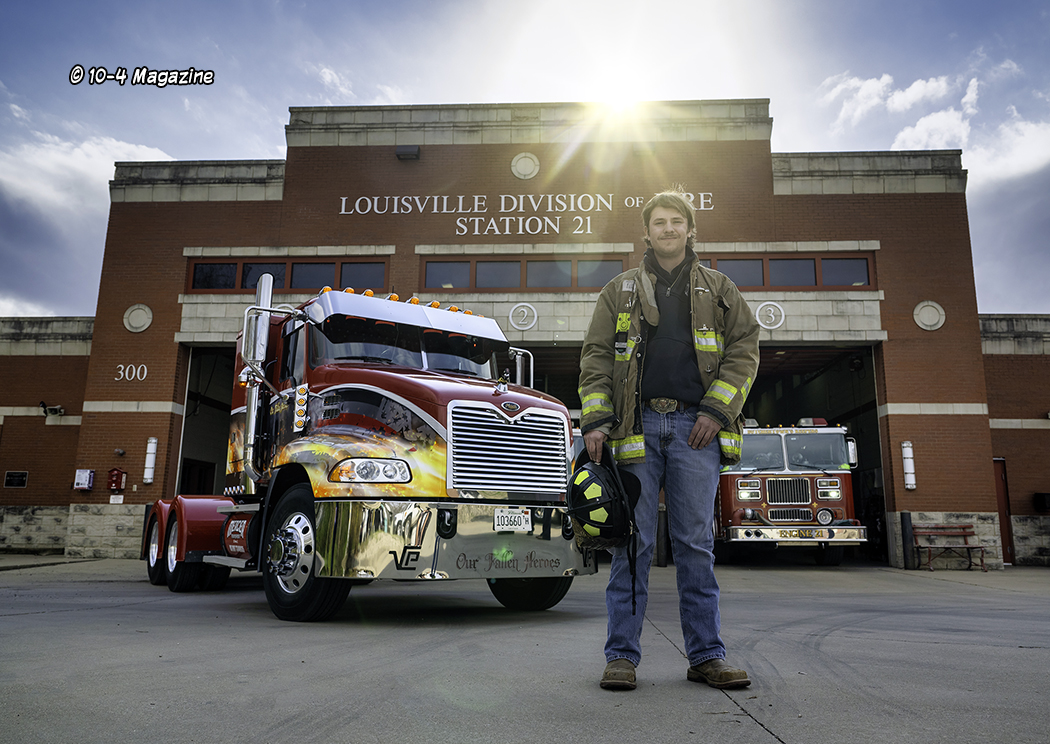
The truck did work during harvest season for a few years, as Dylan would help family friends Todd and Weston Arsemeau. Now, her life will be going to shows and local parades. When Dylan had her in Louisville at MATS this year (2025), we got to team up with our dear friend Warren Aitken from Australia and shoot it at the Louisville Division of Fire Station 21. Thank you to Warren for allowing us to use some of those pictures for this feature.
Dylan has a website where you can buy models of the truck and trailer, shirts and hats (www.merciertransport.com). The profits from these sales go to the Eric Marsh Foundation. This charity was Dylan’s choice after hearing on the news and then seeing the movie “Only the Brave” about the 1st Municipality hotshot team that was overtaken while fighting a mountain fire. Hotshots fight fires like this on the front line, and Type 2 are the clean-up crews afterward.
This truck is truly a labor of love, and at the shows and places Dylan takes her, people come up to him with their stories and what seeing this truck means to them and the memories it brings back. They share the appreciation they have for what he has built. Next year, he has been invited to the 911 Memorial at the Glen Ellyn Volunteer Fire Department in Glen Ellyn, IL. We tried to get the truck to the 911 Memorial in New York City to take pictures for a few years, but we never could get all the pieces together. Maybe one day that will happen. In the meantime, let’s remember to honor all firefighters (and first responders), this month, including “Our Fallen Heroes” that gave their lives for others.