


I’ve been writing for truck magazines since 1989, and over the years, we’ve produced many videos – all focused on Class 8 truck engines. For 47 years, we’ve been aligned with Cummins. Then, in 2000, the Pittsburgh Power Box led us into the world of Caterpillar engines. A few years later, truck racing brought us to the Series 60 Detroit in 2003. While these three engines differ in many ways, they also share key similarities – and one of them is liner protrusion.
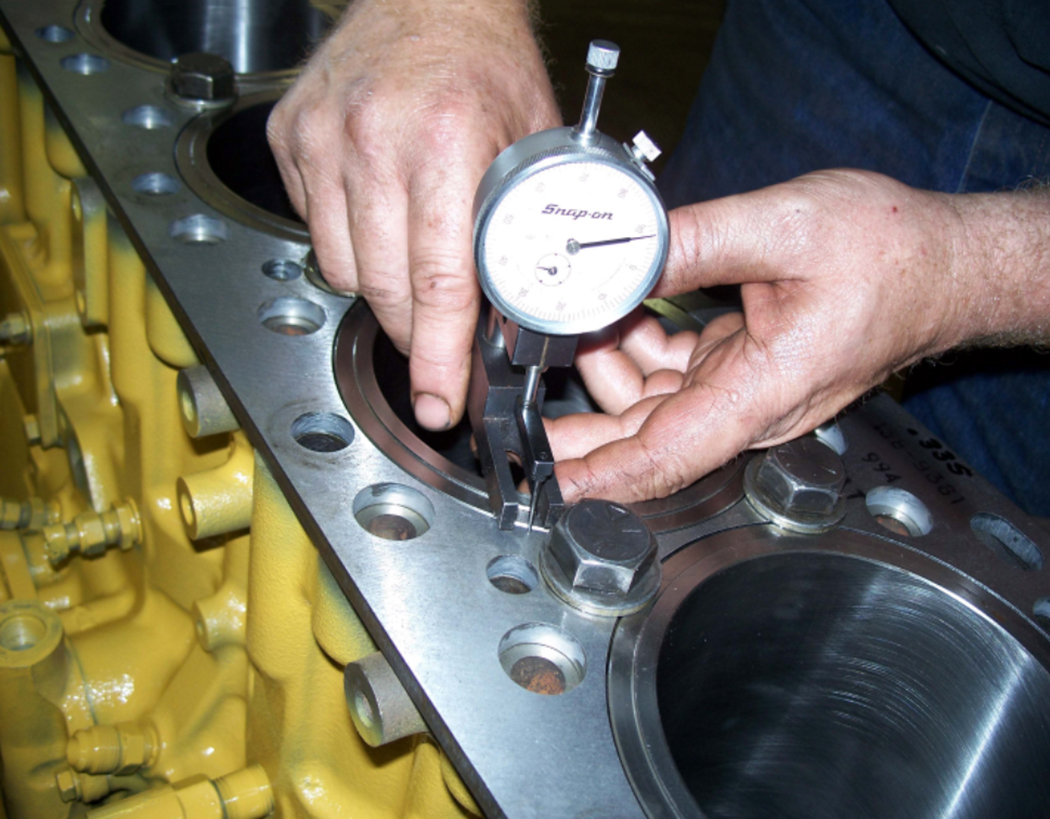
Liner protrusion is how far the edge of the cylinder liner sticks out above the engine block surface. The OEMs have a plus-or-minus specification for this measurement. However, if the liner is set at the low end of that spec, you can expect the head gasket to fail at around 200,000 to 250,000 miles. That’s because the minimum spec simply isn’t enough to hold a head gasket for the long haul – especially not the 800,000 to 1 million miles many expect. After years of building diesel engines, we’ve found what works best: setting liner protrusion at .001 inch over the OEM max specification. This approach has proven to give us the reliability we – and our customers – demand.
To do this correctly, you’ll need an upper counterbore cutting tool, the proper micrometer, and most importantly a knowledgeable mechanic who knows how to use the equipment. As the truck owner or operator, it’s your responsibility to ask the shop performing your in-chassis or out-of-chassis rebuild if they have this tool and whether they know the correct spec to set your liners to.
The upper counterbore cutting tool costs $7,245 – not including the various cutting disks required for different engines. So, don’t be surprised if your shop doesn’t have it. In fact, many will tell you, “We never have to cut the upper counterbores.” If that’s their answer, your next question should be, “Will you guarantee the head gasket won’t blow for at least 500,000 miles?” The Bible tells us to build our house on a solid foundation. The same principle applies to your truck’s diesel engine. And when it comes to engine longevity, the upper counterbores are a big part of that foundation.
Moving on to another topic, let’s discuss some of the current modern diesel engine components and what drivers need to know. In today’s diesel engines, manufacturing methods have evolved, and many of those changes have been around for years. From camshafts to crankshafts, manufacturers like PACCAR and Detroit Diesel have adopted modern production techniques that offer efficiency and cost-effectiveness without sacrificing performance. But, as with any design evolution, there are trade-offs, and it’s important for operators and technicians to be aware of what can go wrong when things do.
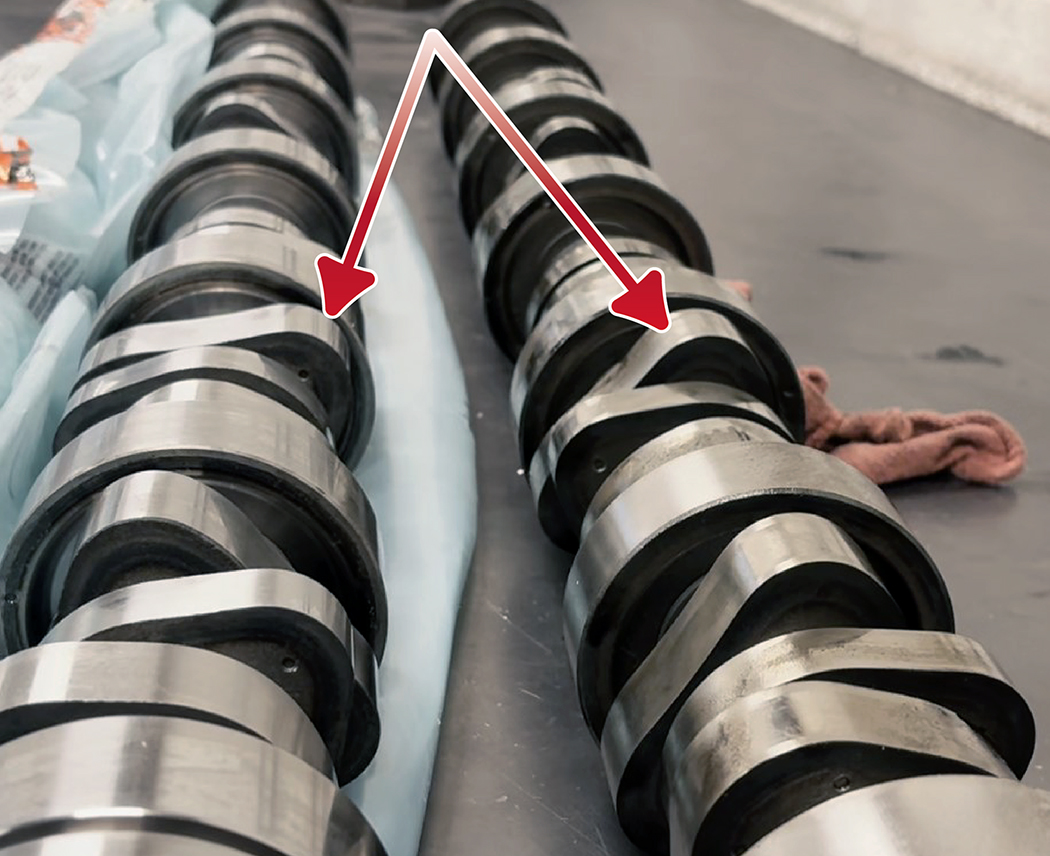
One mostly common shift in diesel engine design is the use of assembled camshafts and crankshafts. PACCAR and Detroit, for example, often utilize a method in which individual cam or fuel pump lobes are pressed onto a shaft. These changes were implemented many years ago and are now considered a standard practice across much of the industry. They offer benefits such as faster manufacturing, reduced material usage, and lighter components.
By contrast, Cummins typically uses forged crankshafts in their heavy-duty engines, not pressed crankshafts. Forging is a process where steel is heated and shaped under extreme pressure, resulting in a crankshaft that is significantly stronger and more durable than one that is pressed or cast. Forged components tend to offer better long-term reliability, especially in high-load or high-stress applications. However, the pressed-lobe method isn’t bad. These components are engineered to meet the expected lifespan and duty cycle of modern engines. But, as with any system, occasional issues can arise.
We here at Pittsburgh Power recently encountered such a case when a PACCAR MX-13 came into our shop with low fuel pressure. Initially, we suspected the fuel pump lobes, which are integrated into the crankshaft. Upon disassembly, we discovered that one of the pressed-on lobes had shifted, disrupting the engine’s fueling system. Although it was a rare type of failure, it highlights the importance of really understanding how these components are built.
Our goal isn’t to criticize technology, it’s to help customers stay informed. Knowing how your engine is assembled can help you catch problems early and make better choices when it comes to repairs or upgrades. These designs have been around for years but knowing how they function (and fail) is key to keeping your engine on the road and running strong. If you have comments or questions or want to see all our available parts and services, stop by our shop in Saxonburg, PA, call (724) 360-4080, or visit www.pittsburghpower.com.